Twin Earthquakes Kill Dozens and Trigger Hundreds of Aftershocks Across Venezuela
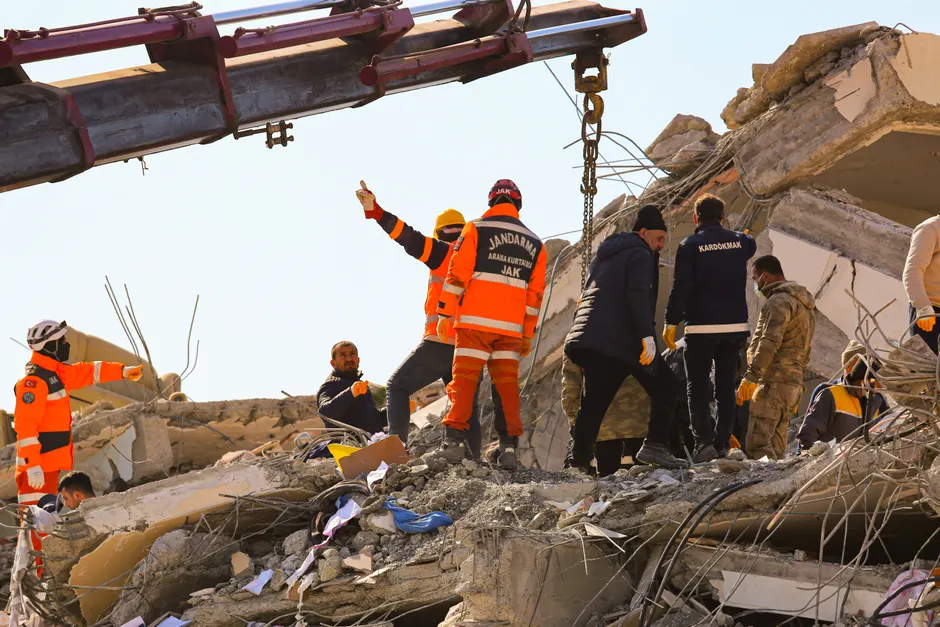
A magnitude 7.2 foreshock and a magnitude 7.5 mainshock struck Venezuela within 39 seconds of each other at approximately 18:04 VET on Wednesday, June 24, 2026, killing at least 32 people and injuring around 700, according to Reuters. The mainshock's epicenter was located 23 kilometers southeast of Yumare, in Yaracuy state — a zone that sits near the active tectonic boundary where the Caribbean and South American plates interact.
The rapid succession of the two events complicated early damage assessment. A foreshock of 7.2 Mw is, by itself, a major seismic event capable of structural damage; that a stronger rupture followed within seconds meant the cumulative ground motion exceeded what either event would have produced in isolation. The shaking was felt across a wide swath of the country, including the capital, Caracas, some 350 kilometers to the east.
Aftershock Sequence and Ongoing Hazard
The seismic sequence did not end with the mainshock. A magnitude 5.1 aftershock struck Tucacas, in Falcón state, on the night of June 25, and by June 26 more than 302 aftershocks had been recorded in total, per Wikipedia's event log. A sequence of this density is consistent with major intraplate and near-plate-boundary ruptures in the Caribbean region, where aftershock decay — described by the Omori-Utsu law — can extend over weeks. Structural engineers and emergency responders typically treat the 72-hour window post-mainshock as the highest-risk period for secondary collapse in already-compromised buildings.
The Falcón state coastline, where Tucacas is located, is a popular tourism corridor and an area of significant oil and gas infrastructure. A 5.1 Mw aftershock in that specific zone warrants monitoring not only for human safety but for potential impacts on refinery and pipeline integrity — a sensitivity that matters acutely given Venezuela's already strained energy production.
Context: Seismic Exposure in a Fragile State
Venezuela is no stranger to seismic risk. The country straddles the southern Caribbean plate boundary, and historical events — including the 1812 Caracas earthquake and the 1967 Caracas earthquake — are benchmarks in regional seismological memory. What distinguishes the June 2026 sequence is the near-simultaneous occurrence of two large-magnitude events and its inland epicentral location near Yumare, rather than the more frequently struck coastal and eastern zones.
The humanitarian picture is complicated by Venezuela's prolonged socioeconomic crisis. Hospital capacity, building stock quality, and search-and-rescue resources have all been under severe pressure for years. An initial death toll of 32 with roughly 700 injured — figures that will almost certainly be revised as access improves in affected municipalities — reflects both the scale of the seismic energy released and the underlying vulnerability of the built environment. In countries with robust construction codes and enforcement, a 7.5 Mw event at this depth and location would still cause significant damage; in one where informal construction is widespread, the damage calculus shifts considerably.
The speed at which the casualty figures and structural assessments evolve over the coming days will depend heavily on access: road damage, landslides triggered by the shaking, and communication outages all slow the process. Aftershock risk also affects the willingness of rescue teams to enter partially collapsed structures — a tradeoff that emergency managers must weigh in real time.
International humanitarian coordination will be the next variable to watch. Venezuela's government has historically been selective about accepting foreign disaster assistance, and any response from regional bodies — PAHO, CEPREDENAC, or bilateral partners — will be shaped by that political context as much as by logistical capacity.


