Russia's Baltic Pressure Campaign: Gray Zone Tactics and the NATO Intercept Line

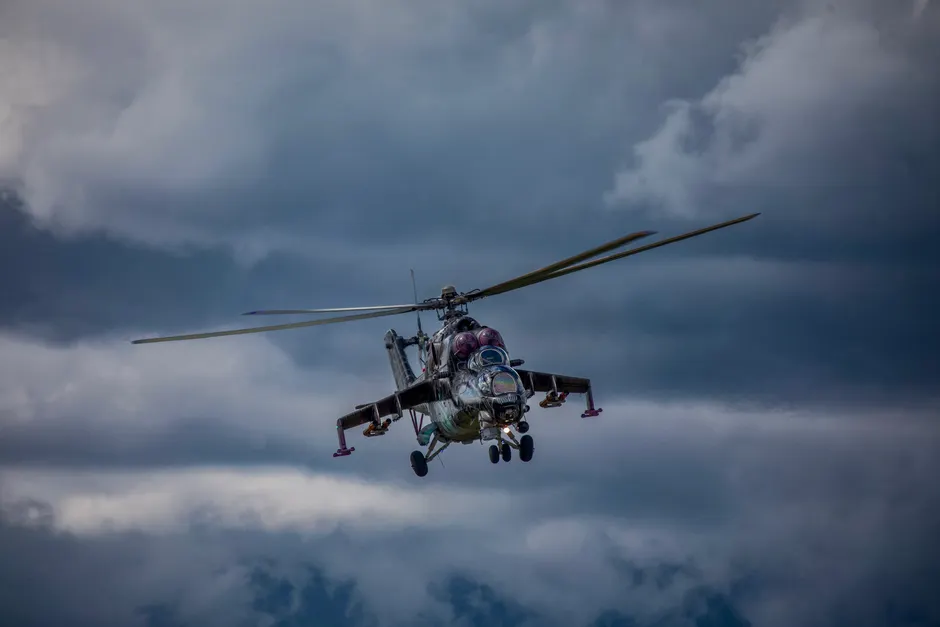
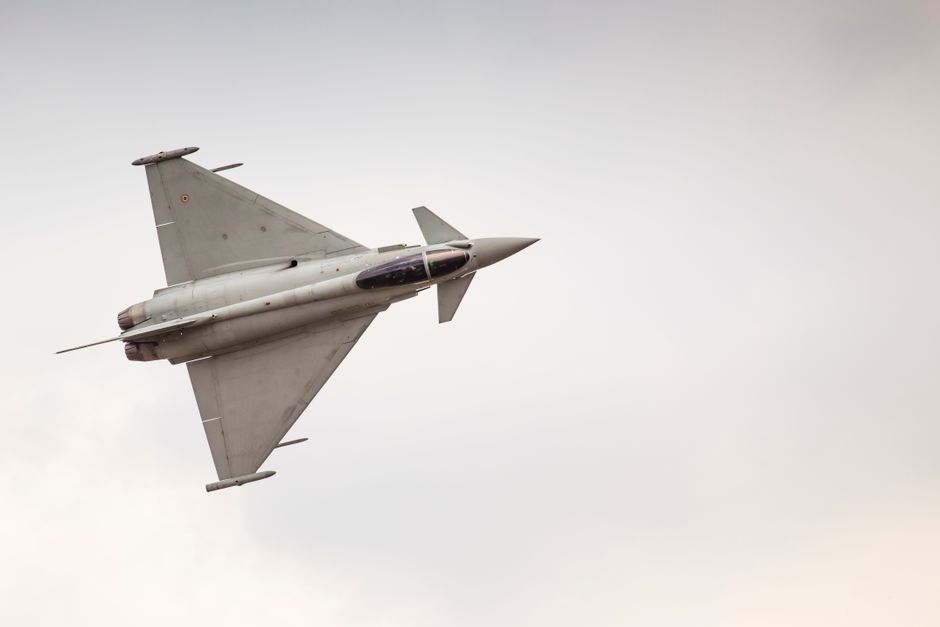
Russian military aircraft approached NATO airspace more than 300 times in 2023, triggering scrambles by Alliance air forces across Europe, according to NATO. The pace of those intercepts — averaging roughly six per week — offers a concrete measure of the sustained pressure Russia has maintained along the Alliance's eastern periphery, with the Baltic states and Poland bearing a disproportionate share of the exposure.
The intercept numbers sit within a broader operational pattern. Analysis from the Belfer Center, published in February 2026, characterizes Russia's approach as a deliberate mix of gray zone activity and explicit military threats calibrated to erode NATO cohesion and secure a practical veto over the Alliance's eastward expansion. Gray zone operations — activities that remain below the threshold of armed conflict but exceed normal peacetime competition — give Moscow room to impose costs and signal resolve without triggering Article 5.
The Baltic corridor is structurally exposed. Estonia, Latvia, and Lithuania share land borders with Russia and Belarus, and the Suwalki Gap — the roughly 100-kilometer strip of Polish and Lithuanian territory separating Kaliningrad from Belarus — remains one of NATO's most analyzed potential chokepoints. Any attempt to sever that corridor would isolate the Baltic states from overland reinforcement. Russian aircraft approaching Alliance airspace in that region are not simply navigational incidents; they are rehearsals of contested airspace management and tests of NATO response times.
The Diplomatic Track and Its Limits
NATO allies have formally called on Russia to cease what they describe as deliberate provocations and to de-escalate tensions along Ukraine's borders and in occupied Ukrainian territory, per the Alliance's stated position on relations with Russia. That language, updated as recently as August 2024, reflects the post-invasion posture: diplomatic formulations maintained as a matter of institutional record, but with little expectation of near-term compliance.
The NATO-Russia Council, the formal bilateral channel suspended after the 2022 full-scale invasion of Ukraine, has not been meaningfully revived. Without that mechanism, direct military-to-military communication on incidents like airspace intrusions runs through narrower, less regularized channels. The risk of miscalculation in a high-tempo intercept environment is not theoretical.
What the Pattern Signals
The Belfer Center's scenario work frames Russian pressure on the Baltics as serving two functions simultaneously: coercing the frontline states directly, and fracturing Alliance consensus by forcing member governments to weigh defense commitments against economic and escalation costs. That dual-track logic explains why the activity persists even when it produces no immediate territorial gain.
NATO's response has been to harden forward presence. Enhanced Forward Presence battlegroups — initially deployed in 2017 and upgraded to brigade-level frameworks after 2022 — are the visible deterrent layer. The intercept cadence of 2023 suggests that posture has not reduced Russian probing. It has, arguably, made the probing more consequential, because each intercept now occurs in an environment where Alliance forces are more densely positioned and rules of engagement are under continuous political review.
The trajectory here warrants attention. If the 2023 intercept rate holds or rises through 2025 and into 2026, Alliance air policing over the Baltics will increasingly shade from a peacetime assurance mission into something operationally closer to active air defense. That distinction — between presence for signaling and presence for warfighting — carries significant implications for force posture, escalation management, and the political sustainability of rotational deployments among contributing nations.
Russia's gray zone playbook has a ceiling. It is effective at maintaining ambiguity and imposing friction, but it does not, on its own, resolve the underlying strategic contest over NATO's eastern boundary. For the Baltic states and Poland, the 2023 intercept record is less a data point than a baseline — one they are working, with Alliance partners, to ensure never becomes a floor.