Who Will Control Africa's AI Infrastructure — and at What Cost?
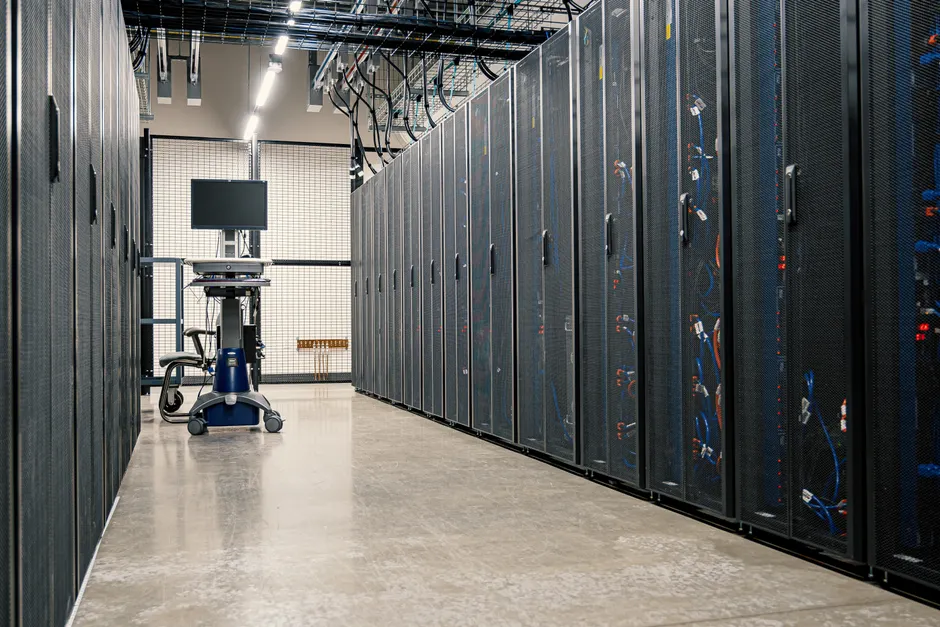
Africa holds 307 megawatts of data centre capacity — less than 2 percent of the global total, according to the Africa Data Centres Association — yet the continent is now the focal point of a race to build AI infrastructure that could reshape how digital power is distributed globally. The question is no longer whether that buildout will happen, but who will own it, who will pay the energy bill, and whether the terms will serve African populations or primarily outside investors.
The gap between Africa's current footprint and the scale of ambition being projected is stark. The World Economic Forum estimates that investment in green computing infrastructure across the continent could unlock $1.5 trillion in value. Microsoft has already committed R5.4 billion to expand cloud and AI infrastructure in South Africa. South Africa's government followed in September 2025 with the launch of the AI for Africa Initiative, explicitly framed as a vehicle to connect all 54 African nations around shared AI capabilities — a signal that at least one major government sees infrastructure sovereignty, not just market access, as the core objective.
The Energy Constraint Is Structural
The resource calculus adds a layer of complexity that investment figures alone don't capture. Globally, data centres consumed 448 terawatt-hours of electricity and 4.5 trillion litres of water in 2024, according to a UN report cited by Reuters. By 2030, the same projections put AI infrastructure demand at 945 terawatt-hours — roughly triple the 2024 figure. That trajectory will stress grid capacity in regions where supply is already unreliable.
Africa currently sits at less than 1 kWh of data centre electricity consumption per capita, projected to rise to just under 2 kWh per capita, according to IEA data — the lowest of any region by a wide margin. That number is sometimes cited as evidence of latent capacity. It is also evidence of how thin existing power infrastructure is. Building out hyperscale compute on a grid that cannot yet reliably power households is a sequencing problem with no clean solution. Renewable energy — solar in particular — is the default framing for "green compute" on the continent, but grid integration at the scale needed for data centre loads requires transmission investment that lags well behind generation pledges.
Ownership, Terms, and the Sovereignty Question
The structure of incoming investment matters as much as its volume. Microsoft's South Africa commitment is a corporate infrastructure play; the AI for Africa Initiative is a state-led diplomatic framework. These two models are not inherently in conflict, but they pull in different directions on questions of data residency, pricing, and access.
Hyperscale infrastructure built by foreign cloud providers tends to route data through contractual and technical architectures designed for the provider's global operations — not for local data governance regimes. African governments have been moving, unevenly, toward data localisation requirements. Nigeria's data protection framework, Kenya's legislative efforts, and South Africa's POPIA represent different points on a spectrum, but the common thread is a push to assert jurisdiction over data generated by African users. Whether that regulatory architecture can keep pace with the speed of infrastructure deployment is an open question.
The $1.5 trillion value figure from the WEF is a ceiling, not a floor — and it is conditional on investment being channelled into infrastructure that serves local digital economies rather than simply providing cheaper compute for global AI model training. The distinction matters. A data centre built to serve an African fintech ecosystem has different economic multipliers than one built to process training runs for models whose outputs are priced in dollars and whose primary market is elsewhere.
South Africa's AI for Africa Initiative is the most concrete attempt so far to set the terms politically before the infrastructure locks in. Whether it can build genuine multilateral commitment across 54 nations with radically different regulatory environments, grid capacities, and negotiating leverage with big tech is the central institutional test of the next several years. The announcement is the easy part. The harder work — harmonising data governance, pooling procurement, and preventing the same asymmetric dependency patterns that defined earlier technology waves — has barely begun.


