Venezuela Earthquake Doublet: M7.2 Foreshock and M7.5 Mainshock Strike Within 39 Seconds

A magnitude 7.5 earthquake struck 28 km southeast of Yumare, Venezuela on June 24, 2026 at 22:05:11 UTC, preceded by a magnitude 7.2 foreshock just 39 seconds earlier — a rare doublet sequence that compounded ground motion and complicated early damage assessment across a wide region.
The two events, catalogued by the USGS as a foreshock-mainshock doublet, occurred roughly 160 km west of Caracas, according to Reuters. That proximity placed the capital well within strong shaking range. Doublet sequences — where two earthquakes of comparable magnitude rupture in rapid succession on the same or adjacent fault segments — are seismologically significant because the initial rupture can dynamically trigger or accelerate failure on a nearby fault patch before the first wave train has dissipated. The 39-second interval between the M7.2 and M7.5 is exceptionally short even by doublet standards, meaning the mainshock arrived before most automatic early-warning systems would have issued alerts.
Venezuela's seismic exposure is not incidental. The country straddles the boundary between the South American and Caribbean plates, a zone of oblique convergence accommodated largely through the Boconó fault system and a series of parallel strike-slip and thrust structures running roughly east-west across the northern Andes and the coastal cordillera. Large historical earthquakes — including the 1812 Caracas event and the 1967 Caracas earthquake — have traced this same tectonic architecture. The Yumare area sits toward the western end of this corridor, where the fault geometry becomes more complex and strain accumulation less well-instrumented.
Seismic Sequence and Structural Implications
In doublet ruptures, standard aftershock forecasting models require re-calibration. Operational Aftershock Forecasting (OAF) protocols — such as those run by the USGS — must account for the combined stress transfer from both ruptures, which can expand the zone of elevated aftershock probability and shift its centroid relative to either event alone. Emergency managers and structural engineers conducting rapid assessments face an additional complication: buildings that sustained partial damage in the M7.2 may have failed catastrophically in the M7.5, or vice versa, making field triage harder to sequence.
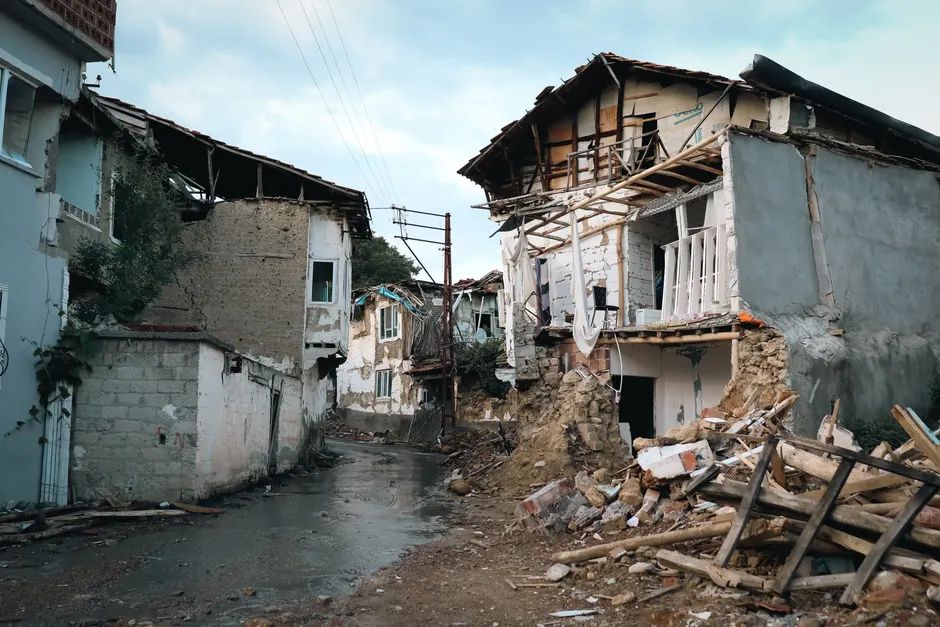
The mainshock's moment magnitude of 7.5 places it in the range where unreinforced masonry and older reinforced-concrete frame construction — both common in Venezuelan urban and peri-urban settings — face high collapse risk. Venezuela's building stock outside Caracas is largely unregulated for seismic performance, and the Yumare area, a small city in Yaracuy state, is not an exception. The broader humanitarian exposure depends heavily on focal depth and directivity, details that will sharpen as the USGS finite-fault model is refined.
Aid Response and Geopolitical Backdrop
Reuters reported on June 25, 2026 that rescuers, cash, and emergency supplies from international partners had begun arriving in Venezuela. The speed of that response carries its own context. Venezuela under the Maduro government has maintained a historically fraught relationship with Western aid mechanisms — the 2019 standoff over USAID convoys at the Colombian border being the clearest precedent — and any rapid acceptance of international assistance would carry political weight beyond the logistical.
The country's economic conditions also shape the response capacity available domestically. Years of hyperinflation, infrastructure decay, and emigration of skilled workers — including engineers and medical personnel — have eroded the civilian and institutional systems that typically anchor a post-earthquake response. A government with limited hard-currency reserves and degraded heavy-equipment fleets will be more dependent on external support for search-and-rescue operations than comparable states in the region.
The doublet structure of the sequence will also keep aftershock risk elevated for days to weeks. Communities near the epicentral zone face a period of ongoing seismic hazard that complicates shelter decisions — the standard post-quake guidance to avoid structurally compromised buildings is harder to act on when temporary shelter options are scarce and the next significant aftershock is a statistical near-certainty rather than a remote possibility.
What the coming days will clarify is the full casualty and damage picture, the depth of Venezuela's willingness to coordinate with international responders, and whether the doublet sequence is in fact complete or whether stress loading on adjacent fault segments raises the probability of further major ruptures in the region.