Twin M7.2 and M7.5 Earthquakes Strike Venezuela, Toppling Buildings and Trapping Hundreds
Two major earthquakes — magnitudes 7.2 and 7.5, separated by just 39 seconds — struck Venezuela on Wednesday, collapsing dozens of buildings across Caracas and the coastal city of La Guaira and leaving an unknown number of people trapped in the rubble, AP News reported. Venezuelan authorities declared a state of emergency in the aftermath.
The M7.5 event — the primary shock by USGS classification — was centered 28 km southeast of Yumare at coordinates 10.4351°N, 68.4716°W, at a shallow depth of 10.0 km, according to USGS. Shallow-focus events at that depth release ground motion with minimal attenuation before it reaches the surface, which amplifies structural damage across a wide radius. USGS shaking models estimated roughly 7.75 million people were exposed to Strong (MMI VI) shaking, approximately 2.37 million to Very Strong (MMI VII), 401,000 to Severe (MMI VIII), and 29,000 to Violent (MMI IX) shaking — a population exposure profile consistent with a high-casualty event even before rescue counts were confirmed.
The Damage on the Ground
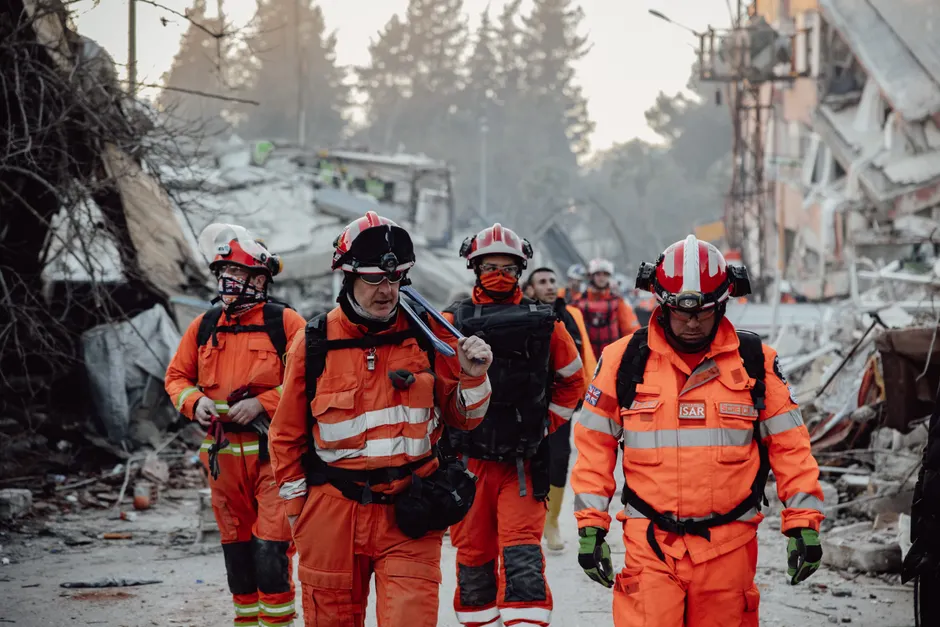
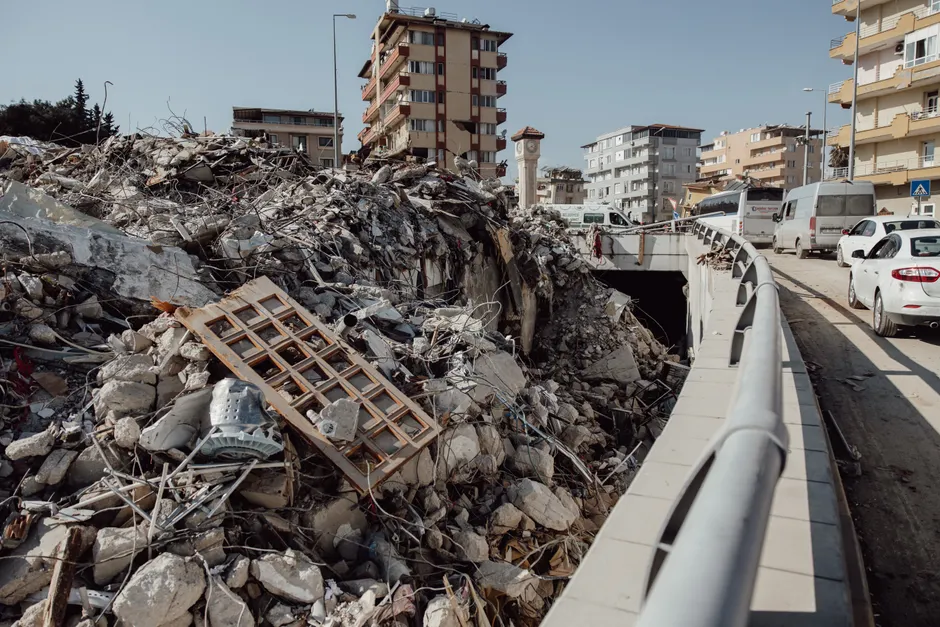
Multi-storey buildings collapsed in La Guaira, the port city that serves as Caracas's gateway to the Caribbean coast, BBC News reported. In Caracas itself, at least one collapsed structure became a focal point for rescue operations. Footage and field accounts described rescuers pulling survivors from debris with their bare hands — a sign that heavy rescue equipment had not yet reached all sites. Three young siblings were pulled alive from the rubble in La Guaira, emerging covered in dust, according to BBC. Their rescue, while one data point, tracks with the pattern of survivable void spaces that shallow pancake collapses sometimes leave in the initial hours.
The sequence of two powerful events within 39 seconds is seismologically significant. Whether the M7.2 is a foreshock or a distinct rupture on an adjacent fault segment has not been confirmed in the verified record at time of writing. Either way, the rapid succession would have prevented occupants from evacuating after the first jolt — a factor that likely amplified entrapment numbers relative to a single-event scenario.
Historical Context
The M7.5 places Wednesday's event among the strongest to affect Venezuela in the modern instrumental record. USGS regional data puts the largest earthquake in the Venezuela region since 1900 as the October 29, 1900 M7.7 Caracas earthquake, followed by the July 29, 1967 M6.5 event. Wednesday's double strike effectively brackets the upper end of Venezuela's documented seismic history short of that 1900 event — and does so against a built environment that has accumulated well over a century of additional urban density and, in many cases, informal construction with limited seismic resilience.
USGS PAGER estimated economic losses at 1–7% of Venezuela's GDP. In absolute terms, that range is difficult to translate cleanly: Venezuela's GDP has contracted sharply over the past decade under sanctions, hyperinflation, and production collapse, meaning even a moderate percentage loss falls on an economy already operating well below its structural capacity. Reconstruction financing will be a central challenge regardless of where the final damage tally lands.
What Comes Next
Venezuela's state of emergency unlocks domestic emergency protocols and, in principle, facilitates international aid coordination. In practice, the country's strained relationship with several major Western donors and the operational constraints facing its public institutions complicate the logistics of a rapid international response. Regional actors — particularly through CELAC mechanisms and bilateral channels with Cuba, Mexico, and China — are more likely first movers than a broad multilateral deployment.
The immediate priority for rescue teams is the 72-hour window during which survival rates in structural collapse scenarios drop sharply. Beyond that, La Guaira's role as the principal port connecting Caracas to sea-borne supply chains means any sustained infrastructure disruption there carries economic spillover well beyond the earthquake zone itself. How quickly that corridor is assessed and reopened will shape the pace of relief operations in the days ahead.