Venezuela's Double Earthquake Disaster: Two Major Tremors, Widespread Destruction, and Survivors Pulled from the Rubble
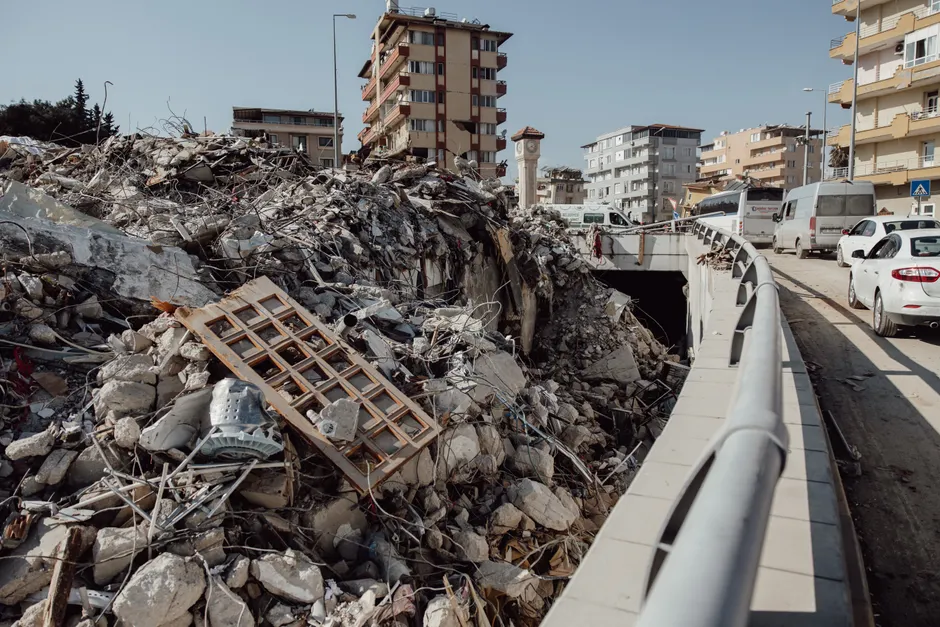
Two major earthquakes — magnitudes 7.5 and 7.2 — struck Venezuela on June 24–25, 2026, causing widespread structural collapse and casualties across the country's northern coast, according to BBC News.
The hardest-hit area was La Guaira, the port city that sits at sea level directly north of Caracas and serves as the capital's maritime gateway. Buildings there collapsed entirely. The combination of shallow coastal geology, dense urban construction, and the sequential nature of the two strikes — a 7.5 followed by a 7.2 — compounded the structural toll far beyond what either event alone might have produced. Secondary shaking from the second tremor is particularly destructive to structures already compromised by the first, and La Guaira's building stock, much of it dating to decades past with uneven seismic retrofitting, was acutely vulnerable.
Venezuela sits along the tectonically active boundary zone where the Caribbean Plate meets the South American Plate, a convergent margin that has generated destructive earthquakes throughout the country's history. The 1999 Vargas disaster — triggered by catastrophic rainfall rather than seismic activity but centered on the same La Guaira corridor — remains the benchmark for rapid-onset mass casualty events in that region. The June 2026 earthquakes now occupy that same geography with comparable, if distinct, destructive force. A precedent closer in mechanism: a 6.2-magnitude earthquake struck Yaguaraparo in the Sucre state on June 22, 2024, offering a recent reminder that Venezuela's seismic exposure is persistent, not episodic.
Rescues and the Search Window
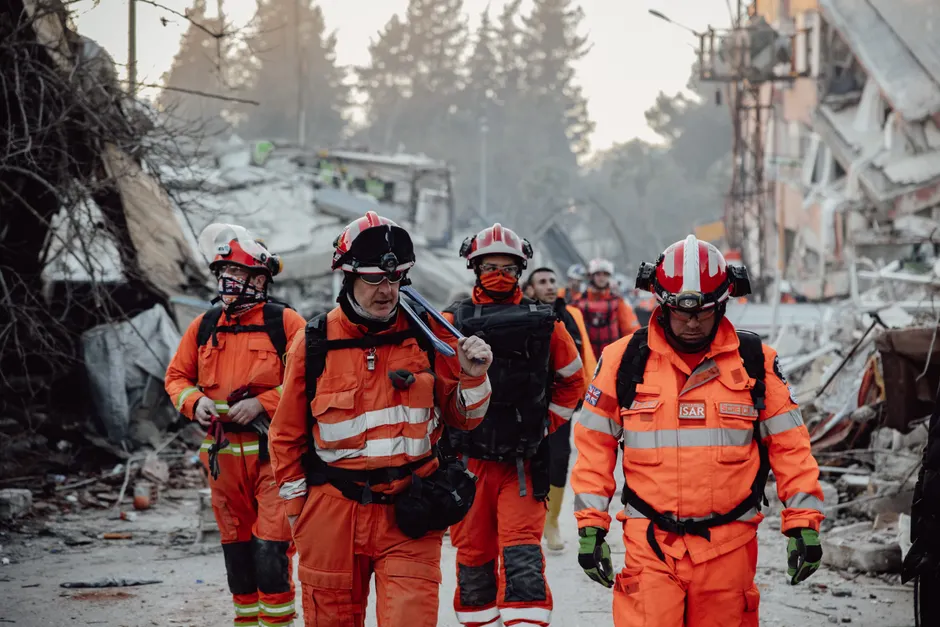
Despite the scale of destruction, rescuers extracted survivors well into the post-strike period. A mother and her 18-day-old infant were pulled from rubble following the double quakes — a recovery that speaks both to the structural voids that can form in collapsed reinforced-concrete frames and to the speed with which search-and-rescue teams were deployed. More strikingly, a three-year-old child was recovered alive six days after the earthquakes struck.
That figure — six days — matters operationally. The international consensus in urban search and rescue (USAR) circles holds that the survival probability curve drops sharply after 72 hours, flattening but not reaching zero through roughly day five or six depending on ambient temperature, access to trapped air pockets, and the victim's physical condition. A child's lower metabolic rate and smaller body mass can, in some configurations, extend the survival window. The rescue does not invalidate the 72-hour planning heuristic, but it reinforces the value of sustained, resource-intensive search operations beyond the acute phase — a lesson that has been relearned after earthquakes in Turkey, Morocco, and Syria in recent years.
Operational and Political Context
Venezuela's capacity to mount a large-scale disaster response is constrained by a decade-plus of economic contraction, emigration of skilled professionals, and degraded public infrastructure. The same pressures that have hollowed out the health system — chronic drug and equipment shortages — apply with equal force to civil protection services. International humanitarian access, which has been politically fraught under the Maduro government, will be a determinative variable in whether the relief operation scales to meet the need.
La Guaira's role as the country's principal port also carries a logistical dimension that extends beyond the immediate emergency. If port infrastructure is damaged or operationally disrupted, the flow of imports — including food and medicine that Venezuela relies on heavily — could be interrupted at a moment when the country is simultaneously managing mass displacement and casualties. That secondary effect is worth tracking closely in the days and weeks ahead.
The broader pattern is one that seismologists and humanitarian planners have flagged for years: the intersection of high seismic hazard zones with fragile-state conditions produces disaster outcomes that dwarf what the raw magnitude figures suggest. Venezuela in June 2026 is the latest, and among the most acute, instances of that intersection. The confirmed rescues — an infant, a toddler, six days on — are the human counterpoint to that structural reality. They are also, for responders still working the rubble, the reason to keep going.