Venezuela's Twin Earthquakes Kill at Least 900 as San Sebastian Fault Ruptures Twice

At least 900 people were dead by June 26 after two major earthquakes — a 7.2 followed by a 7.5 — struck northern Venezuela within approximately 40 seconds of each other on June 24, 2026, with thousands more reported missing as rescue teams worked through collapsed structures across the region.
Both events ruptured along the San Sebastian fault on Venezuela's northern coast, AP News reported. The initial 7.2 struck near San Felipe, in Yaracuy state, before the larger 7.5 followed in rapid succession. Reuters reported both magnitudes, and the USGS event record documented the paired rupture sequence. The proximity in time and the step-up in magnitude — the second event larger than the first — is consistent with a foreshock-mainshock pattern, though seismologists typically confirm that classification retrospectively once aftershock sequences are fully characterized.
The Fault at the Center
The San Sebastian fault is part of the broader Caribbean–South American plate boundary system, a zone of right-lateral strike-slip deformation that runs roughly east–west along Venezuela's northern margin. This is the same tectonic regime responsible for the 1967 Caracas earthquake, which killed several hundred people and severely damaged the capital's then-modern building stock. The fault system is well-mapped and long recognized as Venezuela's primary seismic hazard — but recognition of a hazard and preparation for it are different things.
San Felipe sits roughly 175 kilometers west of Caracas. At 7.2 and 7.5 Mw, both events fall well within the range capable of producing widespread structural failure across a broad area, particularly in building stock that does not conform to modern seismic codes. Venezuela's prolonged economic contraction over the past decade has degraded infrastructure maintenance and constrained the enforcement capacity of regulatory agencies, factors that typically amplify casualty tolls in major seismic events.
Casualty Count and Rescue Operations
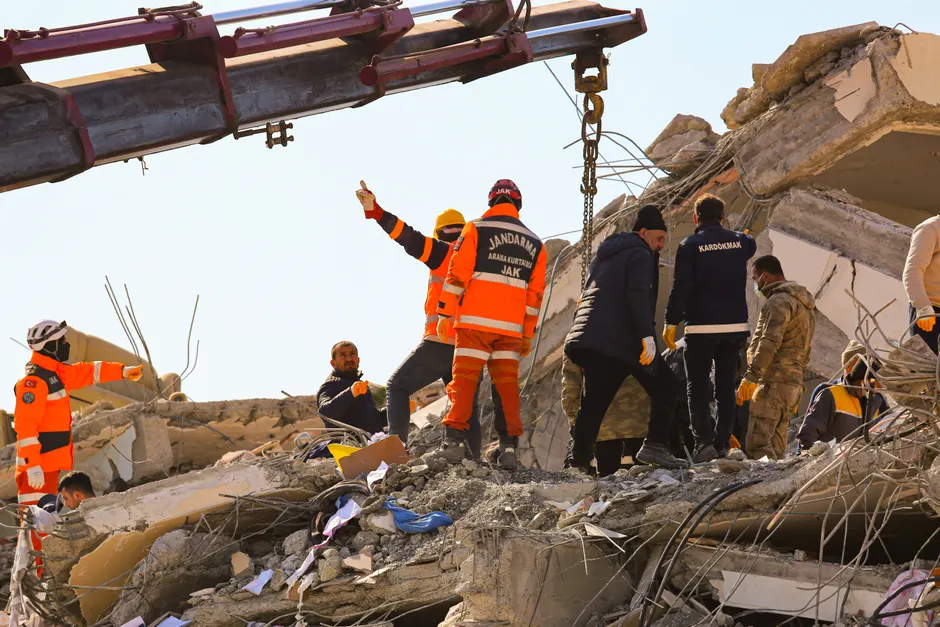
The death toll of at least 900, reported by Reuters as of June 26, is almost certainly not final. Search-and-rescue operations in earthquake events of this magnitude routinely extend for days, and "thousands reported missing" — the framing used in early coverage — indicates the confirmed figure is lagging significantly behind the probable scale of fatalities. Urban collapse events involving informal or older reinforced-concrete construction frequently produce high burial rates; recovery timelines depend on the availability of technical rescue capacity and heavy equipment.
Venezuela's civil protection infrastructure has been under strain for years. International humanitarian access to the country has been politically complicated throughout the Maduro government's tenure, and that context bears directly on how quickly external search-and-rescue teams — if invited — could deploy and integrate with domestic operations.
What Comes Next
The immediate operational priorities are standard: life-safety search and rescue, trauma care surge capacity, and assessment of infrastructure damage to roads, bridges, and port facilities that condition everything else. La Guaira, Venezuela's primary Caribbean port and the gateway to Caracas, sits directly on the fault system; any structural damage there would constrain the logistics of an international relief response.
Aftershock sequences following mainshocks of this magnitude can include M6+ events for days or weeks. Structures already compromised by the initial ruptures are particularly vulnerable to secondary collapse, which poses acute risk to both trapped survivors and rescue personnel.
The longer arc is harder to assess from the current facts alone. Venezuela enters this disaster with a government that has historically been selective about accepting foreign assistance and a population already under severe economic stress. How Caracas manages the relief phase — whether it opens corridors to international teams from the UN Office for the Coordination of Humanitarian Affairs (OCHA) and regional partners, or attempts to manage the response domestically — will shape both the final death toll and the diplomatic dynamics that follow.
Seismically, the San Sebastian system is not finished. A rupture of this size redistributes stress along adjacent fault segments; the scientific community will be running Coulomb stress-transfer models in the coming days to identify where seismic hazard has increased. For a country already managing a humanitarian emergency, that is not an abstract exercise.