Venezuela Earthquake Death Toll Reaches 1,430 as Footballers' Families Among the Dead

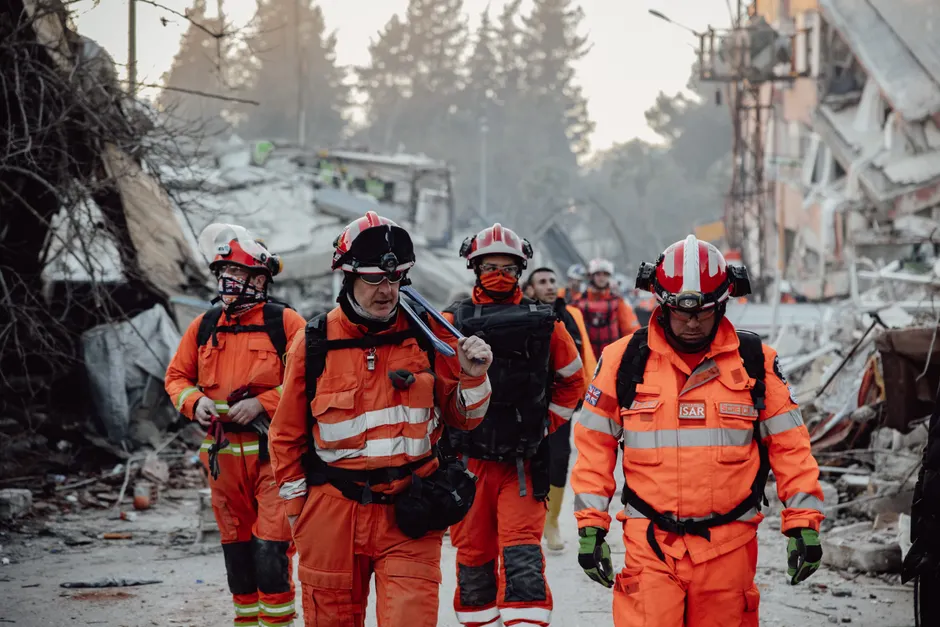
The twin earthquakes that struck Venezuela on June 24–25, 2026 — magnitudes 7.5 and 7.2 — have killed at least 1,430 people, left an estimated 51,000 missing, and injured more than 3,150, with the coastal district of La Guaira among the areas hardest hit, according to reporting through June 28, 2026.
The toll has climbed sharply since the initial hours. Venezuelan lawmaker Jorge Rodríguez put the confirmed dead at 188 as of June 25, per Reuters. By June 26 that figure had risen to 920, and by June 28 it had reached 1,430, with the missing count expanding to roughly 51,000, per Al Jazeera. The sheer gap between confirmed deaths and missing persons signals that recovery operations in the most damaged zones are still far from complete.
A Coastal Community Destroyed
La Guaira, the densely populated port city on Venezuela's Caribbean coast, absorbed some of the worst structural damage. Its geography — compressed between steep hills and the sea — leaves little margin when seismic forces arrive. Buildings there are a patchwork of construction eras, and the combination of proximity to the epicentral zone and that built-environment fragility has driven the city's casualty figures disproportionately high.
Two players from Club Sport Marítimo de La Guaira, a Segunda División side based in the city, lost family members in the disaster — giving a human dimension to statistics that can otherwise flatten into abstraction.
Two Teammates, Two Losses
Héctor Bello, a defender originally from Cumaná, was away from home when the earthquakes struck. His wife, Andrea Bello, died on June 24–25 while shielding their one-year-old daughter. The infant survived. Bello announced Andrea's death publicly on June 26, per BBC News.
The circumstances — a mother using her body to protect a child — are the kind of detail that circulates widely and that carries its own weight, requiring no amplification.
His teammate Lucas Trejo, a 38-year-old Argentine center back who joined Marítimo de La Guaira in 2026, was at a team training camp in Caracas when the earthquakes hit. He rushed back to La Guaira, where his wife and two children had been at home. None of them survived. Trejo — born December 29, 1987 — had relocated to Venezuela for the season, placing his family in a city that would bear the brunt of both quakes, according to The Guardian.
The timing is worth noting plainly: Trejo was absent because of professional obligations. That fact will frame how he processes what happened, and likely how his teammates and the Argentine football community respond to him.
Scale, Context, and What Comes Next
Venezuela entered this disaster with structural vulnerabilities that predate the earthquakes by years. The country's public infrastructure — hospitals, emergency services, roads linking La Guaira to Caracas via the mountain highway — has deteriorated significantly through more than a decade of economic contraction and sanctions pressure. A mass-casualty seismic event stress-tests systems that were already operating well below capacity.
The missing persons figure is the number that most demands scrutiny in the days ahead. At 51,000, it dwarfs the confirmed death count by a factor of more than 35. Some portion will reflect communication failures — people unreachable, not necessarily unaccounted for in a physical sense. But the scale of La Guaira's destruction, and the pattern in comparable events, suggests a meaningful share of those 51,000 remain buried or displaced without contact. Search-and-rescue windows in reinforced-concrete collapses typically close within 72–96 hours; with the June 24 quake now five days past, that window has largely closed for most sites.
International assistance and whether the Maduro government accepts it at scale — or on what terms — will shape recovery timelines. Venezuela's fraught relationships with Western governments and multilateral institutions have historically complicated disaster diplomacy, introducing friction precisely when speed matters most.
The confirmed death toll will almost certainly continue to rise as recovery teams reach areas still inaccessible. What the final count looks like will depend less on the earthquakes themselves than on the response capacity of a state under sustained institutional strain.