Six Suspected 'Space Balls' Wash Ashore in North Queensland as Australian Agencies Move to Identify Origin

Six Suspected 'Space Balls' Wash Ashore in North Queensland as Australian Agencies Move to Identify Origin
Six large spherical objects suspected to be space debris were recovered from beaches in the Forrest Beach area north of Townsville, Queensland, with the Australian Space Agency confirming on 5 July 2026 that it was actively working to determine their nature and origin. The find prompted a hazmat response, a beach closure, and a coordinated multi-agency effort that is still unresolved.
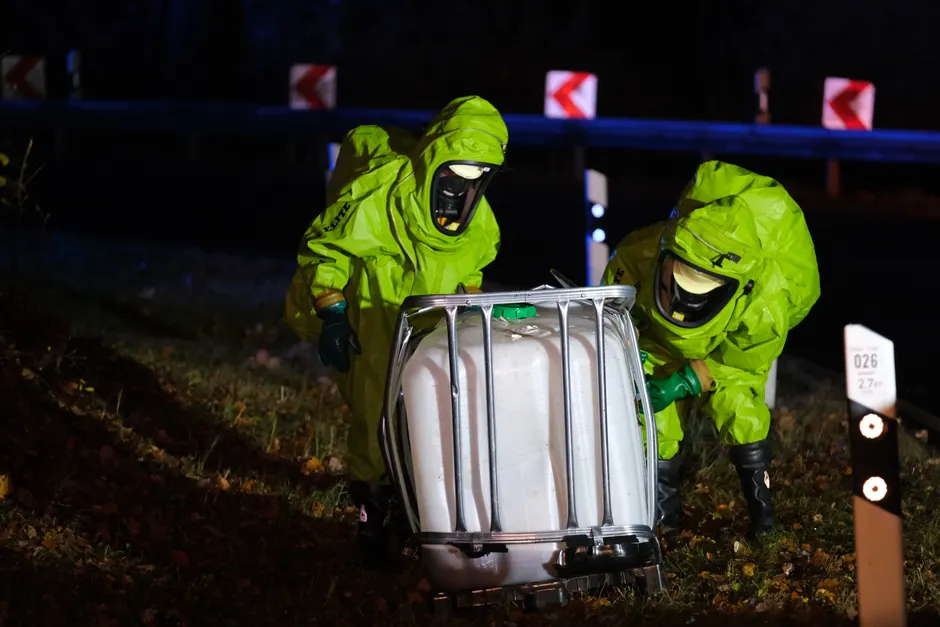
According to a Queensland Police Service media release published 4 July, three objects were located on 3 July and a fourth at 2:30pm on 4 July. By 5 July the count had risen to six. The Queensland Fire Department reported that five had been secured into drums, with the sixth being rendered safe as of that morning. Police acknowledged the objects were suspected of containing hazardous chemicals but stated there was "no danger to the local community" and that the matter did not constitute a criminal investigation.
The Australian Space Agency said it was supporting local authorities and working alongside police and the National Emergency Management Agency — a coordination posture consistent with the agency's standing protocols for unattributed re-entry events, where jurisdiction can be ambiguous until provenance is established.
What the Objects Likely Are
Associate Professor Alice Gorman, a space archaeologist and space debris specialist at Flinders University, reviewed news footage and offered the most technically detailed public assessment available. Gorman noted the objects showed no visible evidence of burning or scorching — significant, because atmospheric re-entry typically leaves thermal signatures on exposed surfaces. Their appearance, she said, was consistent with pressurised propellant vessels fabricated from titanium alloys: a component class colloquially known as "space balls."
These vessels serve as high-pressure fuel storage in rocket upper stages and are engineered to survive re-entry. Gorman described them as "the most frequent piece of space junk" recovered globally, with examples turning up on multiple continents, sometimes years after the originating launch. If the Forrest Beach objects are indeed pressurised fuel vessels, residual hydrazine — a highly toxic hypergolic propellant — could be present inside. That would explain the hazmat posture adopted by Queensland emergency services.
On attribution, Gorman pointed to the Russian Fregat upper stage as a plausible candidate. The Fregat uses spherical titanium pressure vessels of comparable geometry and is a frequently flown stage in launches to geostationary and high-inclination orbits. She was careful to flag, however, that the objects could equally be marine in origin and unrelated to the space sector entirely. No attribution has been confirmed.
The Broader Orbital Context
The incident lands against a measurable accumulation problem. Estimates place the current population of trackable orbital debris above 30,000 objects — working satellites, defunct rocket bodies, fragmentation clouds — with an exponentially larger number of sub-centimetre particles that cannot be catalogued. The re-entry of large, dense hardware like titanium pressure vessels is not exceptional in itself; what makes events like Forrest Beach operationally consequential is the combination of six objects in close proximity, the unresolved origin question, and the potential for continued arrivals. The Queensland Fire Department explicitly warned that additional objects could wash ashore over coming days and directed residents to monitor guidance from the Australian Space Agency.
The parallel question — who bears legal responsibility — runs under every unattributed debris event. The 1972 Convention on International Liability for Damage Caused by Space Objects places liability on the launching state, but that framework requires identifying a launching state first. With the origin still open between a Russian upper stage and a possible marine or non-space source, that process has not yet started.
For the moment, the Australian Space Agency's investigation is the critical path. Its findings will determine whether this becomes a diplomatic matter, a routine remediation, or simply a case of unusual oceanic flotsam that happened to arrive in formation on a north Queensland beach — the last possibility being, as Gorman noted, genuinely on the table.
Forrest Beach Takeaway, for its part, was already selling a "space junk snack box."