Silver 'Space Balls' Wash Up on Queensland Beaches, Prompting ASA Probe

Six spherical objects believed to be space debris have washed ashore on beaches in northern Queensland, including Forrest Beach, over the weekend of July 4–5, 2026. The Australian Space Agency (ASA) has opened an investigation into their origin and says the objects "appear to be pressure vessels from a space launch vehicle" Firstpost.
The objects are large, silver, spherical in shape — media outlets have taken to calling them "space balls" — and their condition and placement are consistent with re-entry debris rather than marine hardware or ordnance News18. Pressure vessels of this kind are a familiar sight for anyone who tracks re-entry incidents: composite-overwrapped or titanium spheres used to store helium or nitrogen for pressurizing propellant tanks, and they are among the most survivable rocket components on atmospheric re-entry precisely because of the same structural robustness that makes them useful in flight.
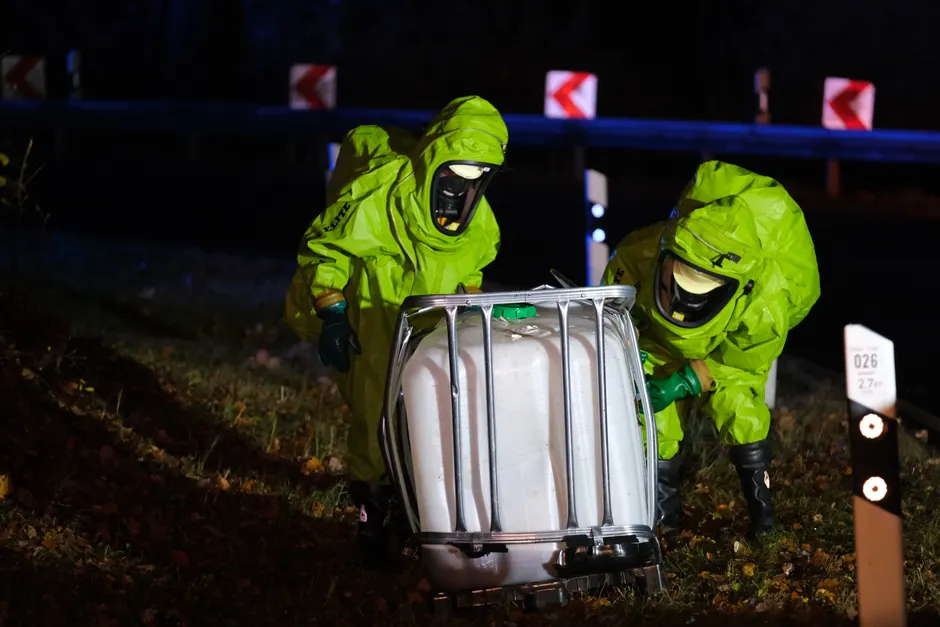
An expert cited by the Guardian cautioned that the debris may still contain toxic rocket fuel or fuel residues, a concern that governs how such objects are typically handled once recovered The Guardian. Residual hypergolic propellants — commonly hydrazine or its derivatives, along with nitrogen tetroxide as an oxidizer — are corrosive and carcinogenic even in small quantities, which is why authorities tend to cordon off suspected debris rather than allow public handling pending inspection.
No agency has yet identified which launch vehicle, operator, or mission the spheres originated from. The Australian Space Agency's investigation is expected to draw on trajectory and re-entry data — likely cross-referenced against tracked objects from the U.S. Space Command's catalog and any recent upper-stage disposal or breakup events — to attempt to match the debris to a specific launch. That process can take days to weeks, particularly when no operator has come forward voluntarily to claim the hardware, as is common with expendable upper stages that are not actively tracked to a controlled reentry.
The pattern of six discrete objects washing up in the same general stretch of coastline is itself informative. A cluster like this is more consistent with the uncontrolled breakup of a single upper stage or vehicle during reentry — scattering pressure vessels and other dense, heat-resistant components along a debris footprint — than with a single isolated dropped item. Northern Queensland's location beneath a stretch of southern-hemisphere orbital corridors used by polar and sun-synchronous launches makes it a plausible, if not novel, landing zone for such debris; Australia has recorded rocket debris washing ashore in past years as commercial launch cadence globally has climbed.
The wider question here is less about this specific find than about what it says regarding the state of space traffic and debris accountability. Global launch rates have risen sharply over the past several years, driven largely by mega-constellation deployments and reusable-vehicle upper stages that are not always disposed of via controlled deorbit. Under the 1972 Liability Convention and related UN frameworks, the state that registered the launch bears responsibility for damage caused by its space object, wherever it lands — but establishing which registered object is responsible first requires identifying it, and unmarked or generic pressure vessels can be maddeningly difficult to trace to a specific mission without serial numbers or telemetry-confirmed reentry windows.
That accountability gap is the practical reason the ASA's forensic work matters beyond Queensland's shoreline. If investigators can trace the debris to a specific operator, it would set a data point for how reentry risk is currently being managed — or not — by commercial and state launch providers operating in increasingly congested orbital regimes. If they cannot, it adds to a growing body of unattributed debris finds that complicate enforcement of existing space liability norms, which were largely designed for an era of far lower launch cadence and fewer private operators.
For now, Queensland authorities and the ASA are treating the objects as recovered hardware requiring careful handling rather than confirmed sources of environmental contamination. Toxicology and material testing will likely determine whether residual propellant is present, and metallurgical or serial-number analysis may yet identify the parent vehicle. Until then, the six spheres sit as a fairly literal illustration of a broader, still-unresolved problem: an orbital environment producing debris faster than the international system built to hold launchers accountable for it can keep pace.