Six Suspected Space Debris Spheres Wash Ashore in North Queensland, Triggering Hazmat and National Security Response
Six large silver spherical objects washed ashore at Forrest Beach, north of Townsville in northern Queensland, over the weekend of 4–5 July 2026, prompting a hazmat response, a national security review, and an active investigation by the Australian Space Agency (ASA).
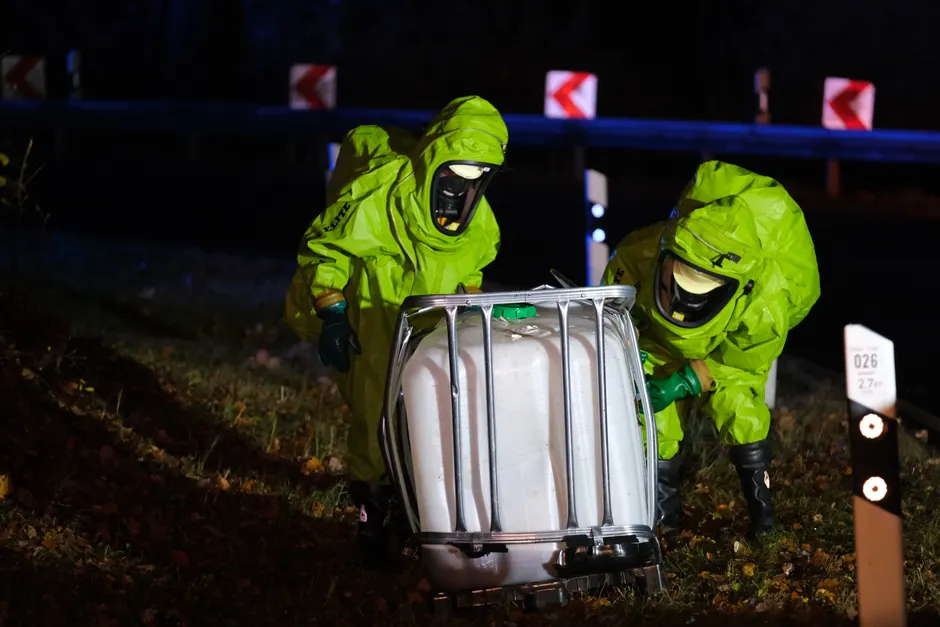
Queensland's fire department established a 50-metre exclusion zone around the objects and closed the beach to the public. Crews in protective suits subsequently secured the spheres in hazmat barrels under police guard, with ABC News reporting that emergency services are still developing a removal and storage plan. The ASA has confirmed it is "supporting local authorities in relation to suspected space debris located at Forrest Beach," according to the Irish Times.
What the Spheres May Be — and Why That Matters
Online speculation, reported by the BBC, centres on the objects being spacecraft propellant tanks — the type of composite-overwrapped pressure vessel (COPV) or metallic pressurant sphere used in launch vehicle upper stages and satellite buses. These tanks are engineered to survive atmospheric re-entry: their spherical geometry and high-strength alloy construction can endure the thermal and mechanical stresses that destroy most structural components. That survivability is precisely what makes them a recurring feature of debris wash-up events globally.
The hazard concern is real, not precautionary theatre. Propellant tanks can retain residual hydrazine, nitrogen tetroxide, or other hypergolic propellants — substances that are acutely toxic, can ignite spontaneously on contact with air or moisture, and require specialist handling under occupational exposure limits measured in parts per billion. The Irish Times notes specifically that the debris could contain toxic rocket fuel, which explains both the hazmat suits and the decision to place the objects in sealed barrels before attribution of origin was even established.
Ownership and Attribution: The Hard Part
The origin and owner of the spheres remain unidentified as of 5 July 2026. That ambiguity is not unusual at this stage — tracing orbital debris to a specific vehicle requires cross-referencing re-entry prediction data from agencies such as the US Space Surveillance Network, ESA's Space Debris Office, or Russia's equivalent, alongside physical markings, alloy composition analysis, and dimensional matching against known hardware catalogues.
Australia's geography makes it a recurring landing zone for re-entering debris. The southern and eastern coastlines sit beneath heavily trafficked orbital inclinations used by both commercial and government launch programmes. Previous incidents — including the 2022 identification of debris near Dalgety Bay as fragments from a SpaceX Crew Dragon trunk — established that physical confirmation can take days to weeks even with cooperative operators.
The national security dimension flagged by 7News Queensland is worth parsing carefully. It likely reflects standard protocol when unattributed foreign hardware arrives on Australian sovereign territory — less a threat assessment than a jurisdictional trigger requiring Defence and intelligence agencies to be looped in alongside civilian space authorities. Whether attribution eventually points to a commercial operator, a government programme, or a legacy vehicle from an earlier era will determine whether any liability or remediation costs can be claimed under the 1972 Convention on International Liability for Damage Caused by Space Objects.
The pace of the investigation will hinge on how quickly the ASA can get the spheres to a laboratory capable of materials analysis, and whether any surviving markings — serial numbers, manufacturing stamps, thermal protection remnants — survived both re-entry and immersion. Until then, Forrest Beach stays closed and the exclusion zone holds.


