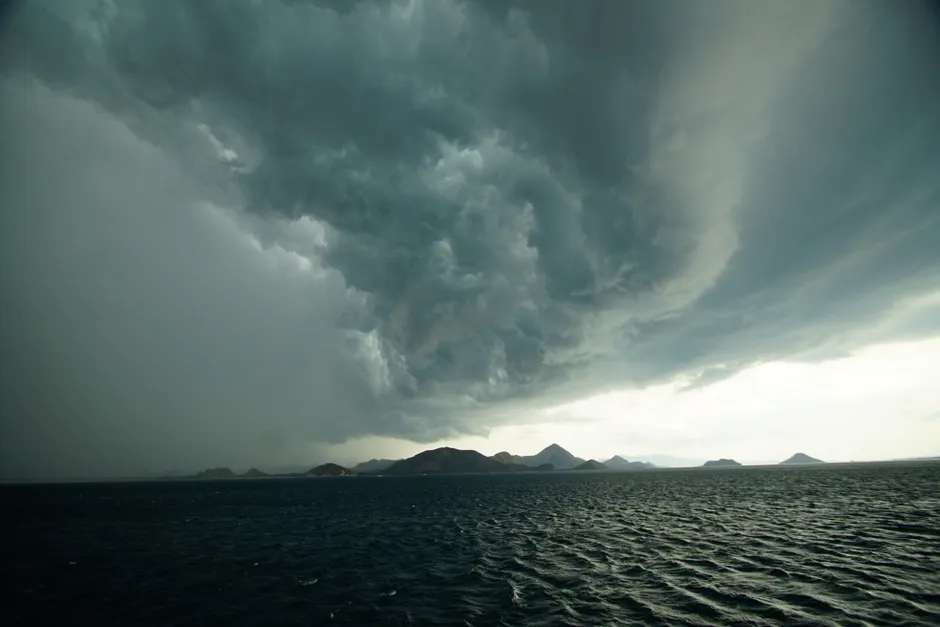
Super Typhoon Bavi Bears Down on Guam and Northern Mariana Islands as Evacuations Strain Capacity

Emergency evacuations are underway across Guam and the Northern Mariana Islands as Super Typhoon Bavi — a Category 5 storm carrying sustained winds of 257 km/h (160 mph) — closes in on the archipelago, with the US National Weather Service warning of catastrophic damage, torrential flooding, and wave heights approaching 11 metres (35 ft) when the storm makes landfall early Monday morning local time.
Guam was elevated to Condition of Readiness 1 (COR 1) at noon on Sunday, July 6 (ChST), the highest civil-defense alert tier, triggering mandatory protective action for the island's roughly 170,000 residents. The escalation followed COR 2, which the Governor imposed at approximately 10 p.m. on Saturday, July 5. COR 1 signals that destructive winds are expected within 12 hours; at that stage, shelter-in-place or evacuation to hardened structures is the operative guidance.
Shelter capacity is already under pressure. Guam opened five evacuation centers — primarily intended for vulnerable residents — with a combined maximum capacity of around 1,700. By 13:00 local time (03:00 GMT) on Sunday, Guam's civil defence office reported that one site had reached maximum capacity and was redirecting arrivals to alternate facilities. Pacific Daily News reported shelter coordinators were expecting close to 2,000 evacuees — already exceeding the five centers' stated ceiling.
The Storm's Track and Destructive Footprint
Bavi carries JTWC designation 09W and is the third Category 5 storm of the 2026 Western Pacific typhoon season, according to Yale Climate Connections. NWS Guam described it as "potentially catastrophic" in a 1:00 a.m. ChST advisory on Sunday. The storm's projected track runs through the Rota Channel and Tinian Channel, or directly over the Marianas chain — Pacific Daily News reported the path could take it near Tinian and Saipan on Sunday afternoon before passing directly over Guam by Monday afternoon. Rota, given its position, faces a particularly direct exposure.
The destructive radius is wide. As of Saturday at 2:00 a.m. ChST, typhoon-force winds already extended up to 50 miles from the storm's center, per NWS Guam. The NWS further warned that destructive conditions could be felt 8 to 10 hours from the storm's center — meaning communities in the path will begin experiencing dangerous winds well before the eye arrives. Venturing outside during that window, the service stated, poses a deadly threat.
Context and What Comes Next
Guam's vulnerability to direct typhoon strikes is structural. The island sits near the peak of the Western Pacific's typhoon generation zone, and its compact geography offers limited inland elevation for shelter. The shelter capacity gap visible here — 1,700 formal beds for 170,000 residents — reflects the long-standing reality that formal evacuation centers in Pacific territories are supplementary assets, not mass-population solutions. Residents with structurally sound private housing are typically expected to shelter in place; the centers absorb those whose dwellings cannot withstand a Category 5 impact.
Three Category 5 storms before mid-July in a single Pacific season is statistically notable. Whether Bavi's intensification trajectory follows patterns linked to elevated sea surface temperatures in the Western Pacific is a question that climate attribution researchers will examine in the aftermath, but it is not yet answered by the sourced record here.
The immediate operational concern is the post-landfall period. Storm surge and flooding can persist and worsen hours after a typhoon's passage, and with wave heights forecast near 11 metres, coastal infrastructure — ports, communications nodes, fuel storage — faces serious exposure. Guam hosts significant US military installations, adding a dimension beyond civilian emergency management; federal coordination with the Indo-Pacific Command is standard procedure in such events, though no specific operational details have been confirmed in the sourced record at this stage.
Guam's emergency management office has also activated mental health crisis support lines — the public has been directed to call or text 988 or access 988lifeline.org — a detail that underscores the psychological weight these events place on a population that has weathered major typhoons before and understands what a direct Category 5 strike means.