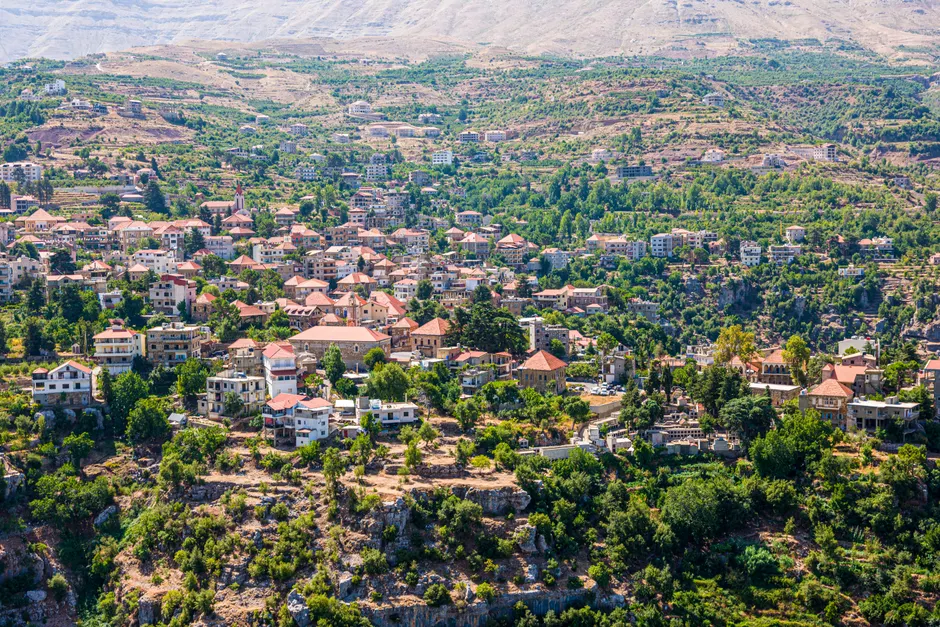
Fifteen Lebanese Towns Reject Netanyahu's Annexation Claim as 'Sowing Strife'

Fifteen towns in southern Lebanon with Christian populations issued a joint statement on July 7, 2026, refuting Prime Minister Benjamin Netanyahu's claim that they had asked to be annexed by Israel Al Jazeera.
The dispute traces to an interview Netanyahu gave on Fox News's "The Sunday Briefing," which aired July 5. Asked about Israel's posture in Lebanon, he said: "Christian villages in Lebanon, some of them have actually asked to be annexed to Israel, because we protect them against Hezbollah, Hezbollah fanatics who want to kill them, and we do the same things with Christians everywhere" France 24. Le Monde carried the same remarks in its coverage of the broadcast Le Monde.
Lebanese analysts were quick to reject the characterization. Karim Emile Bitar, a professor of international relations at Saint Joseph University of Beirut, called Netanyahu a "pathological liar" in response Al Jazeera. The article's Lebanese sources framed the remarks as an attempt to sow sectarian discord in a country whose politics have long been organized along confessional lines.
The claim lands against a backdrop of active Israeli military presence on Lebanese soil. As of July 2026, Israel occupied roughly six percent of Lebanese territory, according to the Al Jazeera report. That occupation followed an escalation that began March 2, 2026, when Hezbollah fired six rockets at Israeli targets, prompting Israel to intensify strikes across Lebanon and launch a ground invasion of the south.
The human toll of that campaign has been substantial and has fallen disproportionately on one community rather than the Christian minority Netanyahu invoked. More than 1.2 million people were displaced during the intensified attacks, the majority of them Shia Muslims — the demographic base most closely associated with Hezbollah. That detail complicates the narrative of an Israeli military acting principally as protector of Lebanese Christians.
The record also includes episodes that cut against a protector framing. A Lebanese priest was killed by Israeli tank fire in south Lebanon in early March 2026. The following month, an Israeli soldier smashed a statue of Jesus in south Lebanon, an incident that drew international condemnation. Also in early April, an official of a Christian political party was killed in an eastern suburb of Beirut. None of these incidents are addressed in Netanyahu's Fox News remarks, but Lebanese commentators have cited them as context that undercuts his claim of special Israeli solicitude toward Christian communities.
Netanyahu's Fox News comments also sit awkwardly next to his own government's diplomatic messaging. On June 10, 2026, the Israeli Prime Minister's Office published a statement addressed to the Lebanese people in his name: "Israel is not at war with you. We're at war with Hezbollah, that has taken your country" Israeli PMO. That statement drew a distinction between the Lebanese state and population on one hand and Hezbollah on the other — a distinction that a claim of villages requesting annexation would seem to blur, since annexation implies a rupture with Lebanese sovereignty itself rather than a campaign against a non-state armed actor.
There is also a formal diplomatic backdrop that the annexation claim sits uneasily against. A US-brokered framework agreement between Lebanon and Israel was signed with the stated aim of ending Israel's war on Lebanon, and under its terms Israel affirmed it has no territorial ambitions in the country. An unsolicited claim of villages seeking annexation, made on American cable television rather than through any diplomatic channel, is difficult to reconcile with that commitment, and Lebanese officials and analysts have treated the remarks accordingly — as rhetoric rather than policy.
The broader context here is one of a fragile, partially implemented ceasefire framework layered atop continued Israeli territorial presence, continued Hezbollah capability, and a sectarian political system in Lebanon that is acutely sensitive to any suggestion that one confessional community might align itself with a foreign occupying power against the others. Netanyahu's framing — casting Israel as guardian of Christians against "Hezbollah fanatics" — echoes a rhetorical strategy Israeli officials have used before regarding minority communities in the region, one that Lebanese analysts read less as description than as an attempt to fracture a national consensus that has, notwithstanding real communal grievances, generally resisted framing the conflict in sectarian terms.
Whether the joint denunciation by the fifteen towns settles the matter politically is a separate question from whether it settles it factually. The towns' statement addresses the specific claim of a request for annexation; it does not resolve the underlying dispute over Israel's continued military presence in the six percent of Lebanese territory it still occupies, nor the status of the broader ceasefire framework going forward.