K2 Airways Boeing 737 Cargo Plane Missing Off Karachi With Five Aboard
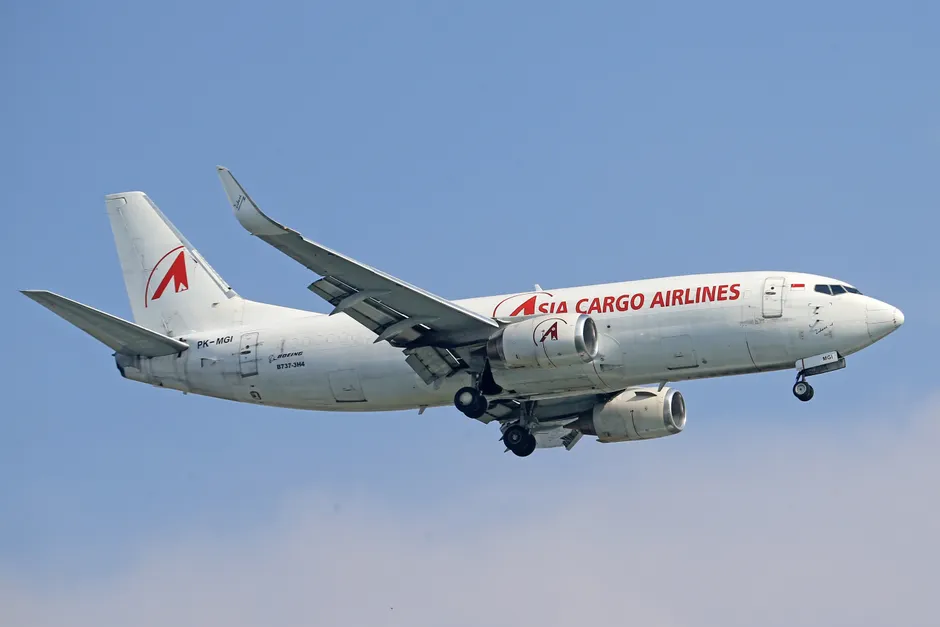
A K2 Airways Boeing 737 cargo aircraft carrying five crew members disappeared from radar over the Arabian Sea off Karachi late Tuesday, July 7, after reporting a technical issue and descending rapidly before losing contact with air traffic control Reuters. Pakistan's Navy has joined civilian authorities in an expanded search-and-rescue operation at sea, according to AP.
The aircraft, operated by K2 Airways, went off the grid near the Karachi coastline after flagging a technical malfunction to controllers Independent. The Pakistan Civil Aviation Authority (PCAA) issued a statement on its website addressing the suspected crash, though full confirmation of the aircraft's fate has not been established as of this writing Simple Flying. K2 Airways separately confirmed that five people were aboard Independent, a figure consistent with earlier reporting from local outlets KTVB and Newsday.
Sequence of events, as reconstructed from air traffic control communications cited across reporting: the crew radioed a technical problem, the aircraft then lost altitude rapidly, and contact ceased shortly after Newsday. No cause has been officially attributed to the descent or the loss of signal. The PCAA has not, per available reporting, specified whether the technical issue involved engine failure, hydraulic loss, electrical malfunction, or another system.
Search efforts are concentrated in the Arabian Sea approaches to Karachi, Pakistan's principal port city and the hub of its maritime commerce KTVB. The Pakistan Navy's involvement, confirmed by AP, points to a maritime recovery operation typical of overwater incidents where debris fields and possible survivors must be located across open water rather than a fixed crash site. AP's coverage, headlined "Cargo plane with 5 aboard goes missing off Pakistan's coast," frames the operation as ongoing and multi-agency AP.
K2 Airways is not among Pakistan's flag carriers with the international profile of PIA; it operates within the freight segment, a sector that has drawn scrutiny in South Asia over aging fleets and maintenance regimes. The 737's age, maintenance history, and cargo manifest have not been disclosed in reporting so far, details that will matter considerably once investigators — presumably including Pakistan's Aircraft Accident and Investigation Board, though not yet named in current coverage — take up the inquiry.
The broader context here involves Karachi's position as an aviation and shipping chokepoint along the Arabian Sea, a stretch of water that has seen its share of aviation incidents given the density of cargo and passenger traffic serving Gulf and South Asian routes. A rapid, unexplained descent followed by total loss of contact is the pattern investigators associate with catastrophic in-flight failure, though it is equally consistent with scenarios where crews manage a controlled ditching that nonetheless severs communications. Until wreckage or a debris field is confirmed, both possibilities remain open, and any presumption of a "crash" — as PCAA's own statement frames it — should be read as provisional rather than conclusive Simple Flying.
What happens next will hinge on recovery of the flight data and cockpit voice recorders, assuming the aircraft is located in navigable depths. The Arabian Sea's continental shelf off Karachi is relatively shallow compared with deep-ocean search zones that have complicated prior missing-aircraft investigations elsewhere, which may work in searchers' favor if the wreck is found within days rather than weeks. Pakistani officials have not given a timeline for the search, and neither PCAA nor K2 Airways has released the names or nationalities of the five crew.
For an industry still absorbing lessons from prior 737-family incidents worldwide, this case will draw attention less for the airframe variant — details on which have not been specified beyond "Boeing 737" — and more for what the technical-fault report reveals about maintenance oversight in Pakistan's cargo aviation segment, an area that operates with less regulatory visibility than scheduled passenger service. Any findings from PCAA's eventual investigation will likely shape scrutiny of smaller freight operators registered in the country.