Wreckage of K2 Airways Cargo Jet Found in Arabian Sea; Five Crew Still Missing

Submerged wreckage from a K2 Airways cargo Boeing 737 has been located in the Arabian Sea, roughly 53 nautical miles (98 km) south of the port of Ormara, more than a day after the aircraft vanished from radar on approach to Karachi Al Jazeera. Pakistan Navy personnel have handled and shifted debris from the water, but the main body of the aircraft has not yet been recovered NBC News; Los Angeles Times. Five crew members remain unaccounted for.
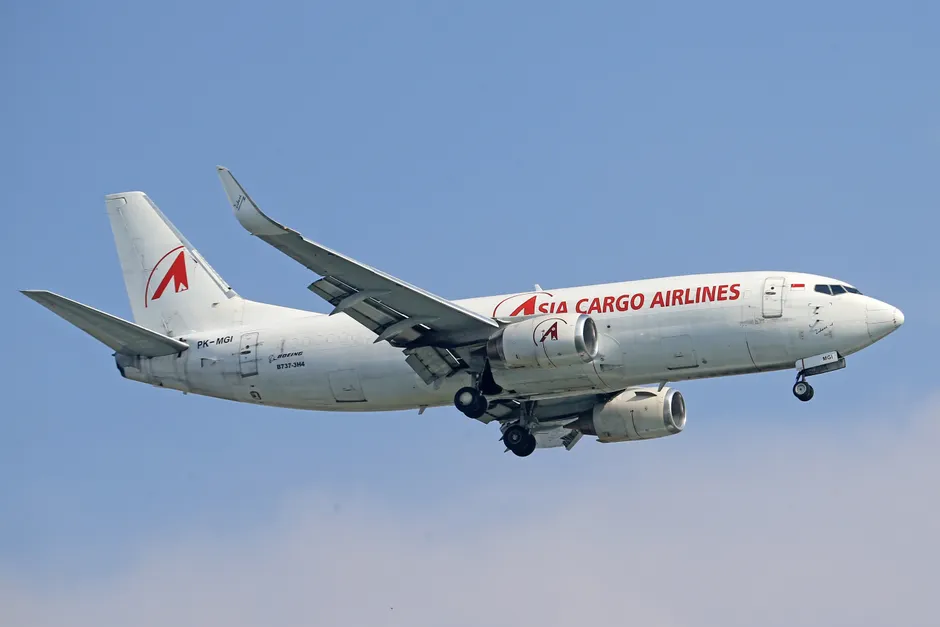
The aircraft, a 27-year-old freighter, went missing late Tuesday, July 7, while operating a cargo run toward Karachi The Guardian. Pakistan's Civil Aviation Authority said the plane was approximately 155 nautical miles west of Karachi when air traffic control lost contact The New York Times. According to Al Jazeera's reconstruction of the flight's final minutes, the crew reported a navigational system fault shortly after 9:18pm Pakistan Standard Time (16:18 GMT), and the aircraft then began an erratic, rapid descent that severed radio contact.
Flightradar24 tracking data cited by Al Jazeera shows the jet climbing and dropping thousands of feet within seconds before entering a final, uncontrolled dive from 36,550 feet — roughly 11,140 metres — into the sea. That altitude profile, cruise-level to impact in a compressed window, points toward a catastrophic in-flight event rather than a controlled emergency descent, though the precise sequence — whether the navigational fault triggered a spatial disorientation event, an autopilot disconnect, or a structural failure — has not been established by investigators.
K2 Airways identified the crew as pilot Muhammad Rizwan Idris, co-pilot Faisal Jatoi, flight engineers Muhammad Hamid and Muhammad Arif Siddiqui, and aircraft loader Muhammad Taufiq Khan. The airline said it is cooperating with Pakistan's Civil Aviation Authority as the inquiry proceeds Reuters. Retired Rear Admiral Faisal Shah told the Associated Press that locating the primary wreckage may require specialised deep-sea search equipment, an acknowledgment that the debris field found so far likely represents surface or shallow-water fragments rather than the fuselage and flight recorders.
The Associated Press reported that the Navy and civilian authorities have expanded the search zone, but rough seas have hampered rescue operations WKYC/AP. Prime Minister Shehbaz Sharif conveyed condolences to the crew's families and ordered all available government resources committed to the search effort, according to Al Jazeera's reporting.
Notably absent from the current record is any statement from Pakistan's Civil Aviation Authority beyond confirming the aircraft's last known position — the regulator has not yet commented on the navigational fault reported by the crew, the age of the airframe, or K2 Airways' maintenance history. That gap matters for what comes next: recovering the flight data and cockpit voice recorders from depths that may exceed the reach of standard salvage equipment is the immediate technical hurdle, and until that happens, any theory about mechanical failure, navigation-system malfunction, or crew response remains provisional.
The crash is Pakistan's first fatal air disaster since May 2020, when a Pakistan International Airlines flight went down in a residential area of Karachi, killing 97 people. That accident prompted scrutiny of pilot licensing and maintenance oversight across Pakistani carriers, and this incident is likely to revive questions about the regulatory environment for the country's smaller cargo operators, which generally attract less international attention than passenger airlines but often fly older aircraft on less-monitored routes.
The 27-year age of the airframe will draw scrutiny in any formal inquiry, though age alone is not disqualifying for cargo operations, which routinely run legacy 737 classics well past three decades under maintenance regimes that vary widely by jurisdiction and operator. Whether K2 Airways' fleet met the inspection intervals and airworthiness directives applicable to an aircraft of that vintage is a question investigators will need to answer before any conclusions about cause can be drawn. For now, the search continues under difficult sea conditions, and the fate of the five crew members remains the immediate and human center of the story.