U.S. Army Apache Crashes Near Strait of Hormuz; Crew Rescued, Cause Unknown
An Incident in a Consequential Waterway
A U.S. Army Apache helicopter went down near the Strait of Hormuz on Monday, June 8, 2026, in an incident that immediately drew attention given the chokepoint's outsized strategic weight. Both crew members aboard were safely recovered, according to Stars and Stripes and NBC News, but the cause of the crash remained undetermined as of June 9, 2026, with a formal investigation opened, i24 News reported.
The Strait of Hormuz — the roughly 33-nautical-mile-wide passage between the Omani and Iranian coastlines — carries an estimated 20 percent of global petroleum trade. Any military incident in its vicinity, regardless of cause, lands in a geopolitical environment already operating at elevated sensitivity.
What We Know
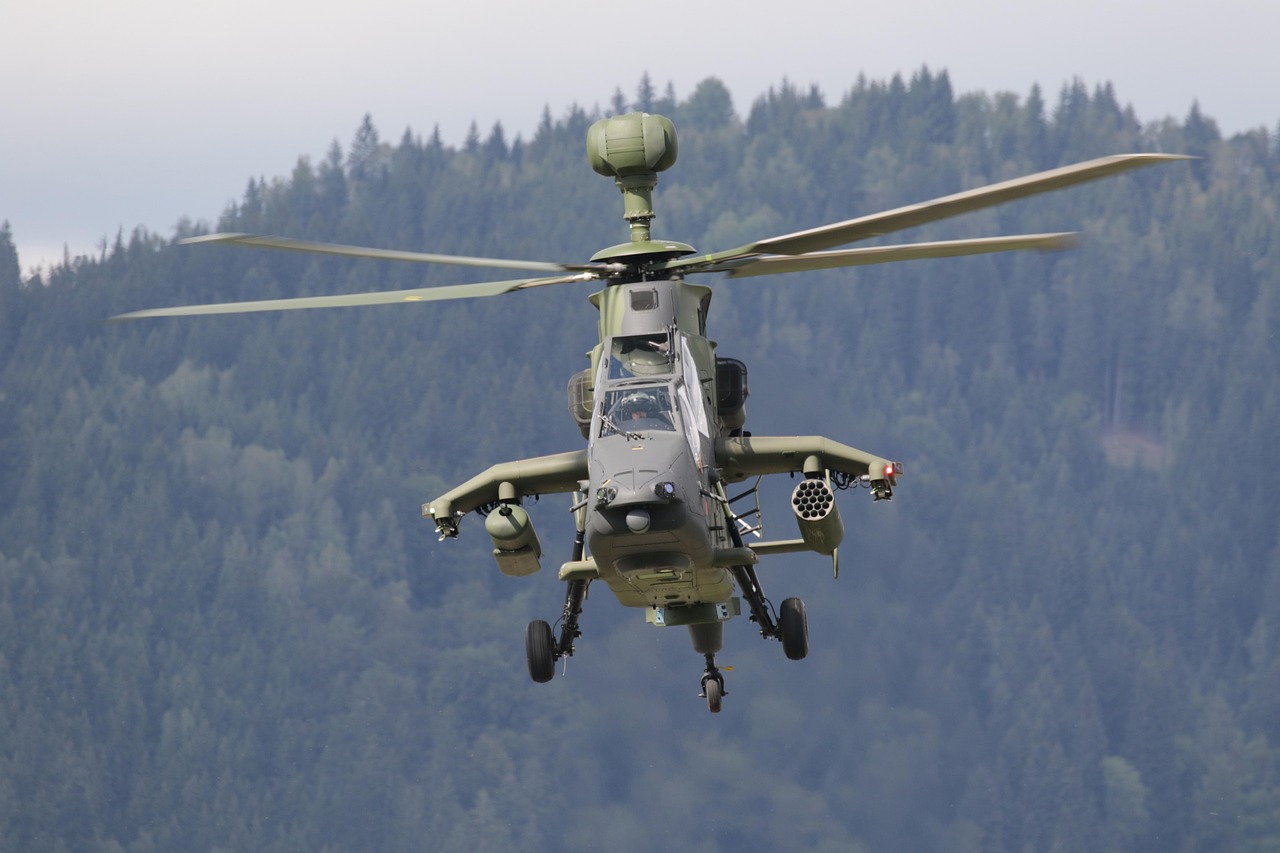
The AH-64 Apache that went down is a twin-engine attack helicopter, standard to U.S. Army rotary-wing aviation. It operates in a range of roles from close air support to armed reconnaissance — roles that bring it routinely into the kinds of complex, maritime-adjacent operational environments characteristic of Central Command's area of responsibility. Details regarding the specific unit, the mission profile, or the precise location relative to territorial waters had not been publicly confirmed as of reporting.
Both pilots were rescued, AP reported. The speed of the recovery operation suggests that search-and-rescue assets were either in proximity or on a posture consistent with contingency planning for exactly this kind of event — a reasonable inference given the density of U.S. naval and air assets maintained in the Persian Gulf region.
What triggered the crash is the central open question. The U.S. military opened an investigation, and no preliminary finding had been released. The range of possible causes — mechanical failure, human factors, environmental conditions, or hostile action — remains formally open. Until the investigation reaches at least a preliminary determination, any specific characterization of cause would be speculative.
The Context That Makes This Complicated
The Strait of Hormuz has been a pressure point in U.S.-Iran relations for decades, and the posture of forces on both sides of that equation has rarely been more layered than it is in mid-2026. The broader regional picture — which the AP source explicitly ties to this incident's news environment — includes ongoing ceasefire dynamics involving Iran, Israel, and Hezbollah. That context does not establish causation, but it does establish why the crash immediately attracted scrutiny that a peacetime mechanical failure in a quieter theater would not.
We have seen this pattern before. In July 1988, USS Vincennes shot down Iran Air Flight 655 in the same strait, killing 290 civilians — a tragedy that unfolded precisely because the operational tempo was high, identification timelines were compressed, and everyone in the theater was primed to see threat. The lesson drawn by analysts afterward was not primarily about hardware or rules of engagement, but about how proximity to a geopolitical flashpoint distorts the interpretation of ambiguous events before any facts are confirmed. The instinct to assign meaning to an incident before an investigation concludes is a structural feature of high-tension environments, and it is worth holding deliberately in check here.
The Apache crash is not, on current evidence, a combat loss. But in a theater where Iranian maritime forces conduct regular exercises, where the threat of mine warfare and drone harassment of commercial and naval shipping has been a documented operational concern, and where U.S. forces maintain persistent rotary-wing and fixed-wing coverage, the gap between "cause unknown" and "cause attributed" will be watched closely by multiple governments.
What Comes Next
The investigation will be the primary driver of how this incident is characterized going forward. U.S. Army aviation accident investigations typically proceed through an Army Safety Review Board process for safety findings, and a separate AR 15-6 investigation if misconduct or hostile action is a potential factor. The distinction matters: one produces safety data that is protected from legal proceedings; the other produces command accountability findings. The fact that both were opened simultaneously, or which track was initiated, has not been confirmed publicly.
Diplomatically, the posture of key actors will be worth watching in the days ahead. If the investigation's early direction points toward mechanical failure or pilot factors, the geopolitical temperature likely stays where it is. If preliminary findings or intelligence assessments point toward any external involvement, the escalatory dynamics in an already pressurized theater would shift materially.
For defense analysts tracking CENTCOM operational readiness, the incident also raises a narrower technical question: Apache operations over open water, particularly in a maritime environment with humidity, salt corrosion exposure, and the particular demands of over-water navigation, present maintenance and operational profiles that differ from the platform's primary design envelope. Whether those factors are relevant here is unknown, but they are standard elements of any thorough investigation.
The Crew
The rescue of both crew members is the clearest and most consequential confirmed fact in this story as it stands. Whatever the investigation ultimately determines about the aircraft, the outcome for the two individuals aboard — alive and recovered — is the immediate human bottom line. In a region where incidents can quickly become symbols, that fact is worth keeping in the foreground.