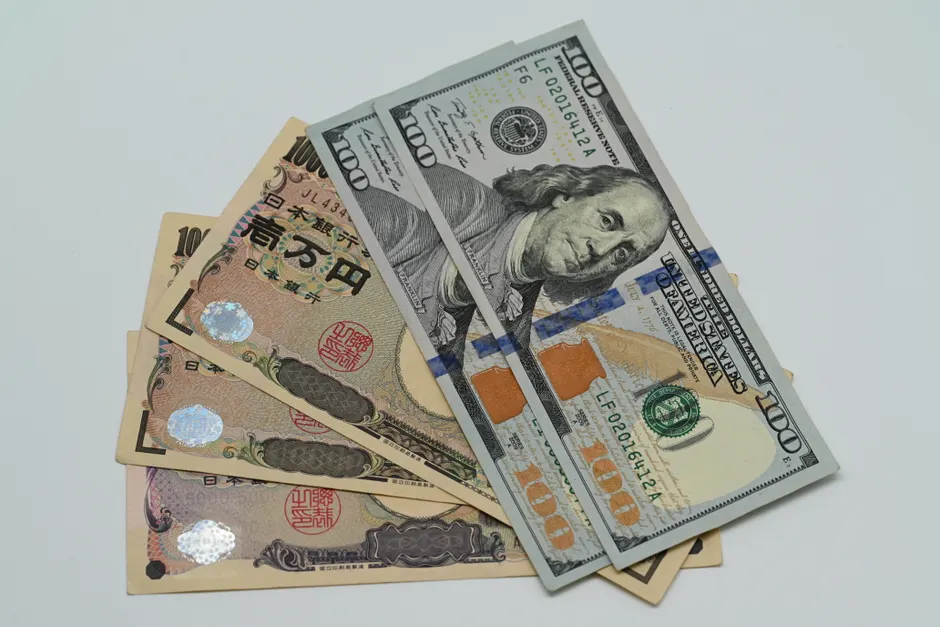
Dollar Stuck Near 162 Yen as Japan Keeps Intervention Threat Alive

The dollar held near 162 yen on July 14, 2026, little changed from levels recorded two weeks earlier, as Japanese authorities maintained their verbal intervention threat while stopping short of stepping into the spot market. (MarketWatch via Morning Star; WSJ)
The yen struck a 40-year low of 162.84 per dollar on June 30, 2026, the weakest reading since the Plaza Accord era. (Star-Advertiser) By July 3, the cross had recovered modestly to 161.2 before drifting back toward the 162 handle by mid-month. On July 2, the dollar was expected to trade in a 161.50 to 162.50 yen band, according to WSJ, and the realized path over the following twelve days stayed largely within that corridor.
Japan's government stated in early July that it was in close touch with U.S. counterparts on the yen's weakness and would keep the intervention option open, Star-Advertiser reported. The coordinated messaging, Treasury consultation, and visible threat of unilateral action are familiar elements of Tokyo's playbook: MoF has deployed verbal warnings first, escalating to actual yen purchases only after jawboning fails to alter the trend. The ministry's published monthly intervention data, covering the May 28 to June 26 reporting period, is available on the MoF's official website (mof.go.jp), alongside quarterly operational records running from April 1991 through March 2026 (MoF English).
A fresh intervention warning was issued in mid-July, WSJ reported, yet the pair barely budged. The market's nonchalance matters. If traders conclude that Tokyo will not, or cannot, sustain a defense at these levels, the risk grows of a disorderly move higher. Conversely, if MoF does act and the U.S. side is privately supportive, the position unwind could be sharp, because positioning at 162 is unlikely to be light. Neither outcome is priced with high confidence, which is precisely why the pair is stuck rather than trending.
The MoF's institutional habits provide some context. Verbal warnings in the 150s preceded the September 2022 intervention; the ministry bought yen at roughly 146 in October 2022 and again near 160 in April and May 2024. Each operation delivered only a transient reversal, and in each case the pair subsequently traded through the intervention zone. Market participants have internalized this pattern. Whether the current episode breaks the mold will depend on Bank of Japan monetary policy alignment, U.S. Treasury tolerance, and positioning dynamics, none of which are cleanly resolvable from the public record.
For portfolios tied to JGB carry trades, Nikkei exposure hedged into dollars, or outright short-yen positions, the calculus is more binary. The intervention zone, for practical purposes, is wherever MoF says it is, and the only credible signal of imminent action has historically been the silence between escalating warnings and execution. That silence is currently running.