Thousands Rally Across Ukraine After Zelensky Dismisses Defence Minister Fedorov
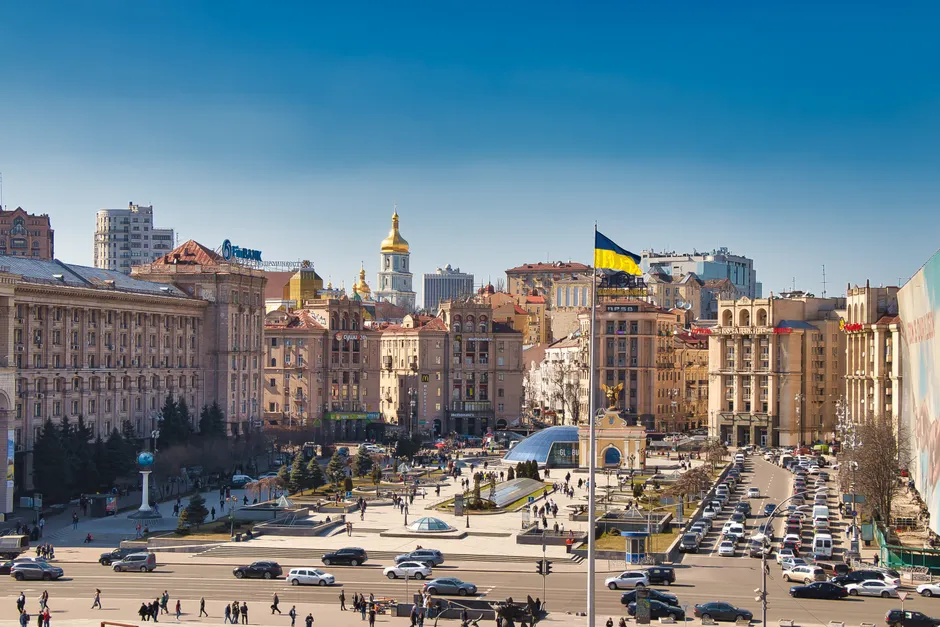
Thousands of Ukrainians rallied in Kyiv and other cities on July 16, 2026, a day after President Volodymyr Zelensky dismissed Defence Minister Mykhailo Fedorov, the 35-year-old former digital transformation minister who had become one of the country's most prominent wartime officials. Protests spread across multiple cities, with gatherings reported in the capital near the President's Office and in Odesa, among others (Kyiv Independent; Pravda; Euromaidan Press).
In central Kyiv, protesters gathered at Ivan Franko Square. The BBC reported the scene there, quoting a Ukrainian soldier identified as Oleksandr who told the broadcaster the dismissal was "the worst mistake Zelensky has made during his entire presidency." Oleksandr told the BBC he had joined the Ukrainian army earlier in 2026 specifically because he trusted Fedorov's team and vision. He also said he does not know anyone, within the army or in society, who supports the decision to replace him (BBC News).
Maria Lavrynets, 31, spoke to the BBC at the Kyiv protest. She said many of her friends in the military have died and that she does not want the war to continue. Lavrynets told the BBC that Fedorov's results are visible, that soldiers' motivation is visible, and that "we should stand for them" (BBC News).
Fedorov's path to the defence ministry was unconventional. He first gained prominence as Ukraine's minister of digital transformation, a portfolio that placed him at the center of the country's technological modernization efforts. From the early days of Russia's full-scale invasion in 2022, he organized a volunteer "IT Army of Ukraine" to conduct cyber operations against Russian targets. He also led the Army of Drones fundraising campaign, which channeled civilian contributions into military drone procurement (BBC News).
His tenure as defence minister was marked by structural reforms. Fedorov restructured the ministry, which many in Ukraine had regarded as burdened by bureaucracy and Soviet-era institutional attitudes. He also introduced gamification elements to the war effort, designing a system that awarded Ukrainian military units credits for destroying Russian assets, a mechanism intended to incentivize frontline engagement and provide measurable performance metrics (BBC News).
The Kyiv Independent described Fedorov's dismissal as part of an ongoing government reshuffle and as deepening turmoil within Ukraine's military leadership. Calls for protest began on July 15, the same day the dismissal was first reported by news outlets (Kyiv Independent; Meduza). France24 characterized Fedorov as Zelensky's most popular minister at the time of his removal, a detail that frames the public response (France24).
The scale of the protests was significant. Thousands rallied in Kyiv alone, with parallel demonstrations reported in multiple cities, all demanding Fedorov's reappointment. The geographic spread, from the capital to Odesa, suggests the reaction extended beyond a localized constituency. The presence of active-duty soldiers among the protesters, as represented by Oleksandr's account, adds a layer of pressure that is distinct from civilian dissent: military morale is not an abstract political metric in a country in its fifth year of full-scale war, and the testimonies gathered by the BBC point to a direct line drawn, by at least some service members, between Fedorov's leadership and their own willingness to serve.
The broader context here is the intersection of wartime institutional reform and political authority. Fedorov's restructuring of the defence ministry and his unconventional methods, from cyber volunteer networks to gamified combat incentives, positioned him as a figure associated with modernization in a system long criticized for institutional inertia. His removal, framed by the Kyiv Independent as part of a reshuffle, nonetheless triggered a public backlash severe enough to produce mass demonstrations within 24 hours. Whether that backlash compels a reversal or hardens the government's posture toward further personnel changes is the immediate question. The testimonies from Kyiv indicate that, for some Ukrainians, this dismissal is not being received as a routine Cabinet adjustment but as a rupture with consequences for the war effort itself.


