Zelenskyy's Dismissal of Defence Minister Fedorov Triggers Rare Wartime Protests and Exposes Military Command Fractures

President Volodymyr Zelenskyy removed Mykhailo Fedorov from the post of defence minister on July 15, 2026, seven months after his January appointment, triggering rallies in Kyiv and other Ukrainian cities and exposing a deep rift between Ukraine's civilian defence leadership and its military high command. Ukraine's parliament accepted the dismissal, and Fedorov publicly turned down Zelenskyy's offer to remain as a government adviser The Guardian.
The move, described by Reuters as part of a "surprise government reshuffle," came after Fedorov's reform efforts reportedly angered Commander-in-Chief Oleksandr Syrskii, the 60-year-old four-star general who leads Ukraine's armed forces Reuters. ABC News (Australia) reported the dispute between Fedorov and Kyiv's top general was "spilling into public" ABC News.
Fedorov had provided Zelenskyy with a list of urgent problems within Ukraine's military: a chaotic management system, constant rotations of commanding officers, non-transparent distribution of arms, bureaucracy, resistance from Syrskii's General Staff, loyalty-based rather than data-driven decision-making, and the isolation of effective commanders. Al Jazeera separately reported that Fedorov publicly stated Syrskii had "split the country" Al Jazeera.
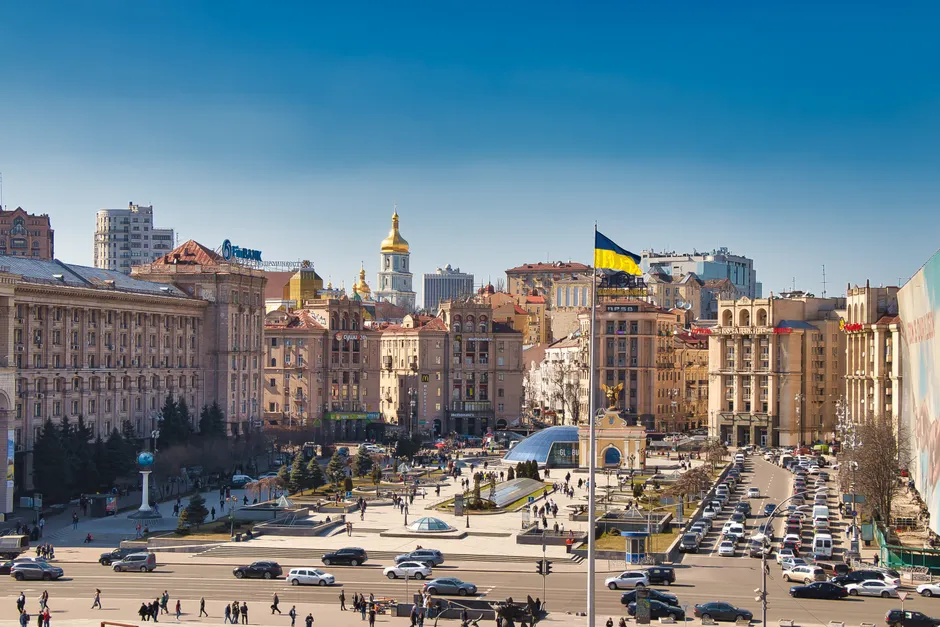
The dismissal drew immediate public backlash. The Financial Times reported "angry demonstrations" across Ukraine on July 16, 2026. Reuters described "rare protests" in a country that has largely maintained political cohesion during wartime. The rallies, described as relatively large by wartime Ukraine's standards, spread from Kyiv to other key cities. At one Kyiv rally, an attendee identified as Taisiya told Al Jazeera she would like to see Fedorov become Ukraine's president. Kyiv-based analyst Ihar Tyshkevich told Al Jazeera that most Ukrainians thanked Fedorov and that Syrskii was "utterly unpopular" Al Jazeera.
Fedorov, 35 at the time of his appointment, had no military background or battlefield experience. He came to the defence ministry from the digital transformation portfolio, where he had built a reputation around technology-driven governance. As defence minister, he boosted the number of drones, particularly mid- and long-range bombers, which paralysed Russia's supply routes and destroyed arms depots, fuel depots, oil refineries, and air defence systems. He promoted AI-driven drones capable of identifying targets without communication with human pilots, eliminating a vulnerability to Russian electronic warfare jamming. He increased the deployment of ground robots for resupply and casualty evacuation. He also cracked down on corruption by making procurement of new weaponry more transparent.
His tenure was not without institutional engagement. On June 18, 2026, Ukraine and Germany agreed to develop anti-ballistic capabilities and jointly produce unmanned ground vehicles, with Fedorov among the participants. The presidential website described Fedorov's original appointment under the title "Internal Changes to Make Ukraine More Resilient" and recorded Zelenskyy approving a course of action to increase the financial stability of Ukraine's defense following meetings with Fedorov, Prime Minister Yuliia Svyrydenko, and Finance Minister Serhii Marchenko.
The broader context here is a structural tension at the heart of Ukraine's war effort. Fedorov's approach to the defence ministry, drawn from his digital transformation background, emphasised data-driven decision-making, transparency in procurement, and the rapid scaling of autonomous and robotic systems. That approach collided with a military command culture under Syrskii that Fedorov characterised as loyalty-based, resistant to outside reform, and prone to rotating officers in ways that disrupted operational continuity. The collision between a technocratic civilian reformer and an entrenched wartime general staff is not unique to Ukraine, but it carries particular weight in a country fighting an existential war where command coherence and procurement efficiency directly affect battlefield outcomes.
Zelenskyy's decision to side with the General Staff over the reformist minister, at least in the immediate term, raises questions about the trajectory of Ukraine's defence innovation pipeline. Fedorov's drone expansion programs, AI-driven targeting initiatives, and anti-corruption procurement reforms had demonstrable operational effects. Whether his successor continues those programs or recalibrates toward the General Staff's preferences will shape both the conduct of the war and the credibility of Western partners who had engaged with Fedorov's reform agenda.
The public dimension adds another layer. Wartime Ukraine has seen limited protest activity, and the scale of demonstrations following Fedorov's removal, combined with visible public hostility toward Syrskii, introduces a political variable that Zelenskyy must now manage alongside the military and operational pressures of the ongoing conflict. Fedorov's refusal of an advisory role and his retention of public support suggest his political trajectory may not end with this dismissal.