Ukraine's Defense Innovation Upheaval: Fedorov's Dismissal and the Generational Fault Line

President Volodymyr Zelensky dismissed Mykhailo Fedorov as Ukraine's defense minister on July 15, 2026, following a meeting with military leadership, removing the most visible champion of Ukraine's tech-driven defense innovation after just six months in the post. The dismissal, confirmed by a senior official and reported by the Kyiv Independent, was formally part of a broader government reshuffle. But the political fault line it exposed runs deeper than routine personnel rotation: Fedorov had publicly accused Commander-in-Chief Oleksandr Syrskyi of obstructing military reform, a rift that BBC reporting identified as the proximate cause of his removal.
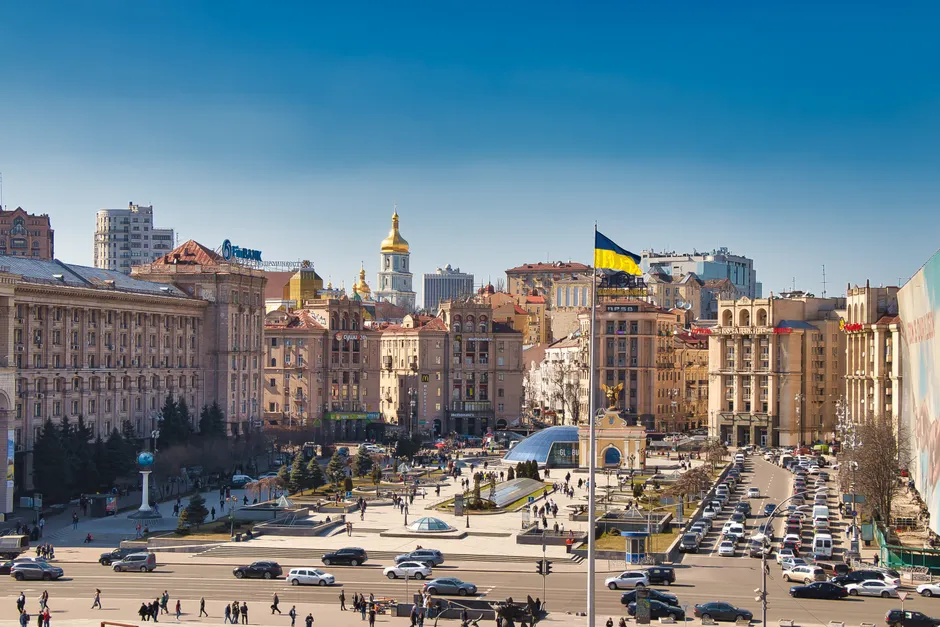
Crowds gathered in Kyiv to denounce the dismissal, according to Deutsche Welle, a public reaction that underscores the degree to which Fedorov had become a symbolic figure for Ukrainians who see technological innovation as central to national survival.
Fedorov's tenure as defense minister coincided with a structural shift in Ukraine's defense sector that the New York Times, in a July 17, 2026, report by Constant Méheut, describes as the rise of "20-somethings" running critical nodes of the war machine. This new generation, drawn from tech backgrounds rather than traditional military career paths, prizes speed and innovation, displacing what the article characterizes as the military's old guard. The cultural and institutional tension between these two camps, a competition over not just tactics but authority, provides the backdrop against which Fedorov's confrontation with Syrskyi played out.
The innovation ecosystem Fedorov championed is not abstract. In November 2025, the New York Times reported on Neros, a military drone company founded in 2023 by former teenage drone racers that raised $121 million. That kind of capital flow into defense startups, led by founders who would have been in secondary school at the start of the full-scale war, illustrates the demographic and operational transformation underway. Ukraine's innovations in unmanned and A.I.-driven systems have been noted in analytical reporting from Harvard Kennedy School's Belfer Center (Russia Matters) as materially contributing to the country's defense posture. The same May 2026 report described Ukraine as waging "lawfare" alongside its military operations, suggesting the innovation extends to legal and institutional domains.
NATO's own assessment gives the stakes institutional weight. NATO Allied Command Transformation stated in May 2026 that the war in Ukraine has become a "laboratory of the future." In the same communication, the command offered a blunter warning: "Russia is learning faster than NATO's procurement bureaucracy." That formulation captures the core tension, not merely between Ukrainian reformers and traditionalists, but between the tempo at which adaptive, tech-enabled forces iterate and the pace at which established institutional processes can respond.
The broader context here is that Ukraine's defense establishment is simultaneously fighting an active war and undergoing an internal contest over its future architecture. The Strategic Defense Bulletin of Ukraine, approved by Zelenskyy, sets out the goal and vision of a "defense force of the 2030 model," an explicit acknowledgment that current structures are transitional. On July 7, 2026, Ukraine imposed sanctions on suppliers of equipment for Russian defense industry plants producing missile components, demonstrating that the innovation-and-reform agenda operates alongside active countermeasures against the adversary's supply chains.
Fedorov's removal does not by itself halt Ukraine's defense innovation trajectory, but it does remove its most senior political advocate at a moment when the institutional resistance he described, obstruction of reform by the military's top uniformed officer, remains unresolved. The accusation against Syrskyi is now a matter of public record, and the crowds in Kyiv suggest it carries political weight beyond the Defense Ministry's walls. Whether Zelenskyy's next appointment signals continuity with the tech-sector approach or a recalibration toward the military establishment will be an early indicator of which vision of Ukraine's defense architecture prevails.
What makes this consequential for external observers is the convergence of three dynamics that are rarely isolated in this configuration: a generational turnover in defense production, a live institutional conflict between civilian reform and military traditionalism, and an alliance-level acknowledgment that the adversary's adaptation cycle is outpacing Western procurement. Ukraine is not the only theater where these tensions exist, but it is the one where they are most compressed and most consequential, with outcomes that will shape defense planning well beyond the war's eventual conclusion.