US Wildfire Smoke Drifts Into Canada as Trump Ties Air Quality to Tariffs

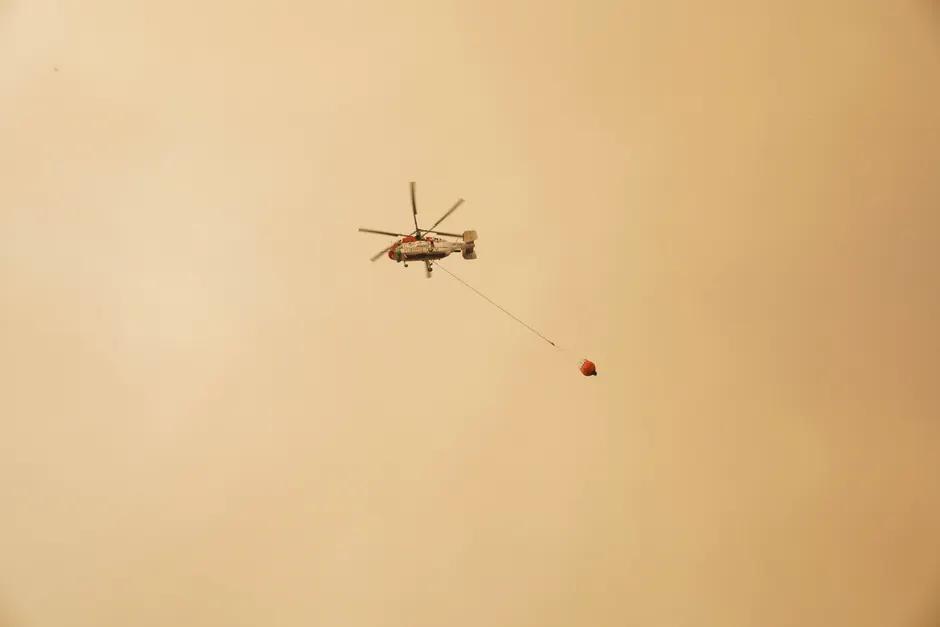
Smoke from wildfires burning across Washington and Oregon drifted into British Columbia over the weekend of July 18–19, 2026, triggering air quality warnings in at least two southeastern regions of the province and adding an unusual dimension to the already fraught trade relationship between the United States and Canada.
The British Columbia provincial wildfire service issued an air quality alert on Saturday, July 18, stating: "Much of this smoke is originating from fires south of the Canada-US border in Washington and Oregon." According to the Northwest Interagency Coordination Center, twenty-two large fires were burning across those two states at the time of the report. As of July 20, active air quality warnings remained in place for the Kootenay Lake and Cranbrook regions, both along BC's southeast border with the United States The Guardian.
The BC government's own air quality monitoring showed the situation evolving across several days. A warning published July 17 noted that smoke in the Okanagan Valley was expected to increase through the day and into the overnight period. By July 18, the service reported that smoke was predicted to gradually thin in the southeast but would remain trapped in valleys and persist near active fires. A broader warning issued July 19 indicated that regions of BC were being impacted or likely to be impacted by wildfire smoke over the following 24–48 hours. Environment and Climate Change Canada separately issued an air quality warning for Fort St. John, BC, on July 19, citing poor air quality and reduced visibility from smoke.
The cross-border smoke event coincided with a politically charged moment. On Friday, July 17, Donald Trump posted on social media that the United States had been "invaded" by dirty air and argued that the cost of this pollution should be added to the tariffs Canada is currently paying. The post inverted the actual direction of smoke transport — the pollution was moving northward from US fires into Canada — though Trump framed it as a Canadian-origin burden on the US.
The following day, July 19, Canadian Prime Minister Mark Carney and Trump sat alongside each other at the World Cup final, a setting that placed the two leaders in proximity even as the tariff dispute and the wildfire smoke issue remained unresolved.
Canada is simultaneously grappling with its own substantial wildfire activity. As of July 20, there were 843 active wildfires burning across the country, of which 181 were classified as "out of control" and spreading without responding to suppressive actions. Canada's Minister of Emergency Preparedness, Eleanor Olszewski, stated that Canada had invested C$12 billion (£6.36 billion) on fire prevention and forest sustainability over the preceding five years.
The broader context here is one of escalating cross-border environmental and economic friction. Wildfire smoke does not respect international boundaries, and the atmospheric transport of particulate matter from US fires into Canadian airspace creates a situation where domestic disaster response in one country directly affects public health in another. Trump's proposal to fold environmental costs into the existing tariff framework — whatever the factual merits of his claim about the direction of smoke flow — signals that cross-border pollution may become a recurring lever in trade negotiations rather than a purely environmental management issue.
For Canadian officials, the dual challenge is acute. Domestic wildfire response already strains provincial and federal resources, with 181 out-of-control fires demanding suppression assets. The additional burden of US-origin smoke degrading air quality in BC communities — from the Kootenays to the Okanagan Valley to Fort St. John in the province's northeast — widens the public health exposure surface without corresponding Canadian jurisdiction over the source fires. Olszewski's citation of C$12 billion in prevention spending over five years frames the investment case, but that spending addresses Canadian forest management, not the cross-border inflow from Washington and Oregon.
The valley-trapping dynamics noted in the BC wildfire service's July 18 warning are meteorologically significant. Smoke that settles into valley topography tends to persist, reducing air quality for extended periods and complicating evacuation and health advisory timing for communities in affected terrain. The July 19 warning's 24–48 hour horizon for potential impacts indicates that provincial authorities were treating the event as ongoing rather than resolving.
Whether the tariff dimension advances beyond a social media post remains an open question. The World Cup final optics placed Carney and Trump in a diplomatically visible setting the day after the BC warnings expanded, but no bilateral statement on either the smoke event or the tariff proposal has been reported. The confluence of active fire seasons on both sides of the border, ongoing tariff disputes, and the unpredictable politics of cross-border environmental attribution creates a policy environment in which atmospheric events can rapidly become trade events.