Six Beluga Whales Relocated from Marineland to US Aquariums
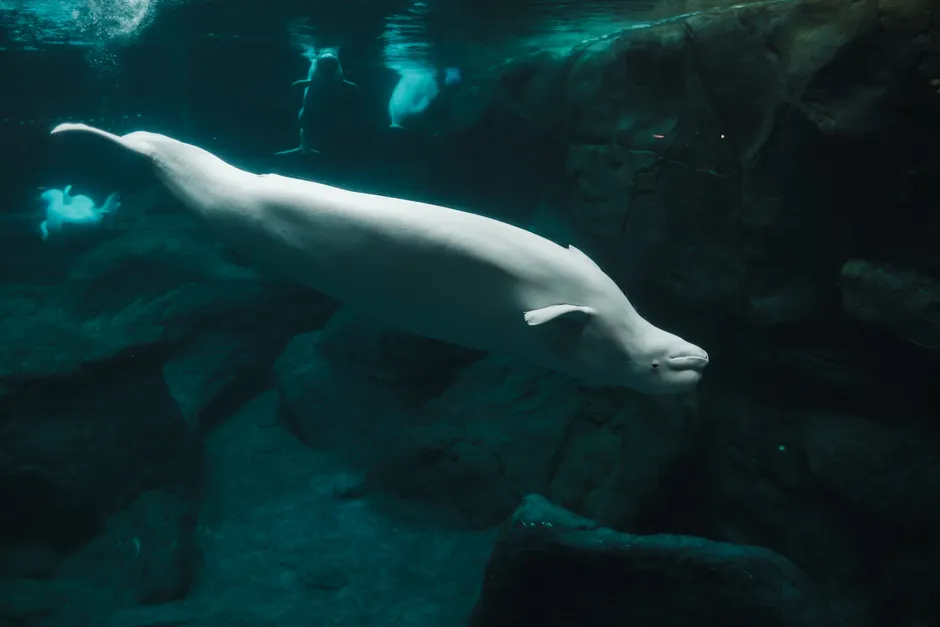
Six beluga whales left Marineland in Niagara Falls, Canada, and arrived at US aquariums during the week of July 22, 2026, the first concrete step in a multinational rehoming agreement reached between the park and the Canadian government the previous month The Guardian.
On Monday, July 20, 2026, the belugas were lifted from their tanks in slings, transported to Toronto Pearson International Airport, loaded in crates onto a cargo jet, and flown to their respective destinations. Four of the whales — Sierra, Acadia, Osiris, and Lillooet — arrived at the Shedd Aquarium in Chicago. The remaining two, Bertie Botts and Frankie, were flown to SeaWorld San Antonio in Texas The Guardian.
The broader rehoming plan took shape in June 2026, when Canada and Marineland reached a deal to transfer the belugas to a consortium of US aquariums spanning Georgia, Chicago, San Diego, and San Antonio, along with the Oceanogràfic València aquarium in Spain. The six whales moved this week represent only a portion of that planned cohort. Twenty-four other whales and two dolphins remain at Marineland as of the week of July 22, 2026 The Guardian.
The transfer also follows a 2025 Fisheries and Oceans Canada (DFO) briefing document indicating that DFO had denied Marineland's request for permits to export 30 beluga whales. The denial preceded the bilateral rehoming agreement and shaped the conditions under which the current transfers are proceeding DFO.
Receiving institutions have framed the transfers in terms of animal welfare. The Shedd Aquarium, which issued a statement on July 8, 2026, said it planned to "rescue" up to 10 of Marineland's whales and that the belugas would have access to "diverse nutritional seafood, healthy habitats, clean water, and individualized care." SeaWorld San Antonio issued its own statement: "Our commitment is clear. These whales need help and we are ready to help them." Marineland, for its part, told the Canadian Press on July 20 that "above all else, the safe, healthy, and comfortable transfer of these whales to their new homes remains our unwavering priority" The Guardian.
Not everyone involved views the receiving facilities as unambiguously positive destinations. Phil Demers, who trained whales at Marineland from 2000 to 2012 before becoming an outspoken critic of the park, offered a measured assessment: "There's obviously some relief, but it's hard for me to frankly endorse any of the facilities that these animals are going to." His remark underscores the tension at the center of this transfer: the whales are leaving a facility with a well-documented history of regulatory scrutiny and public criticism, but they are being relocated to institutions that themselves occupy contested terrain in the broader debate over cetacean captivity The Guardian.
The logistics themselves were nontrivial. Moving six marine mammals across an international border required coordination among Canadian wildlife authorities, US import regulators, two American aquariums, and cargo aviation providers. The sling-and-crate method used is standard for large cetacean transport, but each transfer carries physiological risk to the animals, particularly stress and thermoregulatory challenges during the ground and air phases.
Looking at what this means for the remaining animals at Marineland, the path forward is less clear. The June 2026 agreement contemplates rehoming to facilities in at least five locations across three countries, but only six belugas have moved so far. The 24 remaining whales and two dolphins will require separate transfer arrangements, additional regulatory approvals, and willing receiving institutions. The DFO's prior denial of export permits for 30 belugas further complicates the picture, since the current transfers are proceeding under a bilateral framework that effectively superseded, or at least modified, the conditions that led to that denial.
The welfare framing adopted by both Shedd and SeaWorld — emphasizing nutrition, habitat quality, and individualized care — is calibrated to address precisely the kinds of deficiencies that critics like Demers have alleged at Marineland. Whether the receiving institutions can deliver on those commitments, and whether the remaining animals will be relocated on a similar timeline, will likely depend on regulatory continuity, institutional capacity, and the sustained willingness of multiple governments and aquariums to complete what they have begun.