Wildfire on France's Atlantic Coast Forces 20,000 Evacuations as Heat-Driven Fire Season Intensifies

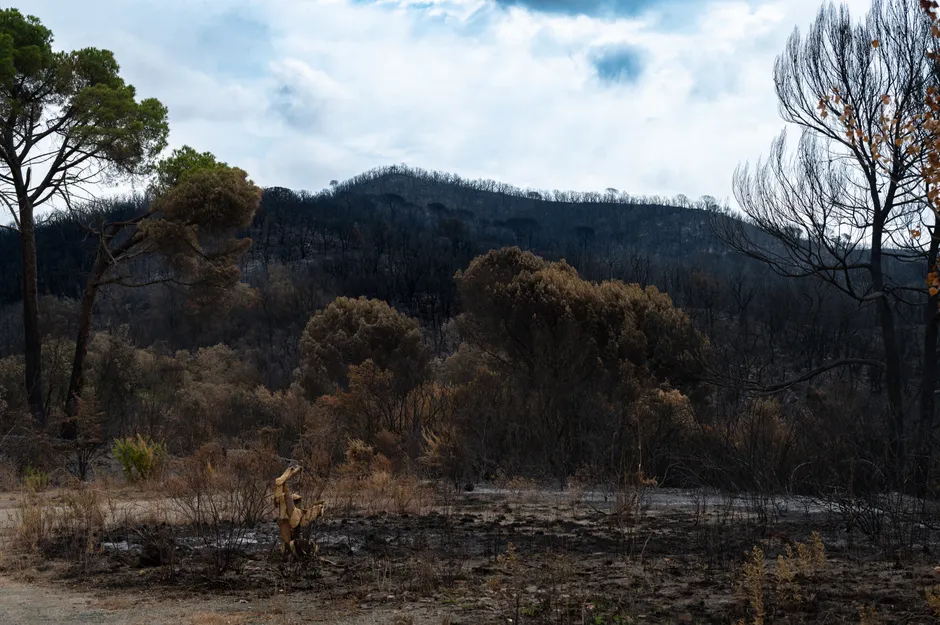
A wildfire that ignited on July 22, 2026, in dense pine forest near the village of Saumos, about 40 km west of Bordeaux and just north of the Bay of Arcachon, burned 2,400 hectares (5,928 acres) in less than 24 hours and forced the evacuation of more than 20,000 people, including thousands of tourists, from France's south-west Atlantic coast The Guardian.
As of the report dated July 23, no casualties or destroyed homes had been reported. Seven hundred firefighters and four waterbombing planes were deployed to combat the blaze, which the Gironde prefecture described as still dangerous. The prefecture stated the wildfire situation "remains unfavourable" The Guardian.
The fire progressed from Saumos toward the commune of Le Porge and then toward Lège Cap-Ferret, following the prevailing wind direction through the Landes forest corridor Gironde Prefecture. Flames reached 10 metres high, fanned by strong wind and tinder-dry conditions after France endured three almost back-to-back heatwaves since May 2026 The Guardian.
Evacuations occurred in phases. The initial overnight evacuation on July 22 moved roughly 600 people from the immediate Saumos area, including a camping site and approximately one hundred residents of the Porge North-East neighborhood, who were sheltered in a communal hall Gironde Prefecture; Reuters. Reuters independently confirmed that more than 10,000 people were evacuated overnight as the fire rapidly spread Reuters. The phased evacuations continued through July 23: 10,000 overnight, 2,000 in the morning, and approximately 8,800 at midday, bringing the total above 20,000 The Guardian. Nine local municipalities opened reception centres sheltering more than 2,500 evacuees.
Roads leading to the Cap Ferret peninsula were closed to all but essential traffic, and road traffic was diverted to popular beaches in the area during the July 22 phase of the response The Guardian; Reuters. Patrick Martineau, 69, was among those evacuated from the village of Le Porge The Guardian.
Police opened an investigation into the fire's causes. The mayor of Le Porge said the blaze appeared to have been started by a machine clearing undergrowth, a detail that, if confirmed, would place the ignition in the category of human activity rather than natural causes such as lightning The Guardian.
A separate wildfire near Pontevès, roughly 70 km north of Toulon in south-eastern France, burned 2,500 hectares and destroyed at least 10 houses before being stabilised on July 23. The simultaneous occurrence of major fires in both south-western and south-eastern France underscores the strain on national firefighting resources during a prolonged heat-driven fire season The Guardian.
The Saumos fire follows a precedent set in 2022, when a wildfire in the same area burned more than 30,000 hectares and forced about 50,000 evacuations. The Landes pine forest, which dominates the coastal strip from Arcachon southward, is a fire-adapted ecosystem that produces heavy fuel loads of resinous litter and undergrowth. Combined with recurring heatwaves, the substrate becomes highly combustible. The 2026 fire season's three heatwaves since May preconditioned that fuel matrix well before the July 22 ignition, and the strong winds that drove the flames to 10 metres in height exploited those conditions with notable efficiency.
The broader context here is one of recurring vulnerability. The same geographic corridor has now produced two mass-evacuation wildfire events within four years, both linked to dry, hot conditions in the Landes forest during summer months. The Saumos fire burned a smaller area than the 2022 event but moved with comparable speed, consuming 2,400 hectares in under 24 hours. The phased evacuation response, the deployment of waterbombing aircraft, and the activation of reception centres across nine municipalities reflect an operational template refined since the 2022 season, though the prefecture's assessment that conditions "remain unfavourable" indicates the fire was not yet contained as of July 23.
The investigation into the suspected mechanical ignition point raises a separate set of questions about land-management practices in high-risk forest zones. Undergrowth clearing is itself a fire-prevention measure designed to reduce fuel loads, but when conducted during periods of extreme heat and low humidity, the machinery itself can become the ignition source. That paradox is well documented in Mediterranean fire-management literature. Whether operational protocols for seasonal restrictions on mechanical clearing in the Landes forest will be revisited in the aftermath of Saumos is a question for French civil-protection authorities.