Italy's Coastguard Cracks Down on 'Umbrella Cheaters' in National Beach-Spot Sweep

Italian authorities seized umbrellas, loungers, and deck chairs during a dawn sweep of a beach in Torre del Greco, a coastal suburb of Naples, on July 27, 2026, as part of a national operation targeting the overnight reservation of prime shoreline spots (The Guardian).
Coastguard staff and local police together collected 40 items during the operation at Laghetto, a popular free-access beach, according to the Torre del Greco port authority. The sweep followed numerous complaints about equipment being left unattended for days on end. Officers discovered chairs, umbrellas, and small tables continuously occupying the sand — a practice the port authority said violates regulations governing the management of maritime public domain areas (The Guardian).
The Italian press has a name for those who stake out beach territory overnight: furbetti dell'ombrellone, or "umbrella cheaters." The phenomenon is a perennial summer flashpoint along Italy's coastline, where demand for free-access beach space collides with informal privatization by early arrivals who plant equipment and leave it in place for days. Those caught leaving belongings after sunset risk fines of up to €500 (approximately £425). Reclaiming confiscated items reportedly involves a bureaucratic ordeal that may serve as a deterrent in its own right (The Guardian).
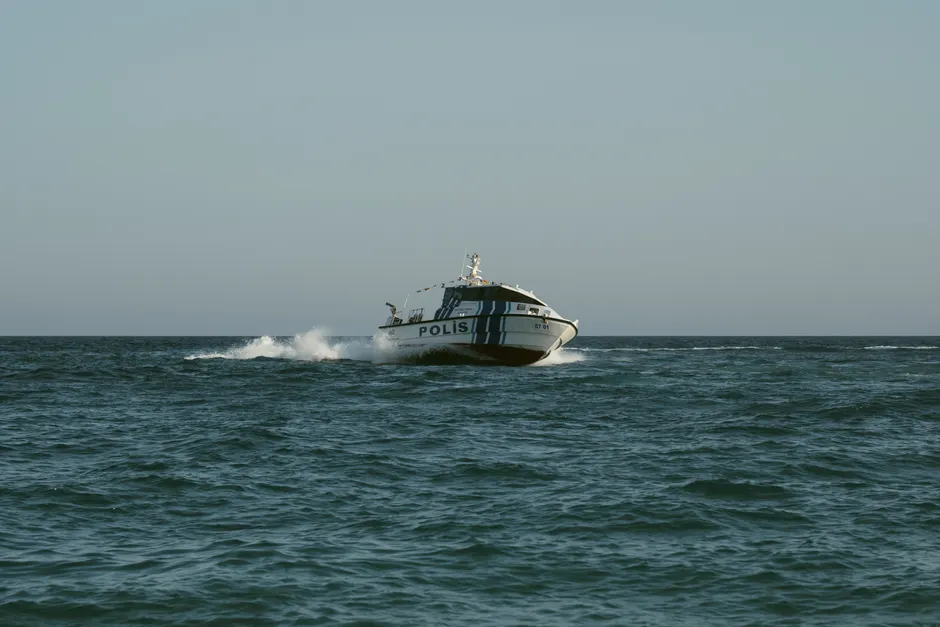
The Torre del Greco operation was conducted under the framework of "Mare e Laghi Sicuri 2026" (Safe Seas and Lakes 2026), a national beach and lake safety operation coordinated by the Italian Coastguard. According to the Coastguard's own announcement, the operation deploys 5 underwater teams (nuclei subacquei), 4 air bases (basi aeromobili), and 280 maritime offices (uffici marittimi), covering 505,000 square meters (Guardia Costiera). The 2025 edition of the same operation, which ran from June 16 to September 16, rescued 1,367 people (Guardia Costiera).
The Torre del Greco sweep is not an isolated incident. Similar blitzes against overnight beach-spot reservation took place earlier in July 2026 in Puglia, as well as in Liguria and Sardinia. The pattern suggests a coordinated enforcement posture across multiple regions under the same national operation, though each intervention has been carried out by local port authorities and municipal police responding to local complaints (The Guardian).
The broader context is a sustained civic and political battle over access to Italy's coastline. In Bacoli, near Naples, a campaign to reclaim free beaches was recently won, with the municipality aiming to make more than 80% of the local coastline free or equipped for public use. The Torre del Greco action fits within the same current: pressure to keep spiagge libere — free-access beaches — genuinely free from informal occupation, whether by individuals leaving equipment overnight or by concessionaires overstepping their allocated boundaries (The Guardian).
What distinguishes the current enforcement wave is the scale of the national framework behind it. "Mare e Laghi Sicuri 2026" is primarily a water-safety and rescue operation, as the 2025 figures illustrate. Its extension to cover beach-occupation enforcement reflects a decision to fold a chronic low-level governance problem into a well-resourced, multi-agency summer deployment. For the furbetti dell'ombrellone, the risk calculus has shifted: the fine is capped at €500, but confiscation plus the administrative process of retrieval adds a layer of cost and inconvenience that a simple penalty notice does not.
For municipalities like Bacoli and now Torre del Greco, the enforcement also signals something about who controls the maritime public domain. Italian law treats the coastline as a public asset; the concession system for stabilimenti balneari (beach clubs) allocates specific stretches, while the remainder is supposed to remain freely accessible. Informal privatization by individuals occupies a legal gray zone — not commercial encroachment, but a sustained physical occupation that effectively removes public space from public use. The port authority's framing of the Torre del Greco seizures as a violation of maritime public domain regulations places the practice squarely within that legal architecture, rather than treating it as a mere nuisance.
Whether the enforcement wave produces durable behavioral change or merely a seasonal deterrent is a question the coming weeks will answer. The 2025 operation ran through mid-September; if the 2026 edition follows the same calendar, authorities have roughly two more months of coordinated presence on the beaches.