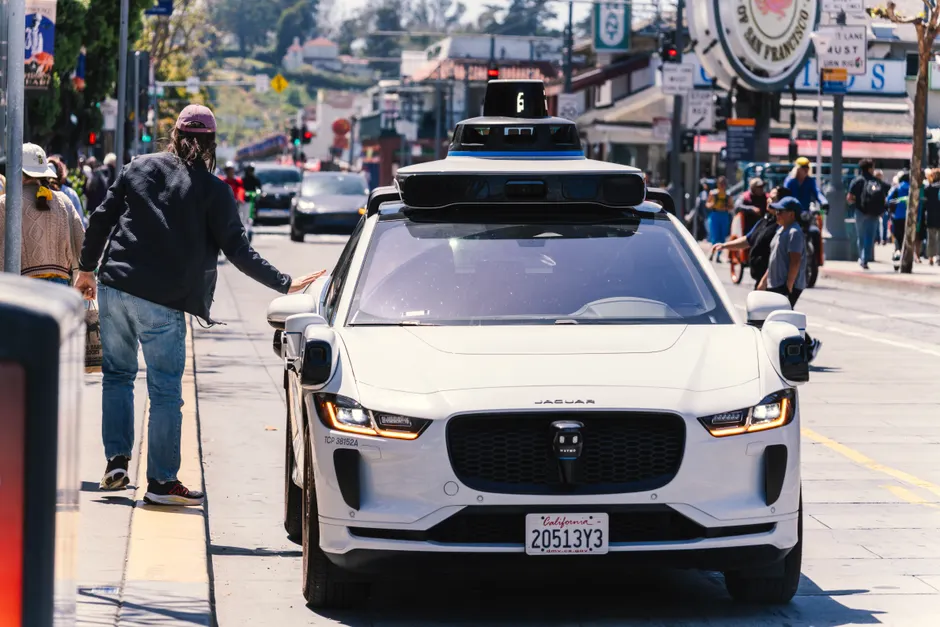
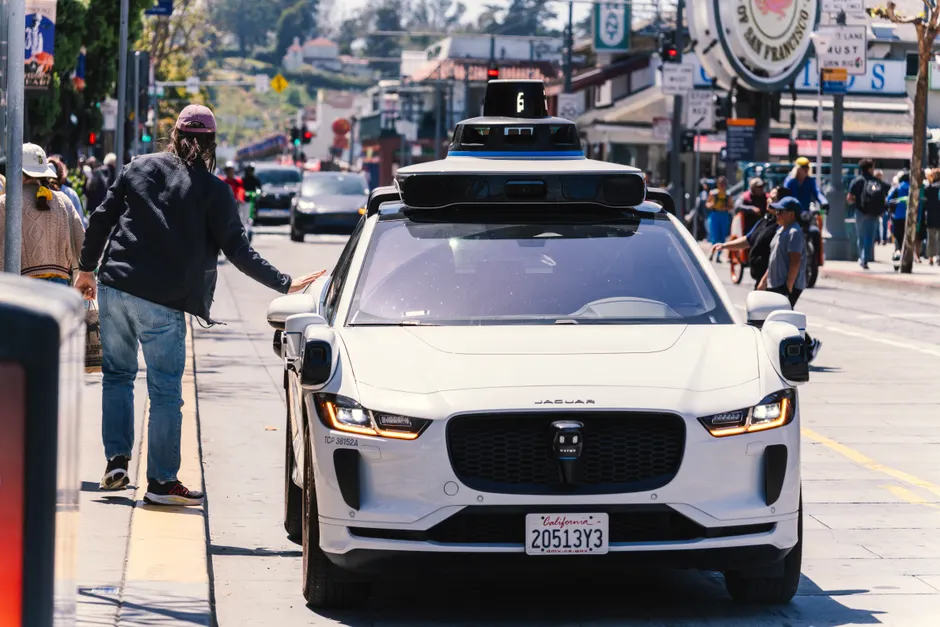
Rep. Mullin Unveils AV Emergency Response Coordination Act in San Francisco

Rep. Kevin Mullin (D-Calif.) on Tuesday unveiled the AV Emergency Response Coordination Act, a bill that would direct federal regulators to establish minimum national safety standards for autonomous vehicle operators, with specific requirements around emergency response coordination. TechCrunch
The legislation was introduced at a press conference in San Francisco, where Mayor Daniel Lurie, Fire Chief Dean Crispen, and Cathy Chase, president of Advocates for Highway and Auto Safety, all spoke in support. The choice of venue and speakers signals that the bill is grounded in the operational friction between AV fleets and municipal first responders, a tension that has been particularly acute in San Francisco's dense urban environment.
The bill directs the National Highway Traffic Safety Administration (NHTSA) to develop minimum national emergency response standards for AV operators. It also proposes two concrete operational requirements: AV companies would need to provide clear emergency protocols for first responders, and they would have to establish a 24-hour hotline giving public officials direct access to company representatives.
A third provision would create a process allowing public officials to geofence autonomous vehicles, restricting where they can operate during emergencies or ongoing safety hazards. That particular mechanism would give local authorities a tool to dynamically constrain AV operating domains in real time, a capability they currently lack under any standardized federal framework.
The bill's provisions address a gap that has existed since AV testing and deployment began scaling in U.S. cities. NHTSA's current regulatory posture toward autonomous vehicles has focused primarily on reporting requirements and voluntary guidance rather than binding operational standards for emergency coordination. State and local governments have patched together their own approaches, but there is no national baseline governing how AV companies must interact with first responders during incidents.
The geofencing provision is the most operationally significant element of the bill. If enacted, it would formalize a capability that local officials have sought but lacked the authority to mandate uniformly. AV operators already maintain geofenced operational design domains internally; the bill would extend a version of that control to public officials during emergency conditions.
The 24-hour hotline requirement reflects a practical reality: when an AV is involved in or near an emergency, first responders need immediate access to someone who can remotely intervene, redirect, or shut down the vehicle. The bill would codify that access rather than leaving it to the discretion of individual AV companies' support structures.
San Francisco has been a focal point for these issues. The city's fire chief speaking at the bill's unveiling underscores the degree to which local emergency services have encountered situations where AV behavior during active incidents created complications for response operations. The bill would establish a federal floor that applies nationally, not just in jurisdictions where AV deployment is already concentrated.
The involvement of Advocates for Highway and Auto Safety, a long-standing consumer safety organization, positions the bill within a broader coalition that includes both municipal operations and consumer protection perspectives. Mayor Lurie's participation signals city-level political support from a jurisdiction that has direct, ongoing experience with commercial AV deployment at scale.
The bill remains a proposal at this stage. It would need to pass through the House and Senate and be signed into law before any of its provisions take effect, and NHTSA would then need to undertake a rulemaking process to develop the specific standards the bill envisions. That timeline, if the bill advances, would likely span multiple years from introduction to implemented regulation.
Still, the legislation represents a concrete step toward federal standards for AV emergency coordination, an area where regulation has lagged behind deployment. For AV operators, it signals that the era of self-regulated emergency protocols may be drawing to a close, replaced by federally mandated minimums with direct local enforcement mechanisms.