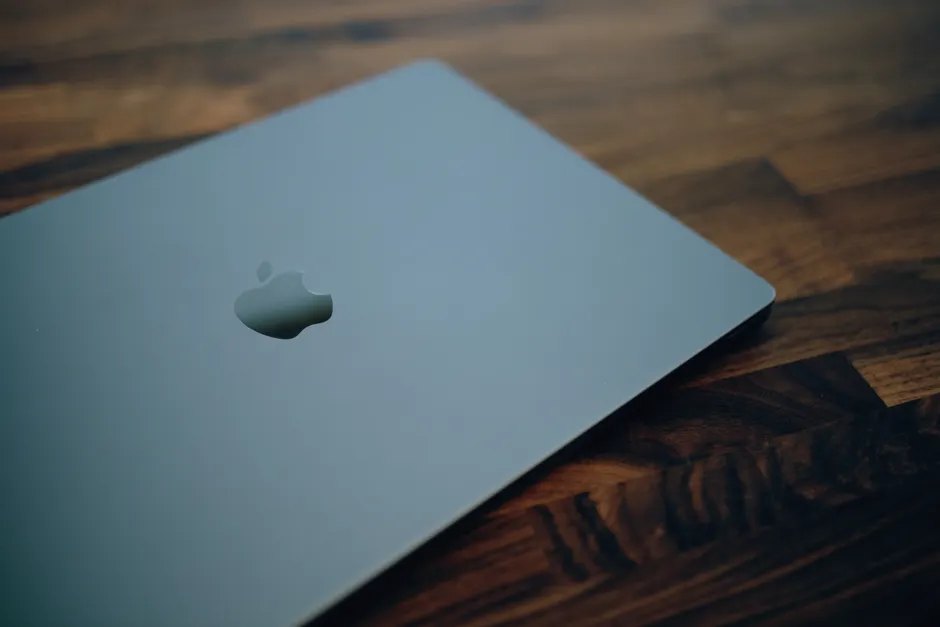
Apple's MacBook Air Hit by Global Memory Shortage: Wait Times Stretch to Weeks

Apple is now selling the MacBook Air with a wait time of two to three weeks, up from a few days, as a global memory chip shortage driven by AI demand continues to constrain supply across its Mac lineup TechCrunch. Buying a MacBook Air from Apple's website currently requires waiting until the back half of August, or into September for certain configurations.
The shortage had already hit Apple's Mac mini and Mac Studio before reaching the MacBook Air, the company's highest-volume Mac. Bloomberg's Mark Gurman reported the progression through the lineup, and retailers told TechCrunch that MacBook Air supply seemed more constrained than ever before TechCrunch.
The root cause is well-established. Samsung and SK Hynix warned in late January 2026 that AI-driven demand was squeezing chip supplies for PCs and phones Reuters. Memory manufacturers have been allocating capacity toward high-bandwidth memory and high-density DDR5 modules destined for AI training and inference workloads, tightening supply for the LPDDR and commodity DDR5 parts that go into consumer devices. Some manufacturers had already started adjusting their products to cope with the shortage and surging prices at that point.
Apple responded on June 25, 2026 by raising prices on MacBook and iPad models, citing soaring memory and storage chip costs driven by AI industry demand Journal Record. Apple said at the time that it could no longer shield customers from the rising component costs Reuters. The company is also sourcing memory from Chinese suppliers as part of its effort to address the shortage, alongside the price increases TechCrunch.
The supply strain is visible in Apple's marketing behavior. The company delayed its latest back-to-school promotion from June. For the first time, Apple's Mac marketing material is more focused on the base model of the MacBook Pro, a shift that aligns with the constrained availability of higher-memory configurations. Apple's Mac marketing material now carries the warning "MacBook Air subject to availability" TechCrunch.
The chain of events here traces a clear arc. The memory manufacturers flagged the squeeze in January. Apple raised prices in June. By August, the shortage has moved from the lower-volume Mac mini and Mac Studio into the MacBook Air, which has historically been Apple's most reliably in-stock consumer laptop. Each step has moved the impact closer to the mainstream buyer.
Worth flagging is the marketing shift toward the base MacBook Pro. Apple's promotional material rarely draws attention to a specific configuration tier unless there is a supply reason to steer buyers there. The combination of the delayed back-to-school promotion, the "subject to availability" caveat, and the emphasis on the base MacBook Pro suggests Apple is managing demand as much as it is managing supply, nudging customers toward configurations it can actually deliver.
The pivot to Chinese memory suppliers is the other notable thread. Apple has historically sourced memory primarily from Samsung, SK Hynix, and Micron. Diversifying into Chinese suppliers carries implications for supply chain qualification, geopolitical exposure, and potentially for the memory performance characteristics Apple can guarantee across its product mix. None of these are showstoppers, but each represents a trade-off Apple would not make under normal supply conditions.
Looking at what this means for the broader market, the MacBook Air shortage is a concrete data point in a trend that has been building since early in the year. AI workload demand is not just absorbing data-center GPU and HBM capacity; it is pulling commodity memory parts away from consumer electronics. PC and smartphone manufacturers are competing for the same DRAM and NAND supply that hyperscalers are bidding up for AI infrastructure. Apple, despite its purchasing power and supplier relationships, is not immune.
The question for the coming months is whether memory supply loosens as new fab capacity comes online, or whether AI demand continues to absorb incremental output faster than it can be added. Samsung and SK Hynix flagged the squeeze in January. Seven months later, the effects are still rippling outward into consumer product lines. For now, the MacBook Air, a machine that has rarely had availability issues in recent years, carries a multi-week wait.