EON Emerges From Stealth With $10.75M to Build Intercontinental Laser Links From Orbit

Endeavor Optical Networks (EON), a startup founded in May 2026, emerged from stealth on August 4, 2026 with $10.75 million in seed funding from General Catalyst and Andreessen Horowitz. The company plans to deploy a constellation of roughly 20 laser-equipped satellites that would relay data between continents from low Earth orbit, targeting a starting throughput of 2.4 terabits per second. (TechCrunch)
EON's co-founders are CEO Charlie Horowitz and CTO Tyler Presser. Horowitz previously worked at satellite bus manufacturer Apex Space, where he served as chief of staff to CEO Ian Cinnamon before becoming the company's director of special projects. Cinnamon invested personally in EON's seed round and told TechCrunch that Horowitz is "the ideal founder." (TechCrunch)
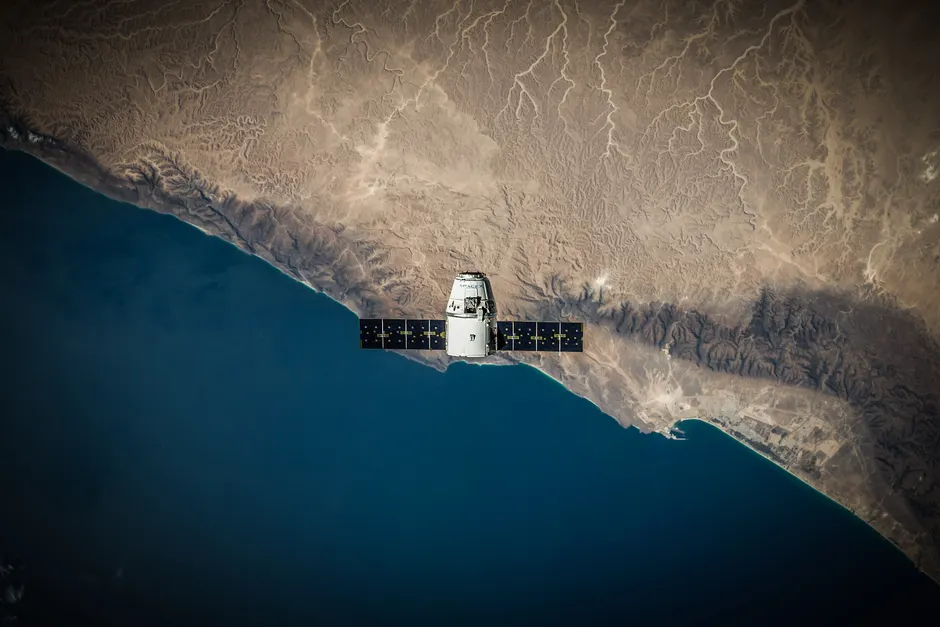
The architectural bet is straightforward: rather than laying or leasing subsea fiber across long, underserved, or expensive routes, EON intends to establish dedicated optical links between two ground sites via orbiting relay terminals. Each satellite in the planned constellation would provide a single dedicated intercontinental link. The initial fleet is designed to deliver 24-hour coverage for early customers. (TechCrunch)
EON is deliberately narrowing its hardware scope. The company plans to buy off-the-shelf satellite buses, such as those manufactured by Apex Space, and concentrate its engineering effort on the optical communications terminal itself. That vertical-narrowing strategy mirrors what other space startups have done when the bus is commoditized and the differentiation lives in a single payload subsystem. The seed capital will fund an optics lab, additional engineering hires, and ground testing ahead of the company's first orbital demonstration. (TechCrunch)
A demonstration satellite is planned for around the end of 2027. Horowitz expects it to achieve the highest optical downlink throughput demonstrated to date, at least 800 gigabits per second and potentially a terabit per second. That demo would validate the core link budget and pointing, acquisition, and tracking subsystems that any operational constellation depends on. (TechCrunch)
On the demand side, EON is in discussions with hyperscalers and AI labs as prospective customers. The routes it is targeting tell their own story: France-to-Australia and Africa-to-South America corridors where subsea capacity is thin, latency is high, or capacity pricing is prohibitive. These are paths where the economics of laying new fiber are marginal, and where an orbital relay with a re-pointable beam could offer a compelling alternative. (TechCrunch)
The technical and economic premise rests on free-space optical communications reaching a maturity point where multi-hundred-gigabit, and eventually multi-terabit, links can close over the roughly 500-to-2,000-kilometer slant ranges involved in LEO downlinks. Atmospheric turbulence, cloud attenuation, and the sheer difficulty of maintaining pointing stability at those data rates remain non-trivial engineering challenges. EON's bet is that purpose-built optical terminals, riding on standardized buses, can clear those bars at a cost per bit that competes with or undercuts long-haul fiber on the routes that matter most.
The customer focus on hyperscalers and AI labs is not incidental to the route selection. Training and inference workloads distributed across global data centers generate east-west traffic patterns that do not always align with where subsea cables already run. A dedicated orbital link between, say, a European data center and an Australian one sidesteps the multiple subsea hops and terrestrial backhaul that conventional routing requires. Whether EON can deliver that at the throughput and availability levels those customers demand, on the timeline it has laid out, is the question the 2027 demo is designed to begin answering.
In this author's view, the narrowed hardware strategy is the most telling design decision here. By buying buses and focusing on the optical terminal, EON is making the same calculation that a long line of space startups have made: the bus is a solved problem, and capital spent reinventing it is capital not spent on the thing that determines whether the network actually works. Whether the optical terminal itself can be made sufficiently performant and reliable at the cost points required for a 20-satellite constellation is the genuine open question, and it is where the seed-funded lab work and ground testing over the next eighteen months will either build confidence or expose problems.
The broader context worth tracking is whether free-space optical relay becomes a meaningful complement to subsea fiber for specific high-value, underserved routes, or whether it remains a niche capability. EON is entering a field where the physics is proven in principle but where operational, regulatory, and economic hurdles have kept throughput and availability below the thresholds that hyperscaler-grade traffic requires. The 2027 demonstration will be an early data point on whether those thresholds are within reach.