Europe Finalizes IRIS² Satellite Constellation at 348 Satellites, Targeting 2029 Launch

The European Commission has signed the agreement formalizing IRIS², the EU's sovereign satellite broadband network, with European manufacturers, the European Space Agency (ESA), and other partners. The signing follows negotiations that began in January and locks in a constellation that has grown substantially since the programme's earliest conceptions. Engadget
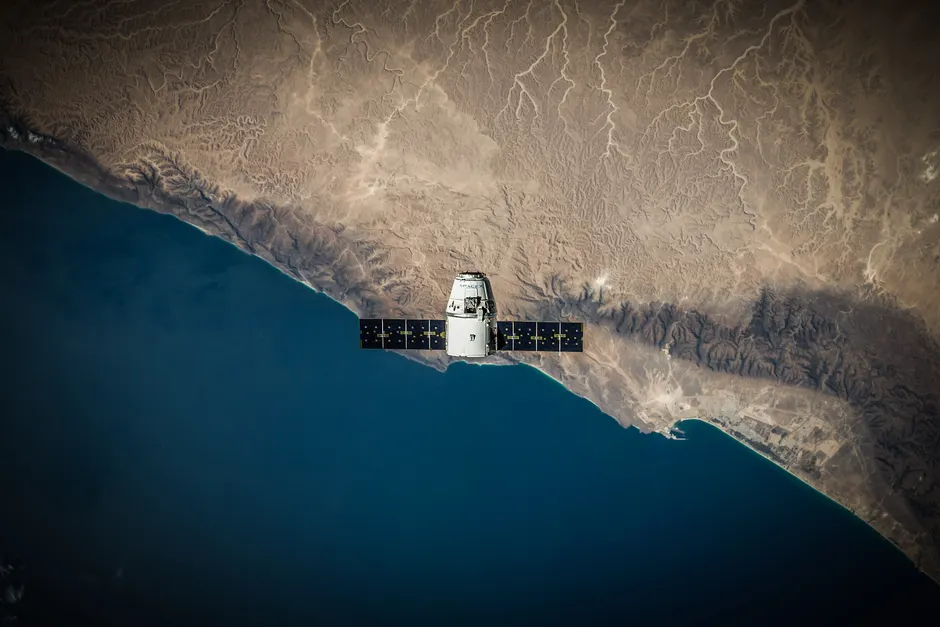
IRIS² — Infrastructure for Resilience, Interconnection and Security by Satellites — will now comprise 348 satellites in low Earth orbit, 66 more than originally planned. The additional satellites are intended to strengthen the constellation's capabilities for defense, security, and emergency services. According to ESA, the reinforced constellation will increase secure governmental capacity by 60 percent within the EU and 54 percent globally. ESA
The architecture is multi-orbital: a LEO constellation complemented by satellites in medium Earth orbit where appropriate. The European Parliament adopted IRIS² on February 14, 2023, and the programme is established under Regulation (EU) 2023/588, covering the period 2023–2027. It joins Galileo and Copernicus as the third pillar of EU space infrastructure, providing what the Commission describes as sovereign, secure, resilient, and cost-effective connectivity. European Commission
The first IRIS² satellites are planned for launch in 2029, with services deployed progressively from that year. European Commissioner for Defence and Space Andrius Kubilius expressed confidence in January 2026 that initial communication services can begin in 2029. Reuters
IRIS²'s primary mission is secure, encrypted communications for EU institutions, ministries, and embassies, enabling the safe exchange of sensitive information. It is designed for critical operations including emergency response, humanitarian aid, border and maritime surveillance, and intelligence-sharing, particularly in areas with limited terrestrial network coverage. The constellation is also intended to strengthen crisis management by ensuring reliable connectivity for emergency responders during natural disasters or network outages, and to help protect critical infrastructure. European Commission
Beyond government use, IRIS² will be made available to businesses and citizens in areas where traditional networks do not exist or are unreliable. The Commission envisions commercial applications across transport, energy, and banking through real-time data exchange and secure operations, as well as facilitating remote healthcare and smart grid management. The constellation is also intended to expand high-speed internet access for individuals in rural and underserved areas. Engadget
The trajectory of IRIS²'s scope is worth tracing. When the EU first proposed a satellite internet system in November 2022, the plan envisioned up to 170 LEO satellites launched between 2025 and 2027. By December 2024, when the Commission took its next deployment step, the figure stood at 290 satellites. The finalized agreement adds another 58, reaching 348. Each revision has expanded the constellation's capacity and its emphasis on defense and security use cases. Reuters
The scale, however, remains modest next to the benchmark the industry inevitably measures against. SpaceX's Starlink constellation currently operates more than 10,000 active satellites. IRIS²'s 348-satellite LEO fleet is not designed to compete on coverage density for consumer broadband; its value proposition is sovereign, encrypted governmental communications and the resilience that comes from a network the EU controls end to end. Engadget
The broader context here is a European strategic posture that treats connectivity infrastructure as a sovereignty question. The war in Ukraine has made satellite communications resiliency a concrete operational concern rather than an abstract contingency. IRIS² exists alongside IRIDE, a separate ESA-managed Earth observation "constellation of constellations" slated for completion by 2026, and together they signal an EU approach to space infrastructure that is multi-layered and designed to reduce dependency on non-European providers for both communications and Earth observation data. ESA
The gap between signing and first launch is roughly three years. Whether the 2029 target holds will depend on manufacturing timelines across the European industrial base, launch vehicle availability, and the integration complexity inherent in a multi-orbit encrypted network. The programme's history of upward revision, from 170 to 348 satellites, suggests that scope has been the negotiating variable rather than schedule. The signed agreement now fixes both, and the work of building begins in earnest.