An Astronaut Filmed the Southern Lights From Space — and You Haven't Seen Anything Like It

An Astronaut Filmed the Southern Lights From Space — and You Haven't Seen Anything Like It
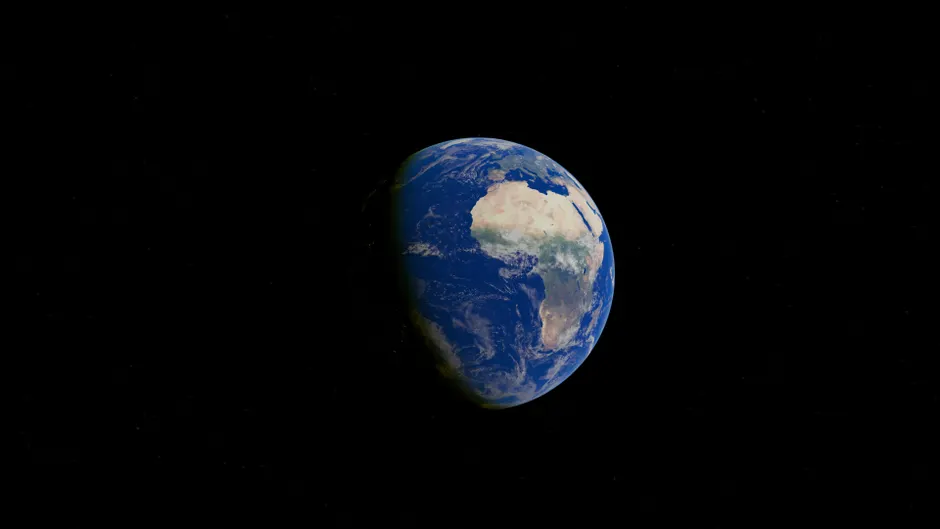
On June 7, 2026, NASA astronaut Jessica Meir shared a video taken from space showing the Southern Lights — the aurora australis — at a moment when the Sun was sending an unusual burst of energy toward Earth. What makes this footage remarkable is the vantage point: Meir filmed it from aboard a SpaceX spacecraft orbiting 400 kilometers above the ground, looking down at the lights rather than up at them from below.
If you have ever seen pictures of the Northern Lights from the ground, you know how they appear — shimmering green curtains rising from the horizon. From space, the view flips completely. Instead of watching the lights emerge in the distance, you see them spread out beneath you like an enormous, glowing blanket draped across the southern polar region.
What Causes the Aurora
Auroras happen because of an invisible interaction between the Sun and Earth's magnetic shield. The Sun constantly sends out charged particles and waves of energy. Most of the time, Earth's magnetic field deflects these particles harmlessly around the planet. But sometimes — especially during active periods on the Sun — those particles break through and collide with oxygen and nitrogen molecules high in our atmosphere. When they do, those molecules light up, creating the colorful glow we call an aurora.
The Sun goes through natural cycles of activity, and right now we are in the middle of a busy period called Solar Cycle 25. This cycle began in 2019 and is currently stronger than scientists predicted it would be. During these active times, auroras become more frequent and more visible. That is what was happening when Meir captured her video.
Why Meir's Footage Matters
Jessica Meir has spent considerable time in space. She lived and worked on the International Space Station during 2019 and 2020, and in 2020 she took part in the first spacewalk made up entirely of women. Because of that experience, she knows how to position a camera in the right place at the right time to capture something extraordinary. She understood which direction to point and when to start filming.
The spacecraft Meir was traveling on — the SpaceX Crew Dragon — has large windows designed specifically so that astronauts can see and photograph Earth. This is different from older spacecraft, which had small windows. Those big windows make it possible to film high-quality video of Earth and its atmosphere.
Why This View Is Unique
The Southern Lights occur in the same way as the Northern Lights, but most people never see them. The Northern Lights appear over populated areas — places like Canada, Norway, and Alaska — where people live and can watch them. The Southern Lights happen mainly over the southern ocean and Antarctica, where few people live. So photographs and videos of the Southern Lights from the ground are extremely rare.
From orbit, that difference disappears entirely. An astronaut above the South Pole sees the Southern Lights just as easily as one orbiting over the North Pole sees the Northern Lights. Meir's video gives the world a chance to see something that almost no one on Earth ever gets to witness.
A Moment That Speaks to Something Bigger
Astronauts have been taking photographs of Earth and Earth's phenomena from space for decades. The most famous example is the "Earthrise" photograph from Apollo 8 in 1968 — the first image of Earth rising above the Moon's horizon. That single photograph changed the way people thought about our planet. It showed our world as fragile and small.
Meir's video of the Southern Lights works in a similar way. It is not just a pretty picture. It shows what the magnetosphere — our planet's magnetic shield — actually does in real-time. The aurora is not happening at one location on the ground. It is a planetary-scale event unfolding across an enormous region. You can only truly understand that scale from above.
For scientists who study space weather — the effects of solar activity on Earth — videos like this add important context that instruments cannot provide on their own. Satellites carry sensors that measure radiation, magnetic fields, and energy in numbers. But those numbers alone do not show you where the light is brightest, how fast it is moving, or exactly how large the whole event is. A video shows all of that at once.
What This Means for the Future
The Sun's current active period will continue for another couple of years. That means more opportunities for astronauts aboard the International Space Station to capture aurora footage. The Crew Dragon, which makes regular runs to the station, has modern cameras and excellent windows. As more missions fly, we will likely see more of these recordings.
Meir's timelapse is a reminder that something extraordinary is happening around our planet all the time — a massive electromagnetic dance that we simply cannot see from the ground. Most of us will never travel to space to witness it ourselves. But we live in a time when those who do can share the view with everyone else.