A South Korean Spacecraft Photographed the Crater Left by a SpaceX Rocket That Crashed Into the Moon
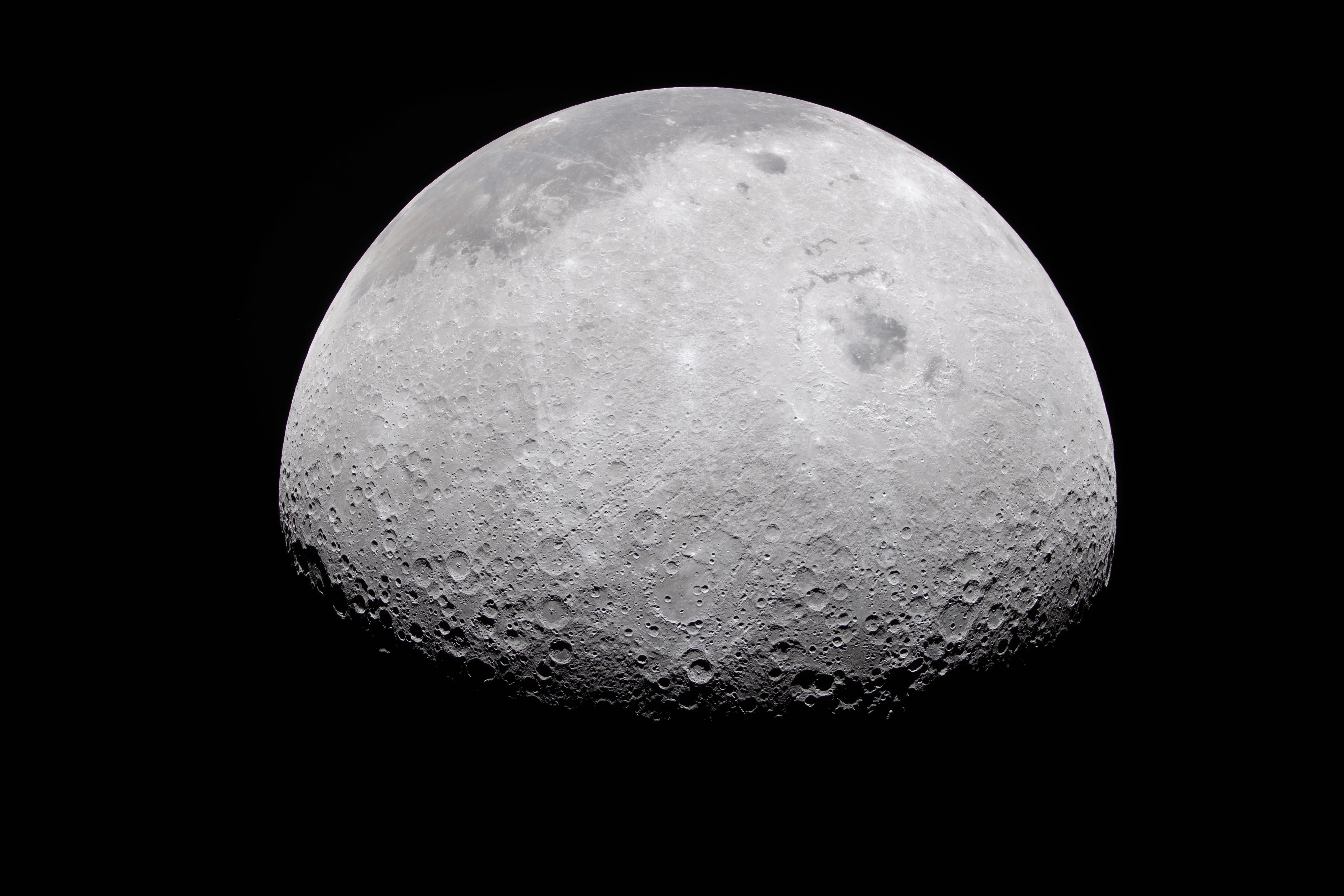
The Korea AeroSpace Administration (KASA) has released what it says are the first before-and-after images of a crater on the Moon left by a crashed SpaceX rocket. The images were taken by South Korea's Danuri lunar orbiter, a spacecraft that has been circling the Moon since 2022. They show the crater left when the upper part of a SpaceX Falcon 9 rocket slammed into the Moon's surface on August 5, 2026, at a speed of about 5,400 mph. NASA estimated the crater at roughly 60 feet wide and 12 feet deep. (Engadget)
Rockets like the Falcon 9 work in stages. The main booster does the heavy lifting at launch and separates early in the flight. The upper stage, which weighs about four tons in this case, continues on to carry the payload — in this case, two lunar landers — to their destination. That upper stage delivered its cargo in January 2025 as part of a mission called Blue Ghost. But after releasing the landers, it had no fuel left to steer itself to a safe, planned crash or back toward Earth. Instead, it drifted in a path around the Moon for about 19 months until it hit the surface on the far side of the Moon — the side that always faces away from Earth. (Engadget; USA Today)
SpaceX said publicly that for most of its missions, it plans a controlled descent of the upper stage so it burns up safely over the ocean. But for missions that send payloads all the way to the Moon, the rocket uses nearly all of its fuel just to get the payload where it needs to go. That leaves nothing in the tank for a controlled disposal afterward. (Engadget; SpaceX on X)
The images were taken by Danuri, also known as the Korean Pathfinder Lunar Orbiter (KPLO), built by the Korea Aerospace Research Institute (KARI). Danuri carries a camera instrument called LUTI, which photographed the impact site. KARI's 2023 annual report also notes that Danuri has had to perform collision avoidance maneuvers — essentially swerving to avoid other spacecraft near the Moon. That points to a growing problem: the space between Earth and the Moon is getting more crowded as more countries and companies send missions there. (KARI 2023 Annual Report; NASA)
NASA had planned to observe the impact and published its estimate of the crater size before the event happened. KASA's before-and-after images now give scientists a way to check how accurate those predictions were. (Engadget; NASA)
The broader context here is that more hardware is reaching the space around the Moon as companies offer commercial lunar delivery services. The Falcon 9 upper stage is not the first spent rocket to hit the Moon, but it is among the first to be documented this thoroughly by an orbiter from a country other than the United States or China. Danuri's images show that more nations now have the ability to produce useful lunar reconnaissance data. For mission planners and the people who track space debris, that is a meaningful gain.
SpaceX's explanation points to a real trade-off. When a rocket stage is sent on a high-energy path to the Moon, there may be no fuel left to safely dispose of it afterward. The alternative is to leave the stage drifting in space, where it becomes a piece of debris that could linger for months or years before eventually crashing. During its 19 months in orbit, the Falcon 9 stage was a loosely tracked hazard to other spacecraft operating near the Moon, including Danuri itself.
Worth flagging: as more commercial lunar missions launch under programs like NASA's Commercial Lunar Payload Services (CLPS) initiative, the number of rocket stages and other hardware reaching the lunar area without a disposal plan is likely to go up. The international community has not yet set binding rules for cleaning up after missions in cislunar space, the way it has for objects in low Earth orbit. Each uncontrolled crash on the Moon adds to a growing risk picture.
The crater itself is not a big deal scientifically. The Moon has no atmosphere and no weather to wear things down, so craters last forever — this 60-foot one joins millions of others. But the fact that it was photographed by a Korean orbiter using a camera built in South Korea tells a bigger story. More spacecraft, more operators, more cameras, and more debris are all heading into the same region of space.