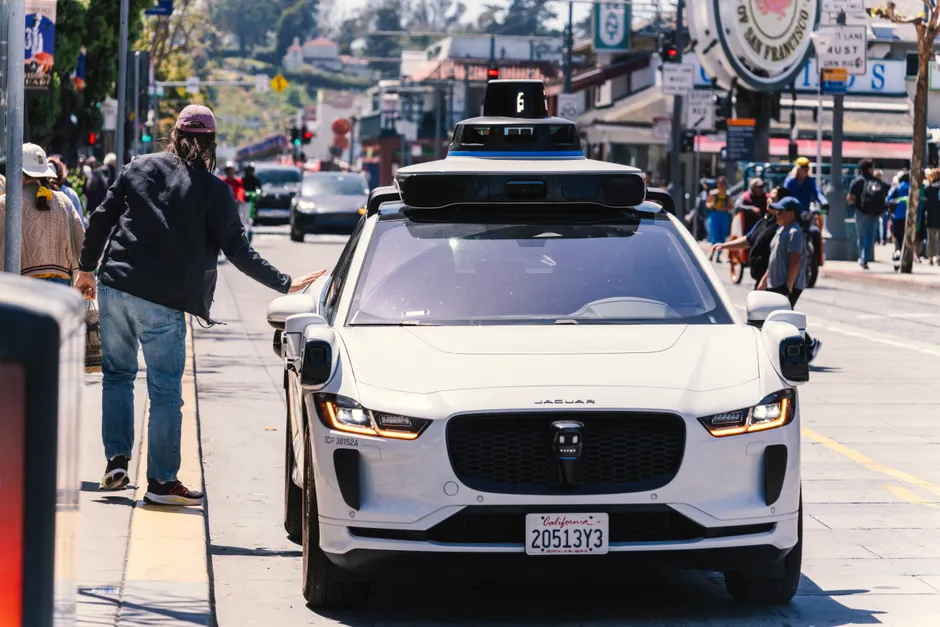
How Waymo Is Testing Self-Driving Cars Using a Model of Human Drivers

How Waymo Is Testing Self-Driving Cars Using a Model of Human Drivers
On 10 June 2026, Waymo announced a new tool for checking whether its self-driving cars are safe. The tool is called ReD — short for Reference Driver — and it works by modelling how a competent human driver would avoid crashing. Waymo published details on its blog, explaining how ReD helps the company evaluate its self-driving system, especially as it moves toward fully driverless operations.
What ReD Does
ReD is not a driving simulator, and it is not a collection of videos of people driving. Instead, it is a computer model that captures how human drivers make decisions to avoid accidents — things like how quickly they spot danger, which gaps between cars they think are safe to enter, and how they react when something unexpected happens.
Think of ReD as a standardised answer to a simple question: if a human driver with good safety instincts faced this situation, what would they do? Then Waymo's self-driving system is tested against that same situation. Does the self-driving car respond as well as that human driver, or better?
For years, car companies tested self-driving systems by counting how many miles they drove without crashing, or by tracking how often a human had to take over. ReD changes that approach. Instead of just asking "did it crash?", Waymo can now ask "did it respond sensibly, the way a good human driver would?" This is a more detailed way to check safety, because a self-driving car could technically avoid a crash by doing something that no human would ever do — something that works in that moment but might fail in a slightly different situation.
Why Waymo Built This Now
Waymo confirmed in February 2026 that its next-generation self-driving system will operate with no human safety driver in the car at all. That is a major step. When there is a human ready to take over in an emergency, the system can rely on that backup. But with no human in the loop, the self-driving car's own judgement becomes the only defence against accidents.
That shift means Waymo needs a rigorous, repeatable way to answer the safety question. ReD provides one: the self-driving car should be as safe as a competent human driver, or safer.
There is also a regulatory angle worth noting. State and federal authorities are now building official safety rules for self-driving cars. They will eventually ask companies like Waymo: how do you prove your system is safe? A documented model of how human drivers avoid accidents is exactly the kind of thing regulators and safety standards bodies will want to see. By publishing ReD now, before those regulations are finalised, Waymo is positioned to influence what regulators end up asking for.
How ReD Fits Into Testing
Waymo already tests its self-driving system using real-world driving data, artificial test scenarios, and computer simulations. ReD slots into the simulation and testing layer as a way to compare the self-driving car's behaviour against a model of human behaviour.
This matters because a self-driving car needs to be consistent and predictable, not just successful. A system that avoids crashes through unusual manoeuvres might work in the specific scenario it has seen, but fail in a slightly different situation. Checking responses against how a competent human would behave adds a consistency check on top of the raw safety numbers.
It is important to be clear: ReD does not model perfect driving. Human drivers cause and are involved in millions of crashes every year. ReD models competent, safety-conscious driving — which sets a reasonable target, though not an especially demanding one. Waymo's goal is that its self-driving car should avoid the crashes a good human driver would avoid, and ideally prevent accidents that humans might not.
The Bigger Picture
Car companies and safety researchers have been wrestling with how to test self-driving cars properly since autonomous driving programmes began. Early research showed that testing a self-driving car against human crash rates through real-world driving alone would require hundreds of billions of miles — an impossible task. That finding pushed the industry toward computer simulations and controlled test scenarios, which is where most serious programmes focus today.
What Waymo is doing with ReD follows a familiar pattern in engineering. When a field matures, it moves from simple counts and gut feeling toward formal models that can be documented and checked. Network security went through this shift decades ago — moving from basic firewalls to structured threat models that experts could review and regulators could audit. Self-driving car safety is entering that same stage: moving from "we drove a lot of miles without crashing" to "here is a formal model of the risks and here is how our system handles them."
What Happens Next
Waymo has explained what ReD is in conceptual terms, but has not yet released the model itself for outside experts to examine. That gap matters. The safety research community will be watching to see whether Waymo opens up the model for independent review, submits it to regulators, or keeps it internal.
The practical test will come as Waymo rolls out its fully driverless system across more cities and more driving conditions. The situations the self-driving car encounters will put ReD to the test. A reference model is only truly valuable if it handles not just the driving scenarios everyone expects, but also the unusual edge cases that inevitably emerge in the real world.
For experts in self-driving car safety, this is worth following. If ReD holds up under scrutiny, it could become an important tool not just for Waymo, but for the entire industry — a standard way to answer the fundamental question: are self-driving cars safe enough for the road?