Russia Hit Kyiv With a Huge Missile and Drone Attack — Here's What Happened
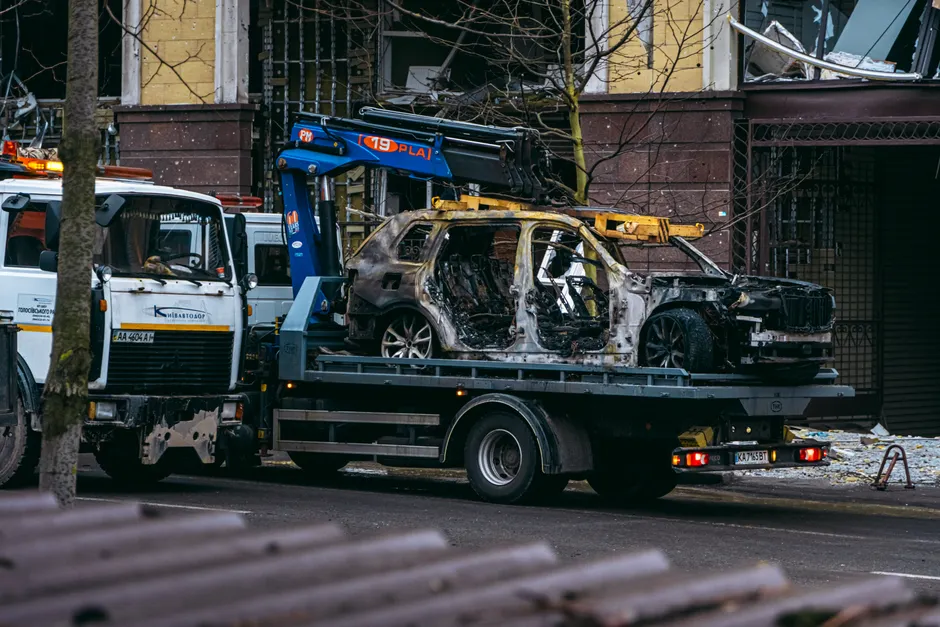
Russia launched a massive overnight missile and drone attack on Kyiv and nearby areas on 20 August 2026, killing at least 12 people and injuring 40. The attack used ballistic missiles, cruise missiles, and 168 drones all at once. President Volodymyr Zelenskyy called it a "massive attack prepared over a long period" aimed at causing maximum damage to civilian infrastructure — the buildings and systems that ordinary people rely on, like homes, schools, and hospitals (The Guardian).
Ukraine's air force reported that Russia fired dozens of missiles — including some that travel at extremely high speeds — alongside the 168 drones. Ukraine's air defence units shot down 145 drones and most of the slower, guided cruise missiles. But none of the ballistic missiles were stopped. Ballistic missiles are fired high into the sky and then come crashing down on their target at enormous speed, which makes them very hard to intercept. This detail matters most: Ukraine's air defence system can handle drones and cruise missiles, but it could not stop the ballistic missiles when Russia fired everything at once.
Damage went well beyond the capital. Zelenskyy reported destruction in the Odesa and Chernihiv regions too. The presidential office said one part of the attack focused on Kyiv and the surrounding region, including the nearby cities of Brovary and Vyshneve, where nine people were killed (President of Ukraine).
In Kyiv itself, Mayor Vitali Klitschko said 18 people were hospitalised. Emergency crews worked across three city districts. Residential buildings, a school, and a children's hospital were damaged. Klitschko declared Friday a day of mourning in the city.
The strike was not a surprise to Ukrainian officials. On 3 August 2026, Zelenskyy said Ukraine knew from its own intelligence and from partner countries that Russia had prepared missiles for a new massive attack (President of Ukraine). That warning came more than two weeks before the strike. It means the attack was planned in advance, not a sudden decision. The gap between the warning and the actual strike raises a hard question: did Ukraine have enough interceptor missiles — the weapons used to shoot down incoming missiles — to act on that warning, or did officials already know they lacked the equipment to stop ballistic missiles?
The attack also reached into NATO airspace. NATO is the military alliance that includes the United States, Canada, and most of Europe. Poland, a NATO member that borders Ukraine, sent emergency alerts to residents in two border regions and sent aircraft into the sky to protect Polish territory. Poland follows this procedure whenever large Russian strikes happen near its border. But it also shows how these massive attacks can pull NATO countries into a defensive stance in real time.
Zelenskyy used the aftermath to send a direct message to Ukraine's Western partners. He said that as long as Ukraine lacks enough anti-ballistic defence, Russia will not take peace seriously. His argument is simple: if Ukraine cannot shoot down Russia's most powerful missiles, Russia has no reason to come to the negotiating table.
The broader context here is that Russia has built the ability to launch overwhelming attacks using different types of missiles and drones all at once, while Ukraine has shown it can stop many of the smaller, slower threats but not the fastest, most destructive ones. Think of Ukraine's air defence as a shield with gaps: it can block arrows and sling stones, but not the heavy spear coming straight down. The 20 August strike, with its zero ballistic intercepts and its targeting of a children's hospital, will intensify the debate in Western capitals over whether to send more Patriot missile systems and similar weapons to Ukraine, and whether Ukraine's supply of interceptor missiles can hold up under repeated attacks. The presidential office mentioned missiles "for Patriots" in a statement on 1 August, which signals that the supply question was already part of Ukraine's discussions with partners before this strike made the problem impossible to ignore.
Friday's day of mourning in Kyiv will be measured against the reality the raid exposed: knowing an attack was coming did not translate into stopping the most destructive missiles, and the civilian cost of that gap was paid in homes, a school, and a hospital.


