Japan and the U.S. Spent Big to Support the Yen — Here's Why It Matters for Your Money

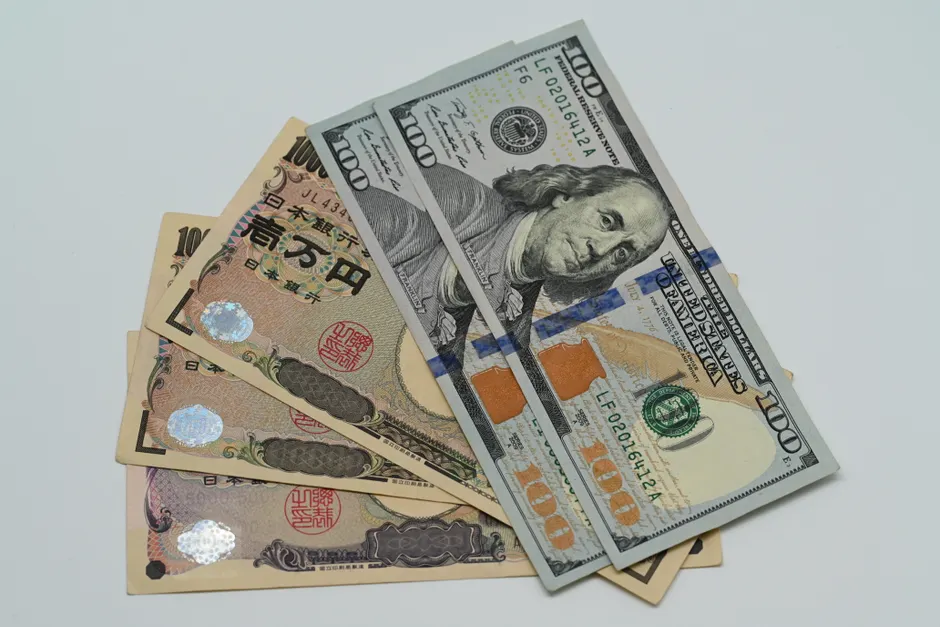
Japan and the United States teamed up to buy yen in the largest such operation in 15 years, according to Goldman Sachs. The effort played out across two separate rounds in 2026.
Japan's Ministry of Finance confirmed buying yen on Friday, July 31, 2026 (U.S. Eastern Time), in coordination with the U.S., per an August 3, 2026 statement from Finance Minister KATAYAMA Satsuki. The broader campaign was big: the Ministry of Finance reported foreign exchange intervention totaling ¥11,734.9 billion for the period from April through June 2026.
That quarterly figure replaces an earlier monthly report. The Ministry of Finance had previously reported ¥11,734.9 billion in intervention for the period from April 28 through May 27, 2026, published on May 29, 2026. Because the two totals match, most of the quarterly spending happened in that late-April-to-late-May window. The July 31 action was a separate operation.
To understand what happened: when a country's currency loses value too fast, its government can step in and buy its own currency using foreign money it holds in reserve. Buying yen pushes its price up, or at least slows the drop. In this case, Japan was selling dollars to buy yen. When the amounts are this large, it changes how many dollars are floating around in short-term lending markets, which can ripple through the financial system.
The intervention slowed but did not stop the yen's decline, according to Schwab director Michelle Gibley. The currency efforts in 2026 took place against a backdrop of stock market volatility. On July 7, 2026, the Dow, S&P 500, and Nasdaq traded with SpaceX slipping below its opening price, as tracked in WSJ live coverage. About a month later, on August 6, 2026, the Dow fell 460 points in a broader stock selloff, per separate WSJ live coverage.
At the same time, global bond markets are dealing with a record amount of new debt. Global corporate bond issuance reached $4.9 trillion so far in 2026, up 14%, according to LSEG data, reported by Reuters on September 1. A portion of that borrowing is driven by spending on artificial intelligence infrastructure.
What makes this situation unusual is that two big forces are hitting markets at once. On one side, companies are issuing a record amount of new bonds, partly to fund AI projects. More bonds mean more supply, which can push bond prices down and interest rates up. On the other side, the yen intervention is pulling dollars out of short-term lending markets. When both happen together, it can tighten conditions across global financial markets.
The timing also matters. The July 31 intervention came less than a week before the August 6 stock market drop. Whether the yen operation merely slowed the currency's decline or set off a chain reaction that hit U.S. stocks is a question for risk managers. Goldman Sachs called the operation the largest in 15 years, putting it above even the interventions during the 2011 post-tsunami crisis. That scale suggests policymakers believed the situation was dangerous enough to warrant dramatic action.
The record corporate borrowing adds another layer of risk. When companies issue $4.9 trillion in new bonds — up 14% from the same period a year earlier — the question is whether enough buyers will step up to absorb all that debt. AI-related spending, the stated reason for some of this borrowing, typically involves large-scale infrastructure and semiconductor projects that take years to pay off. The interest costs on those bonds are sensitive to changes in interest rates. If the yen intervention pushes up borrowing costs or shifts global interest rates, the riskiness of that $4.9 trillion in corporate debt changes too.
In my view, the key challenge for investors is telling the difference between short-term currency-driven turbulence and deeper, longer-lasting problems in the credit market. Schwab's assessment that intervention slowed but did not stop yen weakness suggests that the underlying dynamics — investors borrowing yen cheaply to invest in higher-returning assets elsewhere — are still in play. If the yen keeps falling despite the largest coordinated action in 15 years, the market may be testing whether Japan and the U.S. will follow through. If they back off, or if they escalate further, that would directly affect U.S. Treasury yields and the value of the dollar.
These events form a sequence, not a list of unrelated headlines. The Ministry of Finance's quarterly data confirms the April–June window as the main intervention period. The July 31 coordinated action with the U.S. extends that timeline. The August 6 equity drop followed. The September 1 bond market selloff report, contextualizing the $4.9 trillion issuance figure, brings the supply-side pressure into focus.