The U.S. and Japan Just Teamed Up to Prop Up the Yen. Here's What That Means.

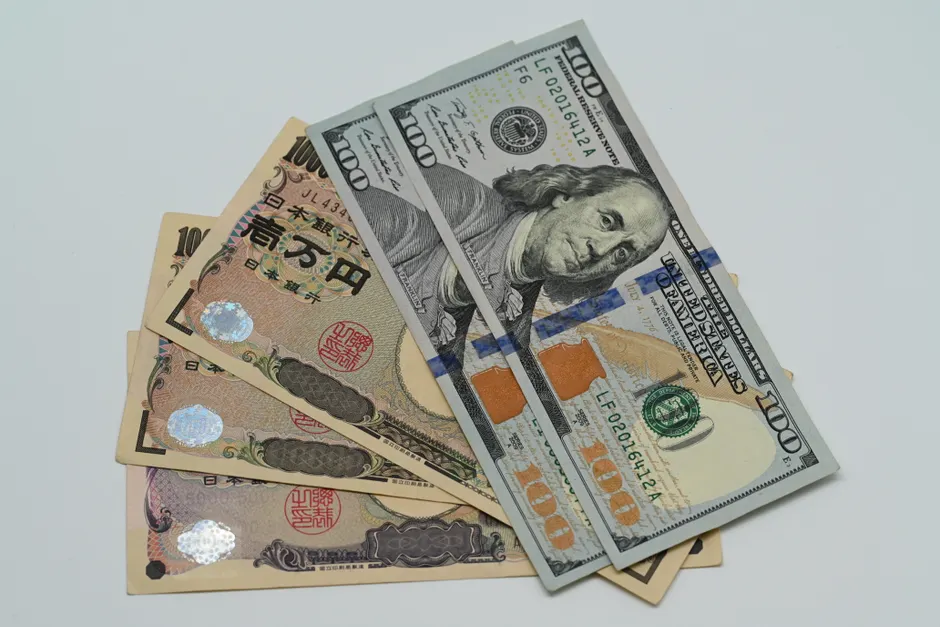
On August 3, 2026, Japan and the United States confirmed a rare, coordinated effort to buy yen in the currency market, aiming to stop the yen from falling to its lowest level against the dollar in 40 years. Japanese Finance Minister Satsuki Katayama confirmed the joint action, saying the yen's recent moves were "disorderly" (Financial Times).
Two Japanese government officials said Tokyo and Washington took joint action, a disclosure first reported by Reuters on August 2 (Reuters). The confirmation from both governments followed, making the intervention public rather than merely hinted at through anonymous sources.
The intervention is the first coordinated U.S.-Japan currency action since 2011, when authorities moved to weaken the yen following the earthquake in eastern Japan (Yahoo Finance; Reuters). That earlier episode ran in the opposite direction: selling yen to keep it from getting too strong. This time, both sides are buying yen to prop up a currency that has been trading at multi-decade lows.
Japan's finance ministry also announced plans to use a tool called the FIMA repo facility for future currency interventions (CNBC). The FIMA repo facility is run by the Federal Reserve Bank of New York and lets foreign central banks temporarily pledge their U.S. Treasury bonds as collateral to borrow dollars. Think of it like pawning a valuable watch: you hand it over to get cash, but you can retrieve it later instead of selling it for good. Using this facility means Japan can get the dollars it needs for market interventions without permanently selling off its reserve assets. The Ministry of Finance publishes statistics on official reserve assets held by the relevant account and the Bank of Japan, which serve as the funding source for currency intervention (Ministry of Finance).
The Ministry of Finance's homepage lists the implementation status of foreign exchange balance operations for the period June 29 through July 29, 2026 (Ministry of Finance). The ministry publishes monthly statistics on the actual amounts of intervention conducted through these operations (Ministry of Finance).
U.S. involvement in the joint action carries a specific historical dimension. U.S. monetary authorities have intervened in yen markets before, purchasing a total of $833 million worth of Japanese yen in a prior operation (U.S. Treasury). That episode echoes June 1998, when U.S. authorities purchased yen in coordination with Japan amid efforts to strengthen the Japanese economy (U.S. Treasury). The Treasury's Exchange Stabilization Fund is the mechanism through which such U.S. currency operations are conducted.
Japan's own intervention history is substantial. Japanese authorities sold yen during the first quarter of 2004, with total sales amounting to approximately $138 billion (U.S. Treasury). That remains the last major solo Japanese intervention campaign before the 2022–2024 operations.
The Treasury's January 2026 Foreign Exchange Report assesses international economic and exchange rate policy developments over the four quarters through June 2025 (U.S. Treasury). The report provides the policy framework within which the current coordinated action sits.
Earlier this year, on February 3, 2026, Finance Minister Katayama addressed yen-dollar exchange rate volatility in a post-Cabinet-meeting press conference and referenced remarks by U.S. Treasury Secretary Bessent on foreign exchange intervention (Ministry of Finance). That exchange established a dialogue between the two finance ministries on currency coordination months before the August action.
The broader context here matters for anyone watching markets. When Japan acted alone to buy yen in 2022 and 2024, the effects were temporary, and the yen resumed its decline within weeks. Adding U.S. participation changes the picture. Coordinated intervention signals that both governments view the yen's level as disorderly rather than merely weak, and it brings the full weight of the U.S. Exchange Stabilization Fund alongside Japan's reserves. The FIMA repo announcement adds another layer: it suggests Tokyo is preparing for a sustained effort rather than a one-time operation, securing a reliable way to get dollars without draining its reserves through outright sales.
What remains unverified is the scale of the August 3 operation. The Ministry of Finance's monthly intervention statistics, which cover the June 29–July 29 reporting window, will not capture this action. The next release covering the relevant period will be the authoritative source for the amounts deployed.