A Tiny Mountain Village Losing a Battle with Floods—and Its Ancient Religion

Lubra Village sits in a Himalayan valley where two problems meet: massive floods that come every monsoon season, and warming temperatures making those floods worse and worse. The village is home to 16 families who practice Bon, an ancient religious tradition from Tibet that is one of the rarest living faiths in the world. Right now, they face a threat that goes beyond damaged homes — it threatens the survival of their religion itself.
Floods Getting Worse
Every monsoon season brings flash floods to Lubra. These floods move debris in waves roughly 150 meters wide (about the length of a soccer field), according to Nepali Times. The village has survived these floods before, but rising temperatures across the Himalayas are making them happen more often and with more force. The valley's narrow shape acts like a funnel, pushing water and mud downhill at high speed, according to research by Engineers for Exploration at UC San Diego.
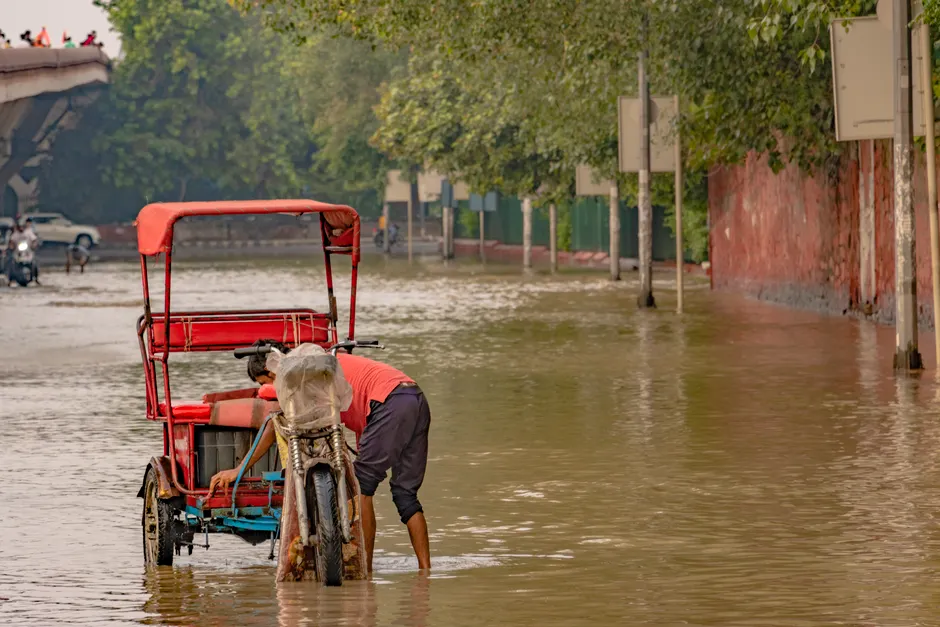
In October 2025, Lubra was hit as part of a much larger disaster. Heavy rains triggered flash floods, landslides, and river flooding across central and eastern Nepal, according to Al Jazeera. The causes included monsoon rainfall patterns, steep mountain slopes, old infrastructure, and climate change. Scientists later found that climate change made floods this severe 70% more likely.
What Is Bon?
Bon is an ancient religion that comes from Tibet. It teaches that nature itself — mountains, rivers, animals — holds spiritual power. Nepal officially recognizes Bon as one of its religions, alongside Hinduism, Buddhism, Islam, Christianity, and others. But Lubra is special: it is one of the only places where Bon is lived as a daily practice by an ordinary community. Most Bon today exists only in monasteries or among scholars. Sixteen families in one village. Nothing else like it exists anywhere.
How people respond to floods and climate change depends partly on what they believe about the world. Research shows that religion shapes how communities understand and adapt to environmental dangers. For Bon believers, whose faith sees all of nature as alive and spiritual, the destruction of the environment isn't just a practical problem — it is a spiritual crisis.
Missing from the Plan
Nepal is starting to include religion in its environmental work. In June 2024, the country created its first Faith Plan for the Environment, which uses Buddhist teachings about caring for nature and life, according to reporting by conservation groups. This makes sense: religious leaders have trust and influence in their communities that government officials sometimes lack.
But there is a problem. Nepal's plan focuses on Buddhism because Buddhism is the dominant religion in the mountains. Bon is left out, even though it is practiced in mountain areas now being destroyed by floods. Bon has no backup — no other countries where its followers live, no big cities where displaced families could find a community. If the village empties out, the religion could disappear.
This pattern shows up everywhere in climate planning: the communities most at risk often get the least attention from policy makers. Lubra's families are not counted in Nepal's flood-risk databases. If they are forced to leave, official records would show population loss — not the death of one of the world's rarest religions.
Lubra needs more than walls to stop floods. Simple things like flood barriers and warning systems could help. But the village also needs to be included in Nepal's environmental plans before the next monsoon season. The 2025 floods changed what counts as normal for the highlands. In the years ahead, whether Bon survives might depend on whether it gets a place in Nepal's policy documents — before it becomes only a memory.