China's New Supercomputer Just Became the World's Fastest
China's New Supercomputer Just Became the World's Fastest
China has built the world's fastest supercomputer. It's called LineShine, developed by researchers in Shenzhen, and it just topped the official global ranking announced in June 2026. The machine can perform 2 exaflops of calculations — that's 2 followed by 18 zeros, in operations per second — making it about 10 percent faster than the previous record holder, a U.S. machine called El Capitan.
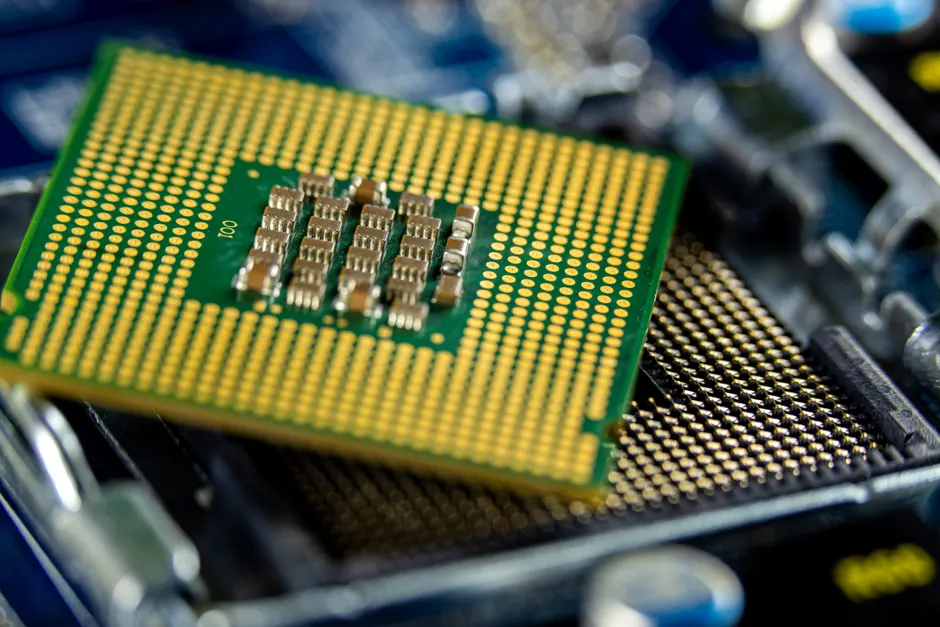
What makes this achievement unusual is how the computer was built. Most of the world's fastest machines rely on specialized chips called GPUs (graphics processing units) — the same basic technology that powers video game graphics. LineShine is different. It uses only regular CPUs (the central processors that sit in all computers), stacked together to reach that extreme speed. This is the first time in the history of the TOP500 ranking that a machine has hit this performance level using CPUs alone.
Why This Matters
Here's the context you need: the U.S. has been restricting China's access to the most advanced computer chips. In particular, America has blocked the sale of Nvidia's cutting-edge GPU chips to China, seeing them as strategically important. Building a world-leading supercomputer with only chips made in China itself signals that China's domestic chip industry is powerful enough to compete at the highest level without buying foreign technology.
This is not new territory for China. A Chinese supercomputer called TaihuLight held the top position from 2016 to 2017, also built with domestically designed chips. But TaihuLight was slower. In the decade between TaihuLight and LineShine, the U.S. took the lead, building several record-breaking machines including El Capitan. Now that lead appears to have shifted again.
What the Ranking Actually Measures
The TOP500 list ranks supercomputers using a specific math test called Linpack. Think of it as asking: how fast can this machine solve a particular type of dense mathematical problem? It's a fair, standardized test that has been used since 1993.
But here's what's important to know: the test does not measure how well a machine performs at artificial intelligence tasks. Modern AI training — the work that makes ChatGPT or other AI systems learn — relies heavily on GPU acceleration. An all-CPU machine like LineShine would likely underperform at that specific task. Different benchmarks, like MLPerf, are used to measure AI capabilities instead.
Reading Between the Lines
LineShine excels at the type of work that national laboratories actually do: complex physics simulations, climate modeling, nuclear weapons testing by computer. For those purposes, raw CPU power remains perfectly suited.
The broader context here is about supply chain independence. By reaching exascale performance using only its own chips, China has shown it no longer needs to import top-tier American semiconductor technology to build world-class supercomputers. From a geopolitical standpoint, this reshapes how the U.S. and its allies think about technological competition and export controls.
One benchmark, though, does not establish a permanent lead. The supercomputer rankings change twice a year. The next list comes out in November 2026, and it's entirely possible that a U.S. system will reclaim the top spot by then. What matters more than a single ranking is whether China's domestic chip ecosystem can keep pace with continued innovation over years to come.