China Tests Submarine Missile in Pacific, Drawing U.S. and Australian Criticism
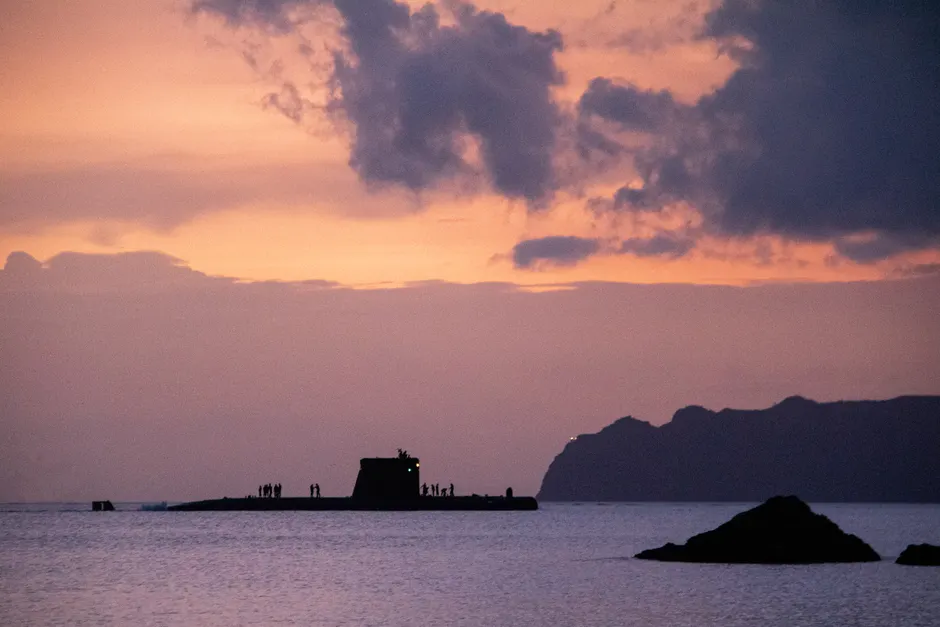
China fired a nuclear-capable ballistic missile from a submarine into the Pacific Ocean on July 6. The United States and Australia say China did not give sufficient advance warning, breaking informal international practices. China's military said it was a routine training exercise with a practice warhead The Guardian.
The test raised alarm across the Pacific region. Taiwan's National Security Council released a map showing the missile traveled southeast from China, passing over or near the Philippines, Micronesia, and Palau before landing south of Nauru. Taiwan's Joseph Wu called the test "a provocation that destabilizes the Indo-Pacific" and said it showed China "is a bully on the block" The Guardian.
China's Foreign Ministry said the test was planned and countries had been informed beforehand. Spokesperson Mao Ning told reporters it was not aimed at any specific country and asked critics not to "over-interpret" what was a normal military training event MFA transcript.
But Australia disagreed sharply. Cabinet minister Pat Conroy said China violated an international standard called the Hague Convention, which sets rules for missile testing. That standard requires countries to give advance notice and share more technical details than China did. Conroy said China gave only hours of warning The Guardian.
Foreign Minister Penny Wong said the test fit a pattern of "rapid military build-up by China" Penny Wong transcript. Deputy Prime Minister Richard Marles noted on a morning news show that while the test landed far from Australia, it demonstrated China now has much longer range for launching nuclear weapons from submarines than it had previously shown in public Richard Marles transcript.
The core disagreement centers on what counts as proper warning. There is no global treaty that every country must follow on missile testing. Instead, countries rely on voluntary agreements and informal practices. China has not signed the Hague Convention, so other countries cannot force it to follow those rules. That is why the US asked China to commit to a regular, formal system for announcing tests in advance — rather than relying on last-minute phone calls.
The missile's path took it over or near several Pacific island nations — the Philippines, Micronesia, Palau, and Nauru — that have limited ability to track or challenge missile tests. This is partly why the criticism spread so quickly across the region. China's claim that this was a routine exercise and not aimed at anyone in particular is hard to separate from a basic diplomatic reality: when a country tests a powerful nuclear weapon through your neighborhood, neighbors notice. The fact that Australia's own foreign minister had just warned about China's expanding military power made the timing, and the message, impossible to ignore.