What Happened With the Two Venezuelan Earthquakes

Two strong earthquakes hit northwestern Venezuela on June 24, 2026, killing at least 164 people and injuring nearly a thousand others, according to acting President Delcy Rodríguez and AP News. The first measured magnitude 7.2, and the second — just 39 seconds later — measured 7.5, as recorded by the USGS.
Both quakes hit the same region southeast of Yumare in Yaracuy state, about 20 to 28 kilometers underground. Scientists say they happened because the South American and Caribbean tectonic plates — huge sections of the Earth's crust — grind sideways against each other at their boundary. This same fault line caused deadly earthquakes in 1812 and 1900. When plates slide sideways like this, they create strong shaking that spreads across wide areas, though they generally don't trigger the large ocean waves associated with other types of earthquakes.
What makes this event unusual: the two earthquakes were so similar in strength and happened so close together in time that they're called a doublet. This is rare. When it happens, the two quakes essentially scramble the ground stress in ways that make it hard for scientists to predict where and when smaller earthquakes will follow. Standard prediction models assume one big quake, then aftershocks. A doublet breaks that pattern.
Buildings collapsed in Caracas, the capital, roughly 250 kilometers away from where the earthquakes struck. This happened because strike-slip earthquakes send waves that travel far and shake for longer periods. Caracas also sits in a valley with thick sediment underneath, which amplifies shaking — like how a bowl of water sloshes more than a flat surface would. Many older buildings there are made of unreinforced materials, which collapse more easily.
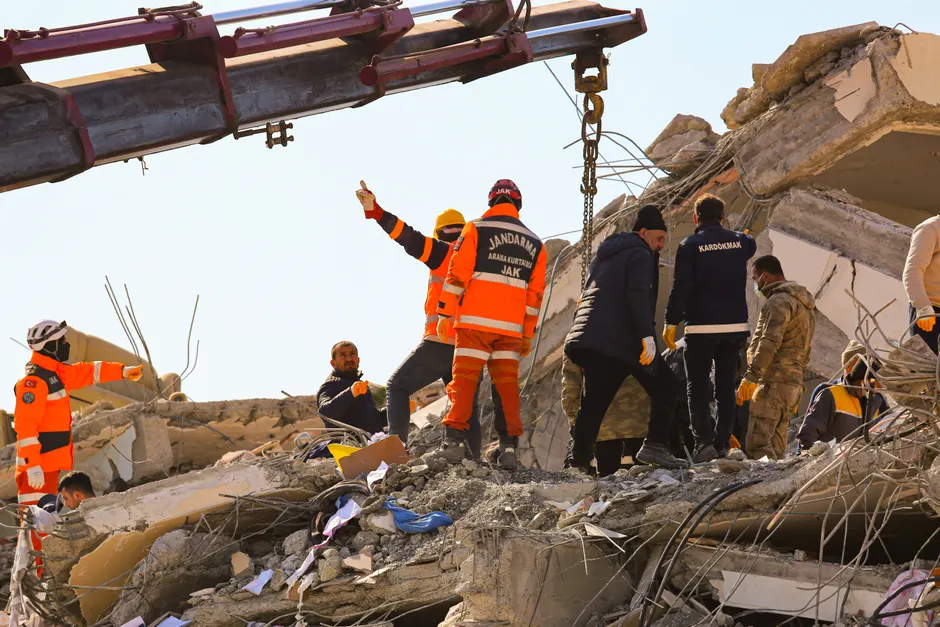
The reported death toll of 164 and injuries of 971 in the first day usually go up as rescue teams search through rubble and hospitals count all their patients. Venezuela's hospitals and power systems have been struggling for years, which will make recovery harder. Acting President Rodríguez is now managing the response, but Venezuela's relationships with other countries and international aid organizations have been strained. That could slow down help from outside.
Broader context: this earthquake spotlights a serious problem. The fault line where these quakes occurred is one of the most dangerous in the Western Hemisphere, but it doesn't have enough monitoring stations. Other countries in Latin America with earthquakes have better early warning systems and stricter building codes. Venezuela's systems are weaker. When two magnitude-7 earthquakes hit in under a minute, they test whether emergency plans built for just one big quake can actually work.