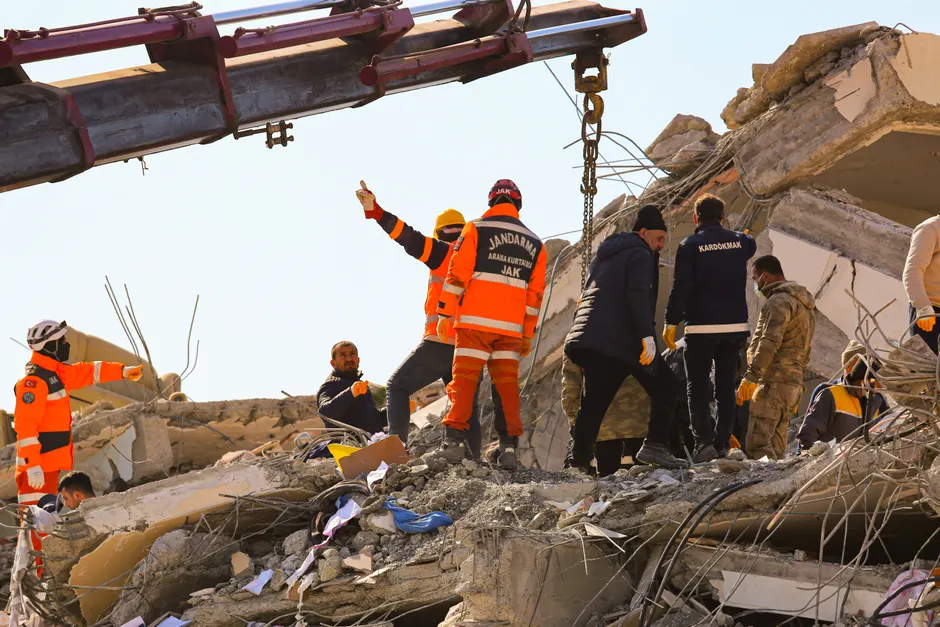
Big Earthquakes in Venezuela: Why Buildings Fell and What Happens Now

Two major earthquakes struck Venezuela on June 24, 2026, killing at least 32 people and injuring around 700. The stronger one measured 7.5 on the magnitude scale and was centered roughly 160 kilometers west of Caracas, the capital; the second was 7.2. Both shook the ground so violently that concrete buildings across Caracas collapsed, according to Reuters.
Why Did the Buildings Fall?
Many of Caracas's buildings were built between the 1960s and 1990s using concrete and steel frames. They were not built to handle the kind of shaking these earthquakes produced. Think of an older concrete frame like a stiff box — when the ground shakes side to side (which is what happens in a strike-slip earthquake), the box cannot bend or flex safely. The shaking was so fast and intense that columns cracked and floors gave way. Experts had warned about this weakness for years before it happened.
Venezuela sits in an area where two tectonic plates — massive pieces of the Earth's crust — slide past each other. This area has produced large earthquakes before. In 1812 and 1967, major earthquakes killed thousands in Caracas, and both times the problem was the same: older buildings that weren't strong enough.
Because there were two major earthquakes instead of just one, the aftershocks (smaller quakes that follow) will likely continue for weeks. That means buildings already cracked or weakened by the first two quakes face more danger from those aftershocks.
Other Earthquakes Around the World That Day
On the same day, other earthquakes happened elsewhere. A magnitude 5.6 earthquake struck near Redwood Valley, California, but it was not strong enough to cause serious damage. A 7.2 earthquake in Japan's Okinawa region caused some damage to unreinforced buildings but was less severe than what happened in Caracas, per USGS and Japanese authorities.
It might seem strange that so many earthquakes hit on one day, but the Earth is constantly shifting. Earthquakes in different parts of the world are not connected to each other — the timing is just coincidence.
What Comes Next
Venezuela faces serious challenges in rescue and recovery. The country has dealt with economic hardship for years, and its emergency services are under strain. Getting international help — rescue teams, doctors, engineers to check which buildings are safe — will be difficult because of logistics and other complications.
Building engineers in California have watched what happened in Caracas closely. California has been working to fix older concrete buildings that have the same weakness, but thousands still need repairs. Venezuela's earthquakes show what can happen when old buildings meet a major earthquake without being retrofitted, or reinforced to be stronger.
The number of people killed may still go up as rescue teams continue their work. Damage outside Caracas is still being counted. And with aftershocks expected for weeks, the danger is not over yet.