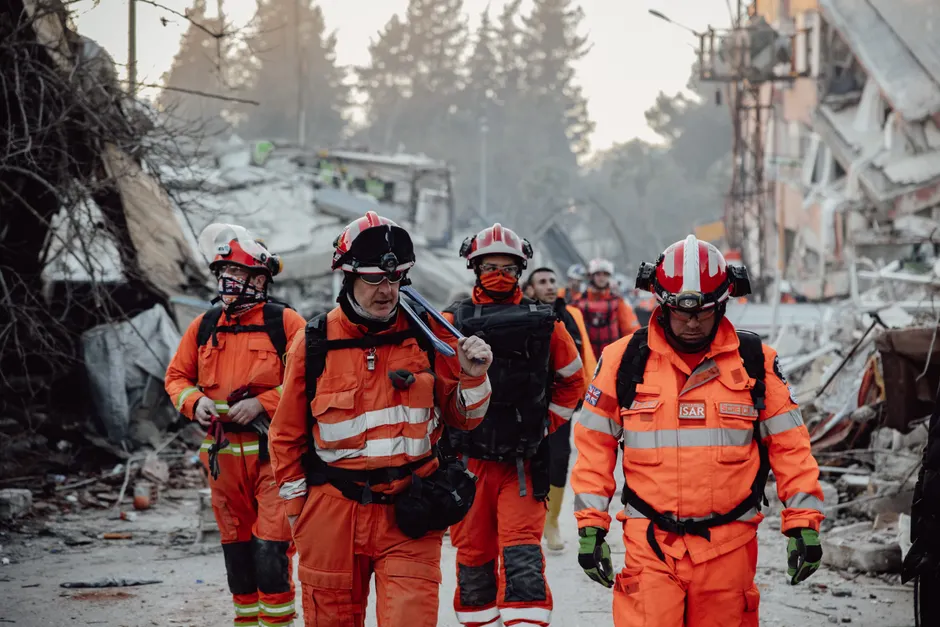
Two Strong Earthquakes Strike Venezuela, Leaving Hundreds Dead and Hundreds More Missing

Two Strong Earthquakes Strike Venezuela, Leaving Hundreds Dead and Hundreds More Missing
On June 24–25, 2026, two powerful earthquakes hit Venezuela in quick succession. The first measured 7.2 in magnitude; less than a minute later, a second one hit measuring 7.5. At least 188 people died and over 1,520 were injured, with hundreds still unaccounted for, according to Reuters.
Both earthquakes struck roughly 160 kilometers west of Caracas, Venezuela's capital. When two big earthquakes hit the same area in quick succession, the damage is far worse than a single earthquake would cause. The ground was already weakened and cracked from the first tremor when the second, stronger one hit.
The coastal city of La Guaira suffered the worst damage. This city sits squeezed between steep mountains and the Caribbean Sea, with little room for buildings to spread out. When the ground shook this violently, buildings collapsed throughout its crowded neighborhoods. AP News reported that the number of dead and injured there was among the highest anywhere in the affected areas.
The death and injury counts from June 25 are still early. After earthquakes this strong, rescue teams work in stages: first they pull people from buildings that have collapsed on top, and over the next few days they find more victims trapped deeper in the rubble or buried under landslides. The number of missing people is likely to change as rescuers continue their work.
Why Venezuela is Vulnerable to Earthquakes
Venezuela sits on the edge where two of the Earth's giant rocky plates meet — the South American Plate and the Caribbean Plate. These plates are always moving, rubbing against each other. That friction causes earthquakes. Two major fault lines run through Venezuela: the El Pilar and the Boconó. History shows this region can produce destructive quakes: a major earthquake destroyed Caracas in 1812, and another strong one hit in 1997.
A magnitude 7.5 earthquake is very powerful anywhere in the world. What happened here — two quakes of nearly identical size hitting the same fault zone within seconds — is uncommon but not unheard of. Scientists call this either a foreshock-mainshock sequence or a doublet. What matters for the damage is that buildings weakened by the first shock collapsed when the second, bigger one arrived.
The Challenges Ahead
Venezuela's ability to respond to this disaster is limited. The country has faced severe economic hardship for years, which has left hospitals short of supplies, roads and buildings in poor condition, and equipment scarce. Getting rescue teams, medical care, and food into the affected areas will be harder here than it would be in many other countries.
La Guaira is also home to Simón Bolívar International Airport, Venezuela's main hub for flights in and out of the country. As of now, no one has confirmed whether the airport's runways and buildings survived the earthquakes undamaged. If they were badly damaged, it would slow down the arrival of aid flights — a serious problem when people need help urgently.
The broader context is important to understand. The numbers we see right now — 188 dead, 1,520 injured — are likely to grow as rescue work continues and hospitals bring in more of the wounded. But beyond the immediate toll, there is another concern: the long-term damage to homes and basic services. In places where people are already poor and housing is fragile, earthquakes displace communities for months or even years. Venezuela, facing an earthquake in degraded buildings and with limited government resources, faces a particularly difficult recovery ahead.
International aid offers may be part of what happens next, but whether Venezuela's government accepts help — and on what terms — will shape how quickly the country can respond.