OpenAI Is Building AI Tools for the Government—and Making Hardware Too
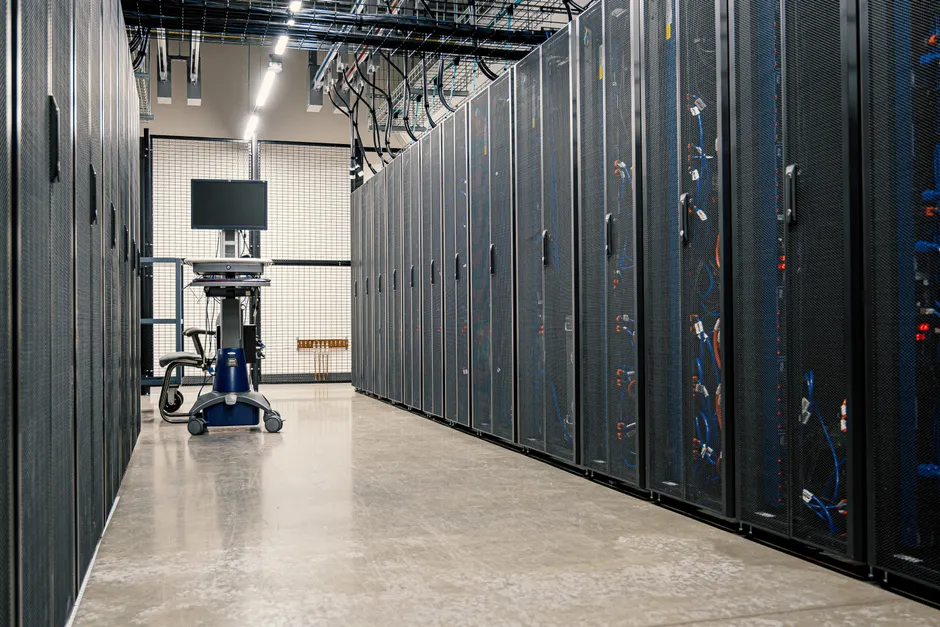
OpenAI released a special version of ChatGPT in January 2025 designed just for US government agencies. The key difference: instead of agencies using ChatGPT through OpenAI's standard internet connection, they can run it on their own servers, keeping all their data in-house. This matters because government work often involves sensitive or classified information that cannot be sent to an outside company's computers.
OpenAI announced the new product as a way to address a major problem keeping federal agencies from using AI. The government's approval process for new technology is deliberately slow — it requires security checks, compliance reviews, and sign-offs that can take years. By offering a version agencies can control themselves, OpenAI removed a big obstacle. Whether agencies will actually adopt it quickly is still unknown, but the barrier is lower now.
Building Physical Hardware
But the government product is just one piece of a larger plan. OpenAI has been working on something bigger: physical devices.
In May 2025, OpenAI acquired io Products, Inc., a startup that was building devices powered by AI. Designer Jony Ive — famous for designing iPhones at Apple — joined the effort through his own design studio called LoveFrom. Rather than having Ive work directly for OpenAI, the two companies arranged it so Ive stays independent but collaborates with OpenAI on the hardware project. This arrangement is common when designers want to keep creative freedom while partnering with a larger company.
Before the merger, there were hints about who was involved. In late 2023, reports surfaced that Tang Tan — the designer who led the look and feel of iPhones for Apple — was helping Ive and Sam Altman (OpenAI's leader) on the AI hardware project. This is telling because Tan's main skill is designing consumer electronics that millions of people can actually manufacture and sell. That suggests OpenAI and Ive are not building a laboratory experiment — they are building something for ordinary people to buy and use.
No one has publicly said what this device looks like or does. But the people involved give us clues. Jony Ive cares deeply about how a product feels and looks in your hands. Tang Tan knows how to design something that works in your pocket and can be made in factories at huge scale. Together, this points to a small, portable device — something you could carry with you — not a machine that sits in a server room somewhere.
Apple Makes a Related Move
Around the same time, Apple made an interesting leadership change. In March 2025, Bloomberg reported that Mike Rockwell — the engineer who led the creation of Apple's Vision Pro headset — became the head of Siri, Apple's AI voice assistant. It is an unusual choice because it puts a hardware engineer in charge of an AI tool. This suggests Apple thinks Siri's problems are not just about the AI being smarter, but about making the AI work smoothly with Apple's devices — making it fast, running it locally on your phone instead of sending everything to Apple's servers, and integrating it with the physical features of Apple hardware.
This move matters for OpenAI because Apple is now competing in the same space. If Apple is trying to build an AI companion that works tightly with its hardware, it is going after the same goal that OpenAI and Ive appear to be pursuing. Multiple companies are racing to create what could be called AI-native personal computing — devices where AI is built in from the start, not added on.
Looking at all these moves together, OpenAI appears to be building a complete stack: starting with AI systems designed for government use on one end, extending to consumer hardware on the other, with AI models powering everything in between. That is more ground than any AI company has tried to cover in one push. It is ambitious, and the risks are real.
One more thing worth noting: selling to the US government is a long game. Government purchases move slowly — deals, security clearances, paperwork, and approvals often take years. OpenAI is planting seeds now, which is the right time, but seeds and actual sales are two different things. The real money may be years away.


