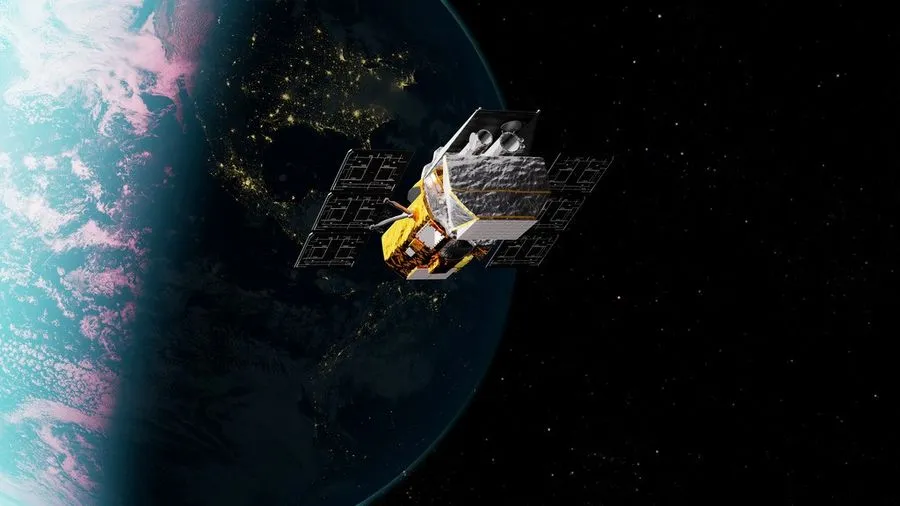
A Startup Just Raced to Save a NASA Space Telescope From Falling Out of the Sky
On July 3, 2026, a startup called Katalyst Space Technologies launched a spacecraft named Link on an urgent rescue mission. Its target: NASA's Swift Observatory, a space telescope that has been orbiting Earth since 2004 and is slowly falling toward the atmosphere.
Swift studies gamma-ray bursts — the most powerful explosions in the universe, created when massive stars collapse or two neutron stars crash into each other. For over 20 years, it has helped astronomers understand these events and use them to study the distant universe. But Swift was never designed to steer itself. It has no engines, so its orbit has always been slowly sinking. Recent solar activity made that sinking much faster. NASA calculated the telescope would fall too low to save by October 2026.
Katayst had to move quickly. The company, based in Flagstaff, Arizona, designed and built Link and got it to the launch pad in just nine months. Link's job is to grab Swift with a mechanical arm, dock with it, and then use its own engines to push Swift's orbit higher — buying the telescope several more years of life.
Getting to Launch
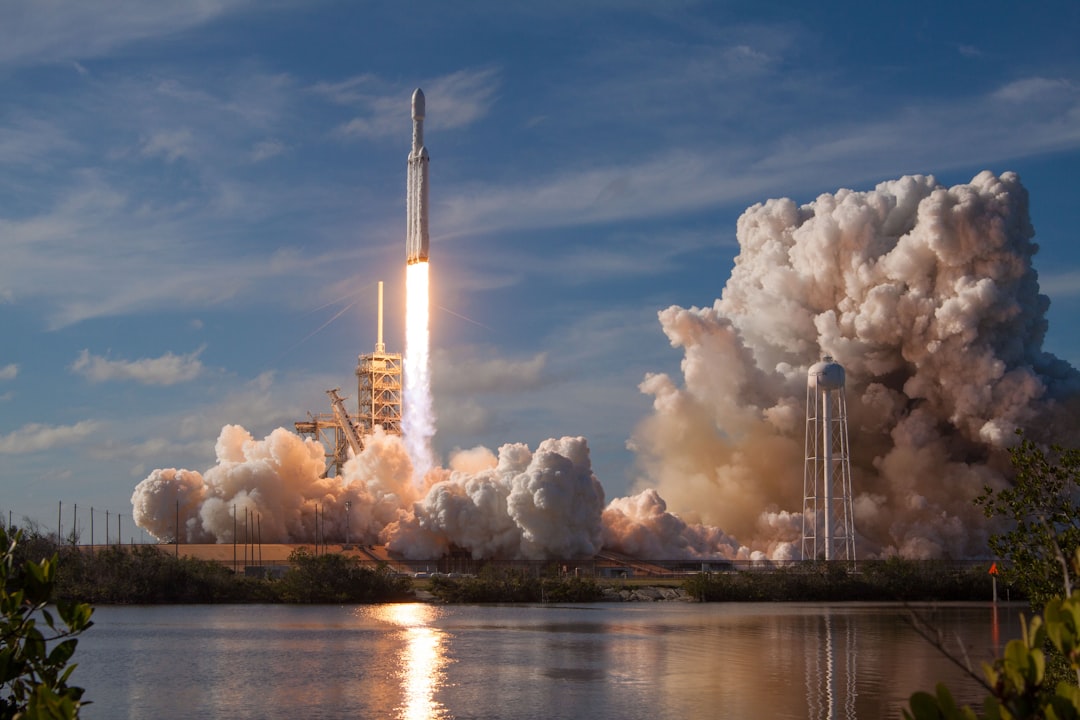
Before Link could lift off, the mission faced delays. Bad weather scrubbed the first attempt on June 30 and the second on July 1. On July 2, NASA reported that engineers were checking data after a technical problem. Finally, on July 3 at 4:35 a.m., the rocket launched successfully.
Nine months from design to launch is extraordinarily fast for any spacecraft. Link had to do something especially difficult: approach and grab another spacecraft that cannot help with the docking process and has no standardized connection point. It is not impossible — other companies have serviced satellites in space — but doing it under emergency conditions, against a clock set by atmospheric drag, is something else entirely.
The Money and the Lesson
Swift cost about $500 million when NASA built it. Katalyst's rescue mission costs $30 million. That is 6 cents on the dollar to save an asset that is still doing important science after two decades. That math alone explains why companies are now thinking about ways to keep space hardware alive.
Swift was supposed to last two years. It lasted more than 20. That says something about how well-built scientific instruments can be. The telescope is still finding gamma-ray bursts and studying the universe the way it was designed to — it just would not have gotten the chance if its orbit sank too far.
If Link succeeds in docking and boosting Swift, it will be a public proof that commercial companies can rescue space hardware in emergencies. That success would make it easier to argue that future space telescopes and satellites should be designed from the start to be serviced or rescued — rather than treating rescue as a desperate last resort. The next few days and weeks will show whether Link can pull it off. But the fact that a nine-month scramble from a startup is what keeps a space telescope alive says something about where the space industry stands right now.