Why Samsung's Great Earnings Announcement Made Its Stock Fall
Samsung Electronics shares dropped as much as 10% on July 7, 2026, even though the company announced profits would jump roughly 19 times higher than a year earlier Reuters. The stock opened at 309,000 won, down nearly 3% from the day before, then fell further to below 290,000 won Chosun. On the surface this makes no sense: good news about earnings should make a stock go up. But here's what actually happened.
Samsung's announcement was straightforward. A 19-fold jump in profit comes from a sharp recovery in memory chip pricing — the computer chips that power data centers and artificial intelligence systems. This fits the broader story that has pushed chip stocks higher over recent months. The company announced this on a normal schedule, nothing out of the ordinary Samsung IR.
The problem wasn't the earnings themselves. According to Reuters, traders were worried about AI stocks more broadly, not Samsung specifically Reuters. This is a common pattern: a stock rises sharply based on a hopeful story, then when the actual numbers come out — even if they're good — traders sell to lock in profits. Think of it like a runner who has already gotten a big head start; when the crowd cheers, the runner might pause to catch breath and take in the moment, even though the momentum was supposed to carry him forward. Samsung had its head start. The cheering came. But traders took the moment to sell and cash in.
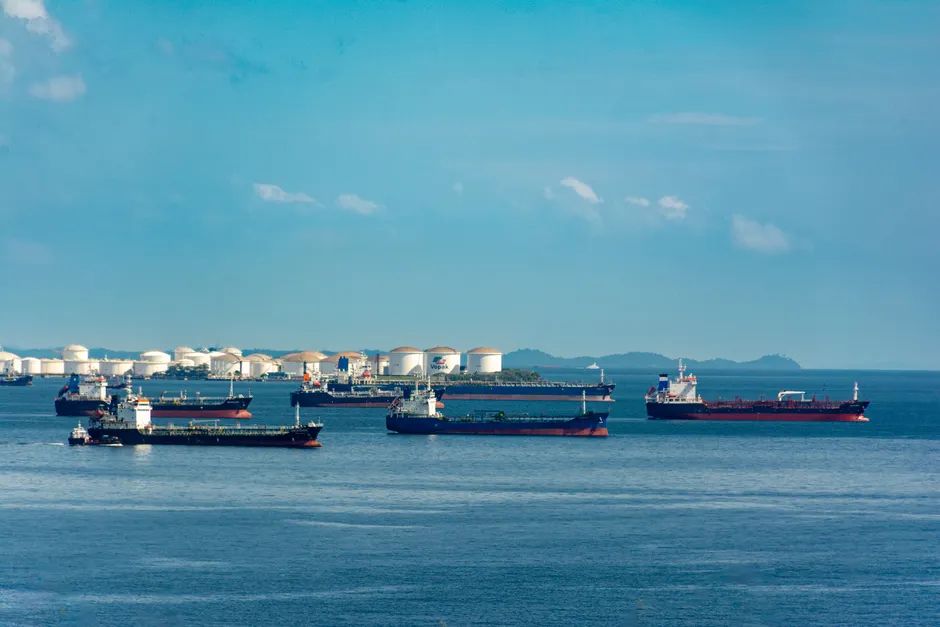
Then the day got worse. At the same time, Iran's Revolutionary Guards fired missiles at commercial ships in the Strait of Hormuz, a vital shipping lane near the Persian Gulf. At least two ships were hit, including a Qatari gas tanker Times of Israel. An international maritime authority confirmed a tanker off Oman caught fire after being struck NBC News. Other news outlets reported the same incident SCMP CNN.
This wasn't the first time. Going back to May, ships in the Strait of Hormuz have been hit repeatedly by projectiles UKMTO. In June, traders were openly doubting the strait would return to normal soon WSJ. By late June, oil prices were moving higher because of fresh attack reports WSJ. The pattern is repeated attacks over weeks, not a one-time event.
What happened is this: Samsung's profit announcement is about computer chips and artificial intelligence demand. The tanker attacks are about oil supply and shipping costs. These are two separate stories that have nothing to do with each other fundamentally. But on the same day, when both happen, investors get nervous. They step back. They sell Asian stocks. Samsung, being the largest company in South Korea's main stock index, takes the biggest hit — even though its own news was positive.
What comes next depends on one question: how bad will these attacks get? So far, oil prices have stayed relatively calm despite the strikes, which tells us markets think this is ongoing harassment, not a complete shutdown of the strait. But now that a gas tanker was directly hit — which could affect natural gas supplies worldwide — traders and oil companies will probably spend this week rethinking their assumptions.