India's Prime Minister Modi Visits Australia This Week

Narendra Modi, India's prime minister, arrived in Melbourne on Wednesday evening for a summit with Australian Prime Minister Anthony Albanese. The two leaders will meet July 8–10 for their annual meeting—a tradition they started in 2023 pm.gov.au. Albanese called Modi "my friend" in a statement welcoming him to the city pm.gov.au.
This is Modi's third visit to Australia as prime minister and his first time back to Melbourne in over a decade. The summit is one of several Indo-Pacific diplomatic meetings Albanese has on his calendar—he was in Fiji just days before Modi's arrival, showing how Australia manages relationships across the region pm.gov.au.
How this annual summit started
Australia and India began holding yearly leaders' summits in March 2023. At that first meeting, Albanese congratulated Modi on India's leadership of the G20, a group of the world's 20 largest economies pm.gov.au. The second summit happened in November 2024, when Modi mentioned hosting Australia at the Quad Leaders' Summit in India—a group made up of Australia, India, Japan, and the United States that focuses on security and trade in the Indo-Pacific region pm.gov.au mea.gov.in.
The big public event in Melbourne
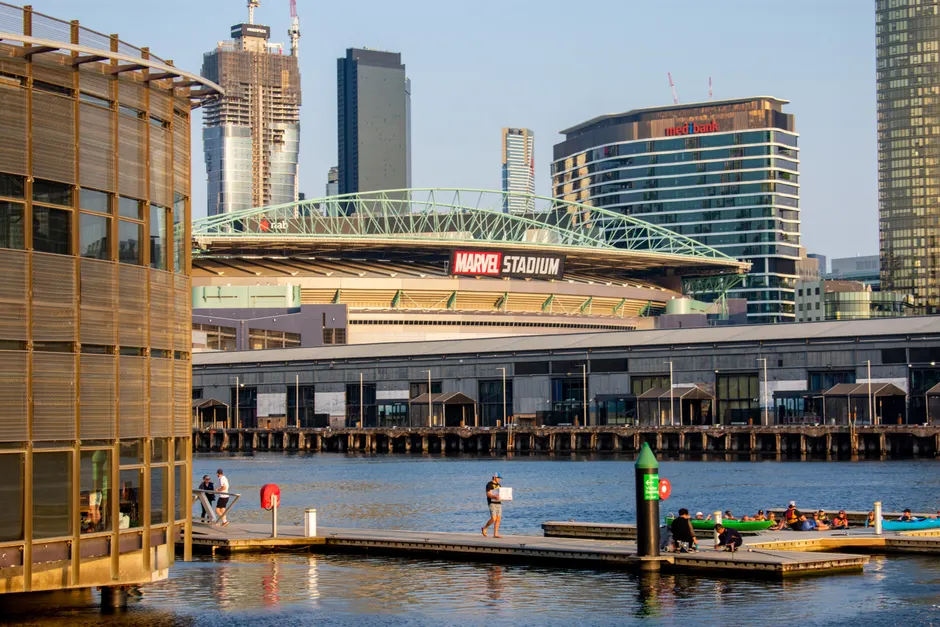
The visit's main public event is Thursday's "Melbourne Meets Modi" at Marvel Stadium—a free gathering expected to draw 25,000 to 30,000 people, mostly from Australia's Indian community The Guardian. The Australia India Foundation is hosting performances celebrating Indian culture and the Indian-Australian community ABC News.
Stadium events like this have become common during Modi's international visits to countries with large Indian populations. The scale of the Melbourne event—between 25,000 and 30,000 attendees—is typical for his larger community gatherings.
Australian Federal Police warned a young person over an alleged online threat against Modi before his arrival ABC News. Victoria Police declined to detail security arrangements, saying that's standard practice when protecting visiting leaders The Guardian.
Criticism and human rights concerns
Not everyone is welcoming Modi's visit. The Alliance Against Islamophobia plans to protest Thursday evening. Amnesty International has called on the Australian government to press Modi directly on India's human rights record during their private meetings The Guardian.
Amnesty's concerns focus on three areas: India should allow journalists and human rights advocates to work without fear, and it should address discrimination against religious and ethnic minorities.
These criticisms reflect longer-standing debates about Modi's tenure since 2014. His political party promotes Hindutva, an ideology centered on Hindu nationalism. In 2024, India passed the Citizenship Amendment Act, which speeds up citizenship for some refugees but excludes people from Muslim-majority countries—a law that has drawn criticism as discriminatory The Guardian.
The contrast between the welcoming stadium event and the human rights criticism reflects a pattern seen in other countries hosting Modi. Most governments separate business from values in these visits: they focus their public messaging on trade, defense, and regional security, while human rights concerns—if raised at all—happen privately behind closed doors rather than in the official statements both sides release to the public.
Whether Albanese will follow this pattern or speak publicly about human rights during the summit remains unclear. The answer may only emerge when Australia and India publish their joint statement after Friday's meetings.
The specific outcomes of this summit—deals on trade, critical minerals, or defense cooperation—have not yet been announced. Like previous years, both governments will likely release a joint statement listing new commitments and future plans once the talks conclude.