Egypt Lost the World Cup Game—But the Real Story Happened in Gaza
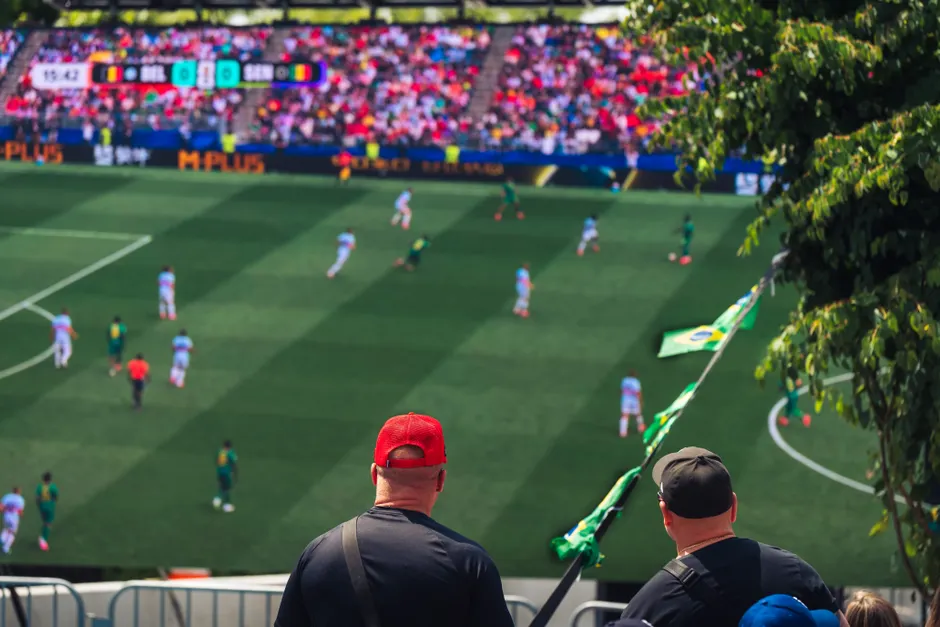
Argentina beat Egypt 3-2 on July 7 in the World Cup's round of 16. Egypt was winning 2-0, then Argentina came back and won, AP News reported. In Gaza City, people gathered in the rubble of buildings to watch the game on a screen. Reuters photographed and filmed them there.
Reuters published the same scene multiple times throughout the tournament. Photos showed people watching from Gaza City while surrounded by damaged buildings. The wire service was careful about which neighborhoods they named in their captions. This pattern—showing the same kind of gathering week after week—suggests the news organization thought these images mattered beyond just one game.
When Egypt took its early lead, fans across Gaza celebrated. Roya News reported the joy in the moment. Then Argentina scored twice, and Egypt lost. The celebration turned to disappointment, but the moment itself was still real for the people watching.
This was not the only time Gazans watched Egyptian soccer together. Back on June 27, AP filmed fans celebrating in Gaza's tent camps alongside celebrations in Seattle and Cairo. Seeing Gaza, a major U.S. city, and Egypt's capital all grouped together in one story shows something important: Egyptian soccer fans are scattered across the world because of war and displacement.
Egypt's coach, Hossam Hassan, made a choice to connect the team to Palestinian politics. Before the Argentina game, he spoke at a press conference about Palestinians. Days earlier, after Egypt beat Australia on July 4, he waved a Palestinian flag on the field. This was not one random gesture—it was a pattern. Coaches do sometimes make political statements at World Cups, but Hassan did it more than once in a deliberate way.
The reports do not mention FIFA punishing Hassan or the Egyptian team. FIFA usually has strict rules against political messages at games, but there was no reported response. We do not know if FIFA decided not to get involved, or if the reports just did not cover what happened behind the scenes. Either way, the silence is notable.
Sport becomes something rare and precious in places like Gaza right now—a moment when people can gather and feel normal together. Reuters showed us that by filming and photographing the same scenes repeatedly over weeks. When news organizations choose to show the same type of image over and over, it means they believe it tells us something important about what life is like during a war.
Egypt lost because it gave away its advantage in the second half, not because Argentina's team was simply better. For a coach who had spent the tournament talking about Palestinian solidarity, losing by letting victory slip away added one more disappointment on top of everything else. We do not yet know if Hassan will talk about the flag or the bigger political message after the tournament ends. That remains a question for anyone watching how FIFA handles politics in sports.