Why Palestinians in Gaza Cheered for Spain at the World Cup
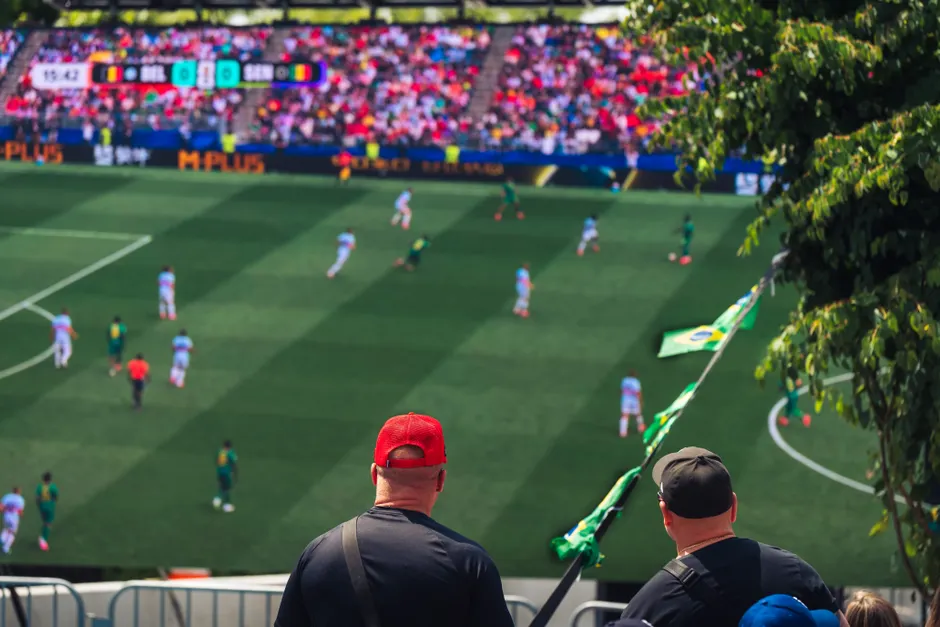
Palestinians across Gaza celebrated Spain's victory over Argentina in the 2026 FIFA World Cup final on July 19, 2026. They gathered at cafes, outdoor screenings, and makeshift screens, waving Spanish flags. The reason goes back to a single moment: Spanish teenager Lamine Yamal, a star footballer, carried a Palestinian flag during Barcelona's league title celebrations in May 2026. The Guardian published a report on July 21, 2026, documenting the celebrations across Gaza, where most of the roughly two million Palestinians live in tent camps with limited power or internet after Israeli attacks destroyed their homes.
The celebrations spread beyond Gaza. Al Jazeera reported that Palestinians in the occupied West Bank also celebrated Spain's win. TRT World reported that crowds in Spain itself raised the Palestinian flag and chanted "Free Palestine" during victory celebrations in Madrid, which drew nearly two million people on July 20, 2026. The Palestinian delegation to the United Nations posted an image of the Spanish team under the headline "world champions" after the final.
Reuters reported that Palestinians gathered at cafes in the Nuseirat refugee camp in central Gaza to watch the final. Al Jazeera reported that thousands gathered across Gaza. For many, just watching the tournament took real effort. Arkan al-Walaida, 23, went to internet cafes each morning to watch match highlights on TikTok, FIFA's YouTube channel, and Instagram, according to the Guardian's July 21 report.
The Egyptian Committee for the Reconstruction of Gaza organized public watch parties for displaced Palestinian families to follow Egypt's matches, as reported by the Guardian on July 9. Egypt's run ended in the last 16 against Argentina on July 7. Just before that match, an Israeli airstrike killed Mohamed al-Wahidi, a Palestinian aid worker who had organized World Cup screenings in Gaza, along with two brothers aged eight and ten.
The connection between Palestinians and the Spanish team came from Yamal's flag gesture. The Gaza al-Irada amputee football team, whose players have lost limbs to war injuries, posted a pre-game video message for Spain saying: "Whoever raises the Palestinian flag deserves to raise the World Cup." Saadi al-Masri, 40, the captain of the al-Irada team, watched the final in a cafe with friends, as the Guardian reported.
Politics and sport were hard to separate. Spain has been one of Europe's loudest critics of Israel's war on Gaza and wants the EU to take stronger action, including suspending a free trade pact, which is an agreement that lowers taxes on goods traded between countries. Israel's defense minister attacked Yamal for raising the Palestinian flag, accusing him of "inciting hatred." Spanish Prime Minister Pedro Sánchez defended Yamal on social media. Israeli Prime Minister Benjamin Netanyahu posted a good luck message for Argentina before the final and has built close ties with Argentine President Javier Milei.
The broader context is that the World Cup became a kind of mirror for political tensions already in play. Spain's stance against Israel, its push for economic penalties within the EU, and Spanish footballers showing support for Palestinians all fed off each other. Palestinian communities picked Spain as their team, which led to Palestinian solidarity appearing in Spanish celebrations, which drew criticism from Israeli officials, which Sánchez pushed back against. So the final between Spain and Argentina carried extra meaning: Netanyahu backed Argentina, and Palestinians across Gaza and the West Bank backed Spain.
The conditions in which Gazans watched the tournament make the celebrations especially striking. Many people have been forced from their homes, and damage to power and internet infrastructure meant that watching a match meant finding a communal screening, an internet cafe, or any available power source. The killing of al-Wahidi, who set up screenings for his community, showed the danger of simply gathering to watch football in a war zone. The al-Irada amputee team's involvement placed the joy of a football result right next to the realities of ongoing conflict.
Sports and politics have mixed before in international football. But the 2026 World Cup final created an unusually direct chain of gestures and responses connecting players, governments, and ordinary people across several countries. Whether this moment leads to any lasting political change is a question for the diplomatic and humanitarian efforts already underway, not for the result on the pitch.