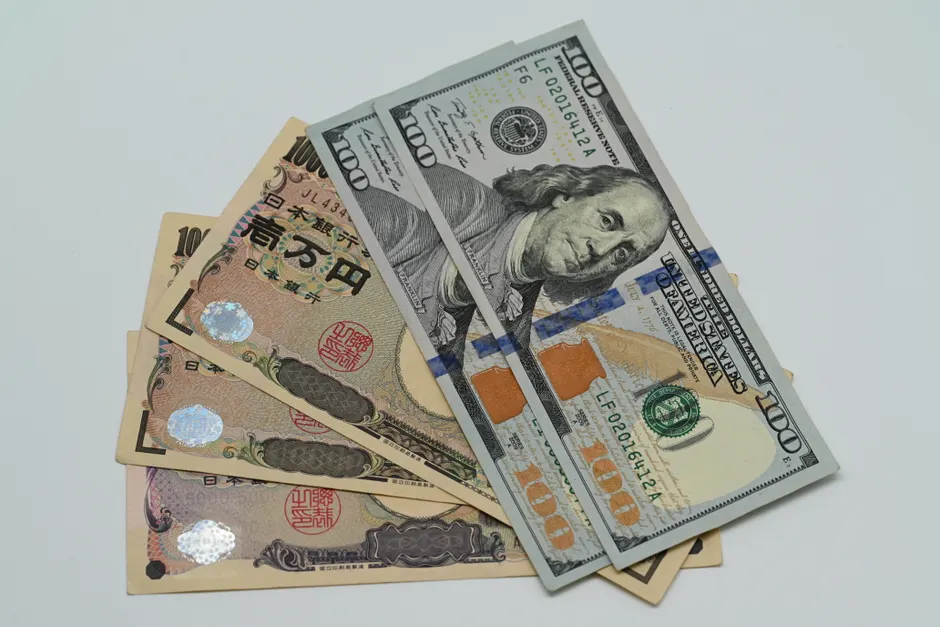
Why Japan's Yen Is at a 40-Year Low — and What Happens If It Steps In

The dollar sat near 162 yen on July 14, 2026, almost unchanged from two weeks earlier. Japanese officials kept warning they might step in to prop up their currency, but they didn't actually do it. (MarketWatch via Morning Star; WSJ)
Think of the exchange rate like a seesaw. When the dollar is at 162 yen, one dollar buys 162 yen. A higher number means the yen is weaker and the dollar is stronger.
"Intervention" means a government buys its own currency to push the rate in a direction it wants. Japan would buy yen and sell dollars to make the yen stronger.
The yen hit a 40-year low of 162.84 per dollar on June 30, 2026, the weakest since the mid-1980s. (Star-Advertiser) By July 3, it had recovered slightly to 161.2 before drifting back toward 162 by mid-July. On July 2, the dollar was expected to trade between 161.50 and 162.50 yen, according to WSJ, and it mostly stayed in that range over the next twelve days.
Japan's government said in early July that it was in close contact with U.S. officials about the yen's weakness and would keep the option to intervene open, Star-Advertiser reported. This pattern — warnings first, coordination with the U.S., then the threat of acting alone — is familiar. Japan's Ministry of Finance has always talked tough before actually spending money to buy yen, stepping in only when the talk doesn't change anything. The ministry's published monthly intervention data, covering May 28 to June 26, is on the MoF's official website (mof.go.jp), along with quarterly records going back to April 1991 through March 2026 (MoF English).
A new warning came in mid-July, WSJ reported, and the exchange rate barely moved.
The market's calm matters. If traders decide Japan won't actually defend the yen at these levels, the yen could drop fast and disorderly. On the flip side, if Japan does act and the U.S. is privately on board, the reversal could be sharp because plenty of traders have bet on the yen staying weak. Neither outcome is priced in with much confidence, which is why the rate is stuck in place rather than moving clearly in one direction.
The history here tells a story. Verbal warnings in the 150s came before Japan stepped in during September 2022. The ministry bought yen at around 146 in October 2022 and again near 160 in April and May 2024. Each time, the yen bounced back briefly, then kept falling past the level where Japan had intervened. Traders have noticed this pattern. Whether this time is different depends on Bank of Japan policy, U.S. tolerance, and how traders are positioned — none of which can be resolved from public information alone.
For anyone with money tied to yen-related trades, the situation is a waiting game. The intervention zone is wherever Japan says it is, and the most reliable signal that action is coming has historically been the quiet gap between escalating warnings and actual execution. That quiet gap is running right now.