Japan Just Made It a Crime to Deface the National Flag. Here's Why It Matters.

On July 17, 2026, Japan's parliament approved a new law that makes it a crime to damage or disrespect the national flag. The law took effect the same day. Prime Minister Sanae Takaichi and her government pushed the measure as part of a wider plan focused on national pride (New York Times; Associated Press).
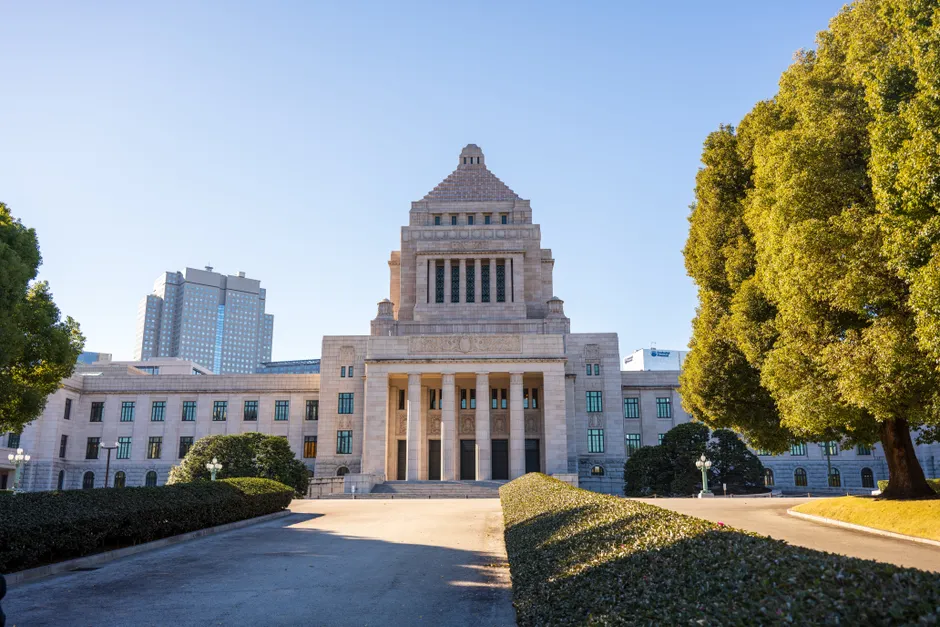
Japan's parliament is called the Diet, and it has two parts: a lower house and an upper house (the House of Councillors). The bill passed the upper house on Friday, July 17, 2026, according to the Associated Press, which reported the story through correspondent Mari Yamaguchi (Associated Press). The Japan Times also confirmed the bill's passage that day (Japan Times).
Takaichi's cabinet has been in power since at least April 2026, per the Prime Minister's official website (kantei.go.jp). The New York Times described the flag law as part of Takaichi's nationalist agenda — meaning a political approach that puts the nation's identity and symbols at the center of policy. Human Rights Watch, an international watchdog group, warned about the bill as early as March 25, 2026, calling it a threat to freedom of expression (New York Times; Human Rights Watch).
Opponents of the law agree with that warning. They say making flag desecration a crime unfairly limits people's right to speak freely and protest politically. The Associated Press, distributed by ABC News, reported that opponents worry the law could cover more actions than its supporters have publicly admitted (Associated Press via ABC News; Oskaloosa).
The broader context here is that Takaichi's government has been pushing nationalist priorities into the center of Japan's agenda. Laws like this are controversial in democracies around the world. In some countries, courts have thrown out or narrowed similar laws because they clashed with free-speech rights. Japan's own constitution, in Article 21, guarantees freedom of speech, assembly, association, and the press. The big legal question now is how courts will handle this new law when measured against those constitutional protections.
Human Rights Watch spoke out in March, months before the bill became law, which shows that international organizations were tracking it and raising alarms before the final vote. The fact that the law passed anyway suggests Takaichi's government is willing to accept criticism from civil-society groups to get its legislative goals done.
What matters going forward is how the law actually works in practice: what specific actions it punishes, what penalties it carries, and whether prosecutors use it in a narrow or broad way. The law's own text, plus any guidelines from Japan's Ministry of Justice, will determine whether it stays mostly symbolic or becomes a real tool for criminal prosecution. Both are meaningful, but they have very different consequences.
There is also a diplomatic side to this. Japan's neighbors in East Asia, especially South Korea and China, have historically been sensitive to signs of Japanese nationalism because of the region's history during the mid-twentieth century. This law only applies inside Japan, but it may be noticed by other countries as part of a larger pattern.
The bill has now passed both chambers of the Diet, completing its journey into law. The political question is whether Takaichi's government sees this as a one-time achievement or as a stepping stone for more legislation in the same direction.