Why Thousands of Ukrainians Are Protesting Their Own Government During Wartime

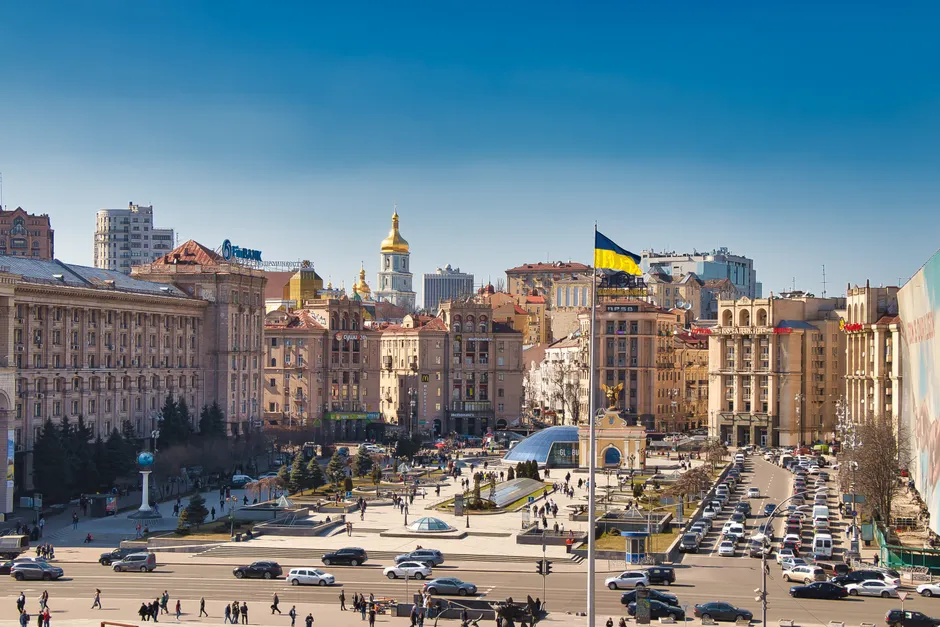
Thousands of protesters rallied across Ukraine on July 16 and 17, 2026, demanding the reinstatement of ousted Defense Minister Mykhailo Fedorov. Reuters called it a rare display of public dissent during wartime. Demonstrators gathered outside President Volodymyr Zelenskyy's office in Kyiv for a second consecutive day, chanting "Syrskyi away" and "Bring Fedorov back," while protests spread to other major cities. (Reuters)
Fedorov was dismissed only six months after his appointment as defense minister. His removal was part of a surprise government reshuffle in which Ukraine's parliament elected a new government. (Reuters) (Reuters) President Zelenskyy said the reason was friction between Fedorov and General Oleksandr Syrskyi, the commander of Ukraine's armed forces. (AP)
The ouster exposed a deep split at the top of Ukraine's war leadership. Fedorov publicly accused Syrskyi of stirring up intrigue and blocking his reform efforts, telling a news conference that the general had "split the country." (Reuters) (Al Jazeera) Appearing in a dark T-shirt and jeans, Fedorov defended his work to modernize the Ukrainian armed forces and said he had privately urged Zelenskyy to replace both Syrskyi and Chief of the General Staff Andrii Hnatov. (WPXI) (BBC) (New York Times)
To understand the clash, it helps to know that in many countries the defense minister is a civilian who oversees how the military is run, while the top general runs actual combat operations. Fedorov wanted to modernize the institution. Syrskyi was focused on fighting the war. Fedorov said Syrskyi blocked his reforms, which suggests this was not a simple disagreement but a power struggle between two people with different jobs and different priorities.
The broader context here is what Zelenskyy's choice tells us. By removing the minister rather than the general, he decided that keeping the war effort running smoothly mattered more than pushing forward with civilian reforms. That decision has consequences for how a country manages its military during a long war.
The scale of the protests matters too. Ukraine has been at war, and the public has largely stayed united behind its leaders. So seeing thousands of people protest across multiple cities is unusual. The fact that protesters named Syrskyi specifically shows their frustration was aimed at a particular person, not just general anger.
Fedorov himself struck a calm tone about the path forward. He said he was "certain" Zelenskyy "hears the Ukrainian people" and that "the situation will be 100% corrected." (United24) It is not clear whether he expects to get his job back or whether he expects a broader change. But his words suggest he believes the crisis can be solved within the political system, not through escalation.
Hnatov served as Chief of the General Staff at the time of Fedorov's ouster. Fedorov's recommendation that both he and Syrskyi be replaced shows the ousted minister saw the problem as rooted in the senior military command as a whole, not tied to one person. (BBC)
The government reshuffle that accompanied Fedorov's removal extended beyond the defense ministry. Ukraine's parliament moved to elect a new government amid the public outcry, according to Reuters, placing the personnel changes within a broader restructuring rather than a single dismissal. (Reuters)
What remains unresolved is whether Zelenskyy's administration will use the protest energy to push for reform or wait for the demonstrations to fade. Fedorov's public posture keeps the door open for reconciliation, but his specific, on-the-record accusations against Syrskyi make it hard to simply go back to how things were. The protests entering a second day with no immediate concession from the presidency suggest this standoff has staying power.