The U.S. Is Sending More Warplanes to the Middle East. Here's Why It Matters.

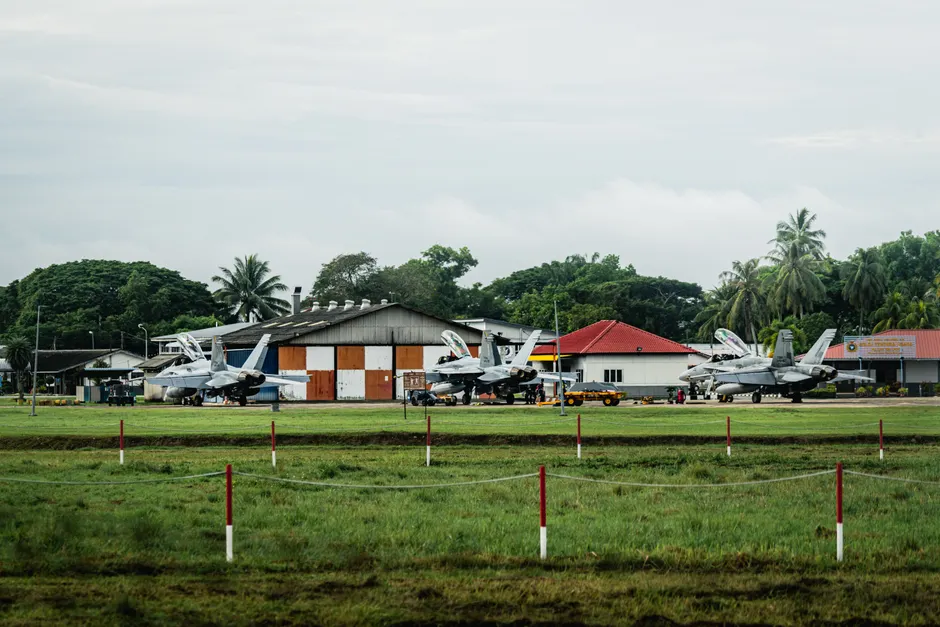
The United States is sending Air Force F-16 fighter jets from Germany and F-35 stealth jets from Britain to the Middle East, according to U.S. officials cited by The New York Times on July 19, 2026. These jets add to a large number of American warplanes already in the region, which has been growing since the Israel-Iran war intensified in mid-2025.
This is not the first such move. On June 17, 2025, Reuters reported that the U.S. military was sending additional F-16, F-22, and F-35 fighter jets to the Middle East amid the Israel-Iran war, citing an unnamed U.S. official. Days later, on June 21, American officials confirmed that these fighters had passed through bases in the region.
The latest moves also build on a military presence near the Strait of Hormuz — a narrow waterway between Iran and Oman through which about a fifth of the world's oil passes — that the Pentagon had publicly acknowledged years earlier. In July 2023, the Pentagon confirmed that the Secretary of Defense had ordered F-35 and F-16 fighters, along with a Navy destroyer called the USS Thomas Hudner, to the area near Oman. That earlier deployment set up a system for rotating troops and equipment in and out of the region that later administrations have continued to use as tensions with Iran have risen.
These fighter deployments are part of something called Operation Epic Fury, a campaign run by U.S. Central Command (the military command that oversees American forces in the Middle East). According to CENTCOM's official website, the operation involves striking targets to dismantle the Iranian government's security forces. CENTCOM published details of the operation in April 2026. The Air Force's 158th Fighter Wing, which flies F-35s, is participating in Operation Epic Fury. A U.S. base was supporting the operation as of April 2, 2026, according to the CENTCOM website. Alongside Epic Fury, CENTCOM is also running "Regional Cooperation 2026," an annual military exercise involving multiple countries, noted on the command's website as of May 13, 2026.
The fighting has come at a cost to American forces. Around April 3, 2026, Reuters reported that two U.S. warplanes were shot down over Iran and the Gulf. Two pilots were rescued. A third remained missing, according to Iranian and U.S. officials. This happened as the United States said it would target more Iranian infrastructure and as several countries worked to keep the Strait of Hormuz open for shipping.
Where the jets come from matters. Sending F-16s from Germany and F-35s from Britain rather than from the United States cuts down on travel time. It also signals that the U.S. is pulling resources from its European bases to strengthen its forces in the Middle East. The F-35s are stealth jets, meaning they are designed to be hard to detect on radar, which helps them get past Iranian air defenses. The F-16s are workhorse fighters that can fly many missions quickly. The F-22s that were sent in 2025 are designed to win control of the skies by defeating enemy aircraft.
The broader context here is that the U.S. has been getting more directly involved in confronting Iran's security forces over several years and across different presidential administrations. The 2023 deployments near Oman were described as being about protecting shipping and discouraging Iran from taking hostile action. By 2026, the mission had shifted to active combat under Operation Epic Fury, with the stated goal of dismantling Tehran's security apparatus. The loss of two American warplanes over Iran in April 2026 was a sign that the situation had moved from simply being present and discouraging conflict to ongoing fighting in which forces are being lost.
The fact that the U.S. is still sending more fighter jets in July 2026, pulling them from bases in both Germany and Britain, suggests that earlier deployments have not stabilized the situation. The combination of combat strikes under Epic Fury, multinational military exercises under Regional Cooperation 2026, and diplomatic efforts to keep the Strait of Hormuz open shows that these jet movements are part of a wide effort involving combat, coordination with allies, and keeping trade routes open.
For countries in the region and U.S. allies, the key question is whether sending more aircraft will change Iran's decision-making or simply deepen the conflict. The downing of two U.S. warplanes over Iran in April did not lead to a withdrawal. Instead, the July deployments show a decision to keep the pressure on or increase it.